
Imagine a material so versatile that it seamlessly integrates into countless industries, from medical to aerospace, delivering unmatched performance and reliability. Meet the expanded PTFE sheet, a material engineering powerhouse that often goes unnoticed yet plays a crucial role in modern technology and manufacturing. Its remarkable adaptability and resilience make it a preferred choice for innovators looking to push the boundaries of design and functionality. But what exactly makes this material stand out in a sea of options?
Intriguingly, the journey of the expanded PTFE sheet is one of transformation and ingenuity. Originally discovered in an accidental chemical experiment, it has become indispensable to engineers and designers alike due to its unique structure and properties. As we delve into its various applications, you’ll uncover how this humble sheet has revolutionized industries, offering solutions to complex challenges with its impressive versatility. Whether you’re a seasoned professional or a curious novice, the story of expanded PTFE sheets will captivate and inspire, revealing a world where potential and practicality coexist harmoniously.

The Genesis of Expanded PTFE Sheet: From Accidental Discovery to Engineering Marvel
Imagine a breakthrough born out of serendipity: in 1938, chemist Roy Plunkett at DuPont discovered polytetrafluoroethylene (PTFE) purely by accident when a container of tetrafluoroethylene gas polymerized unexpectedly. It wasn’t until the 1960s, however, that this slippery, chemically inert material was transformed into today’s expanded PTFE sheet. Bob Gore’s pioneering work involved rapidly stretching PTFE under controlled conditions, producing a unique microstructure of nodes and fibrils that yielded remarkable porosity and flexibility. This novel form of PTFE retained the parent polymer’s legendary chemical resistance and thermal stability while gaining unprecedented conformability and breathability.
The emergence of expanded PTFE sheet marked a milestone in materials engineering. Engineers quickly recognized its potential for sealing, gasketing, filtration, and more, thanks to its ultra-low friction, high strength-to-weight ratio, and fine pore structure. From those early experiments sprang a versatile material that could be tailored through adjustments in stretch ratio, pore size, and thickness. Over subsequent decades, manufacturing processes were refined—improvements in biaxial expansion techniques ensured uniformity and consistency, while advanced sintering methods enhanced durability. Today, expanded PTFE sheet stands as a testament to transformation: a once-obscure polymer turned engineering marvel, quietly revolutionizing industries from medical devices to aerospace applications.
Key Properties that Make Expanded PTFE Sheets Stand Out
Expanded PTFE sheet distinguishes itself through a unique combination of properties that address demanding engineering challenges. Its open microstructure results in high porosity, providing excellent breathability and allowing fluids or gases to pass while filtering out particles as small as sub-micron sizes. This porosity, coupled with ultra-low surface energy, imparts remarkable non-stick and anti-fouling characteristics—contaminants simply don’t adhere. The sheet also boasts exceptional thermal stability, functioning reliably across a temperature range from –200°C to +260°C without degrading or losing performance.
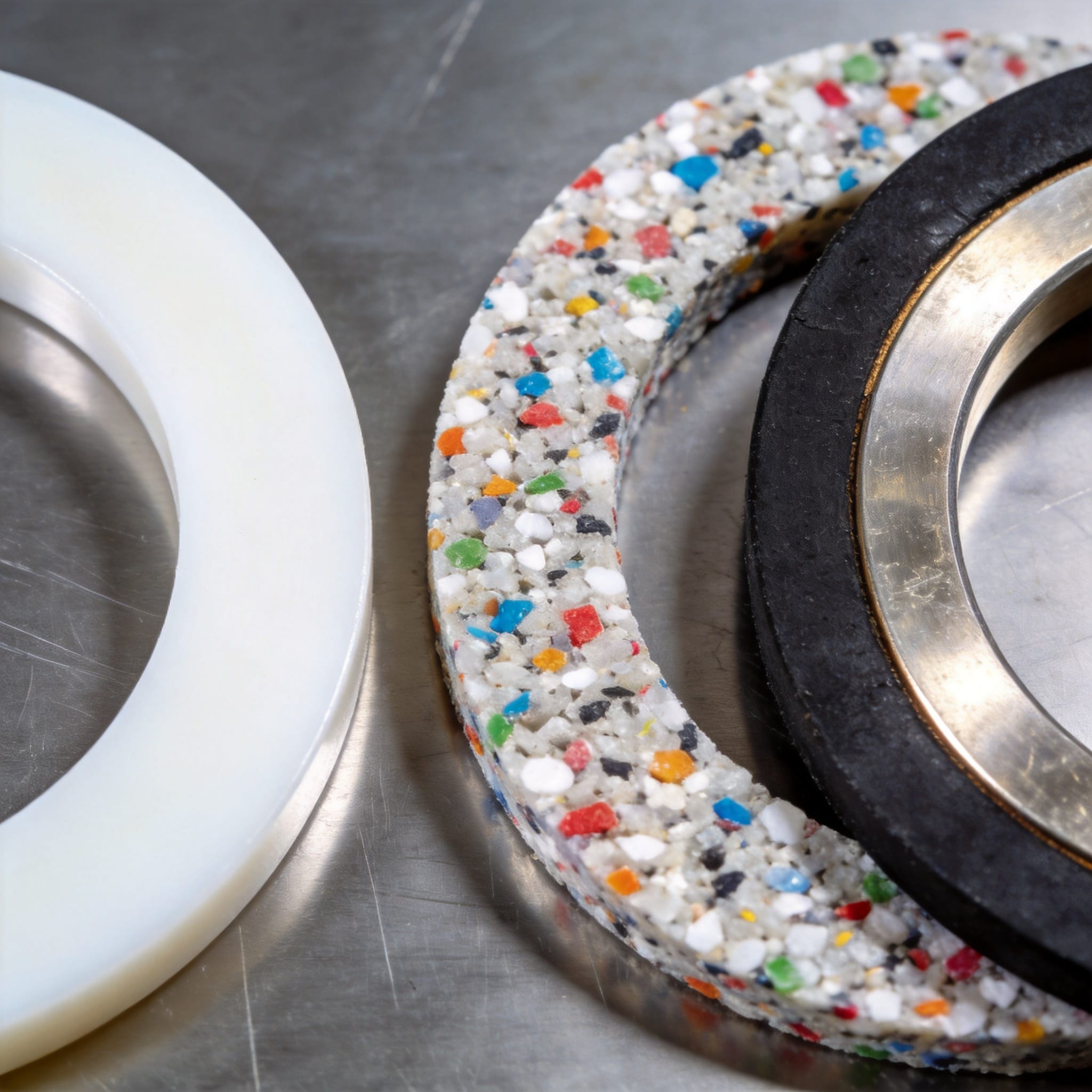
Beyond its thermal and chemical resilience, the expanded PTFE sheet offers outstanding mechanical strength and flexibility. The nodal-fibril architecture produces a material that can conform to irregular surfaces, ensuring tight sealing and minimal leakage in gasket applications. Its tensile strength and tear resistance make it suitable for demanding environments, while its low coefficient of friction reduces wear on moving parts. Additionally, the inherent chemical inertness of PTFE renders it impervious to acids, bases, solvents, and UV exposure, ensuring long service life even in corrosive or outdoor environments. These key properties collectively position the expanded PTFE sheet as a preferred material for engineers seeking reliability and durability.
Aerospace Innovations: How Expanded PTFE Sheets Are Redefining the Industry
In aerospace engineering, every gram and every millimeter of performance counts. Expanded PTFE sheet has emerged as a game-changer, answering critical needs for lightweight, high-performance materials. Its low density contributes to overall weight reduction, a constant design imperative for improving fuel efficiency and payload capacity. Moreover, the sheet’s superior chemical inertness and thermal stability make it ideal for harsh flight environments, from cryogenic fuel systems to engine compartments exposed to extreme heat.
One of the most transformative applications lies in sealing and gasketing solutions. Expanded PTFE sheet provides leak-tight seals for fuel lines, hydraulic systems, and avionics enclosures, resisting degradation by jet fuels, lubricants, and hydraulic fluids. Its conformability allows it to fill surface imperfections, maintaining integrity under vibration and pressure fluctuations. Additionally, advanced expanded PTFE variants are used as wire insulation and jacketing material, offering flame resistance, dielectric stability, and lightweight protection for critical wiring harnesses. As aerospace designs push boundaries—incorporating more electric systems, novel propulsion concepts, and reusable spacecraft—expanded PTFE sheet continues to underpin innovative solutions, ensuring reliability in the most demanding missions.
Environmental Impact and Sustainability Aspects of Expanded PTFE Sheets
The conversation around sustainability extends to every material, and expanded PTFE sheet is no exception. While PTFE is derived from fluorinated monomers, its durability and long service life mitigate the need for frequent replacements, reducing waste over time. The material’s chemical inertness ensures that no harmful leachates pollute surrounding environments, whether in industrial applications or consumer products. In filtration roles, expanded PTFE membranes enable efficient removal of particulates and contaminants, safeguarding air and water quality.
Manufacturers are also striving to minimize the environmental footprint of expanded PTFE sheet production. Advances in processing technology have reduced energy consumption during expansion and sintering steps. Some producers now implement closed-loop systems to capture and recycle process effluents. Moreover, research is underway to develop greener synthesis routes for PTFE precursors and to explore recycling methods for end-of-life PTFE components. As regulatory pressures increase and industries adopt circular economy principles, the expanded PTFE sheet’s longevity, recyclability potential, and low contamination risk position it as a viable material in sustainable engineering strategies.
Conclusion: The Endless Possibilities of Expanded PTFE Sheet Technology
The story of the expanded PTFE sheet is one of innovation born from chance, honed by engineering, and embraced across industries. Its distinctive combination of thermal stability, химическая стойкость, mechanical resilience, and porosity has unlocked solutions to challenges once deemed intractable. From sealing aircraft systems to filtering life-saving medicines, this unassuming sheet continues to prove its worth.
As materials science advances and sustainability becomes paramount, the versatility of the expanded PTFE sheet ensures it will remain at the forefront of design and application. Its journey from accidental discovery to indispensable engineering tool serves as inspiration—reminding us that even the most ordinary-seeming materials can hold extraordinary potential.

 English
 Russian
 French
 Spanish