
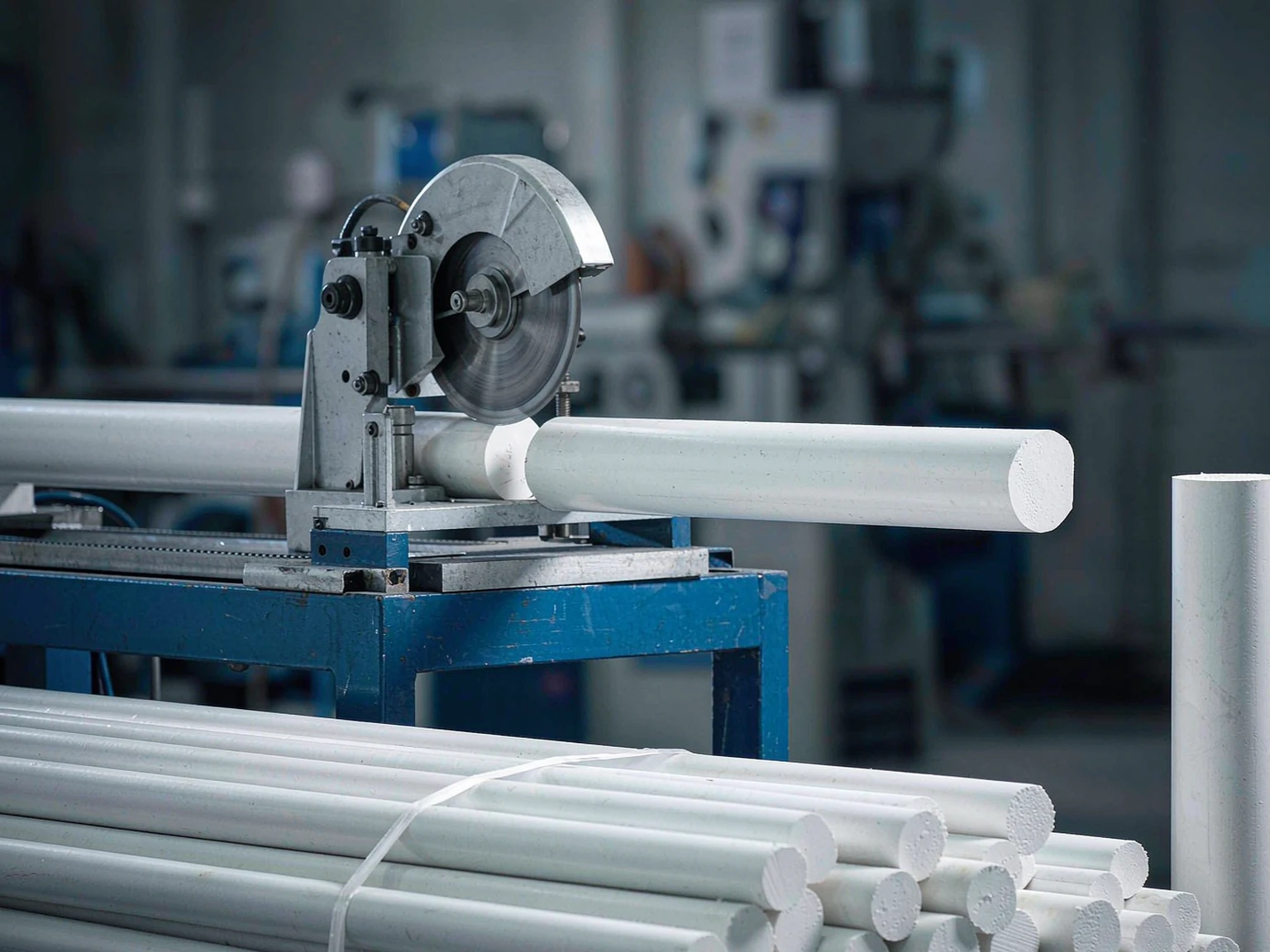
Short answer: Order PTFE rod cut-to-length when your machining process benefits from dimensional consistency and reduced handling — high-volume turning of consistent blanks, automated feeding, or shops without saw capacity. Order full-length stock when flexibility matters — varied part lengths, frequent changeovers, or when offcuts feed other jobs. Cutting service costs a little per piece and saves setup time, material waste, and handling damage.
Cut-to-length is a small service with outsized effects on shop flow. The decision is about where you want to spend your own hours.
When Cut-to-Length Pays
| Your situation | Why cutting service wins |
|---|---|
| High-volume turning of same-length blanks | Consistent blanks → consistent cycle times, less first-piece adjustment |
| Bar feeding / automated lathes | Pre-cut, square blanks feed without jamming |
| No saw or limited saw capacity | Outsource the operation and its scrap rate |
| Multiple machines consuming same stock | Cut once at source; no redundant handling |
When Full Length Wins
- Varied part lengths: you optimize each cut yourself against the current job mix.
- Frequent changeovers: fixed-length blanks lock you into yesterday’s plan.
- Offcut economy: remnant offcuts feed small jobs; pre-cut lengths generate uniform drops that are harder to use.
- Length tolerance isn’t tight anyway: if your first operation is facing, cutting precision adds cost without value.
Specifying the Cutting Service
State length with tolerance (±0.5 mm standard from a stop system; ±0.2 mm achievable), squareness expectation, deburr/chamfer if your process wants it, and packaging (bundled, lot-marked). Ask whether cutting happens before or after any certificate measurement — dimension records should reflect delivered state. Chunhuan provides rod and tube cut-to-length on automated saws with length and squareness checks, integrated with the molding lot certificate so traceability survives the cutting step.
Frequently Asked Questions
When should I order PTFE rod cut to length?
For high-volume consistent blanks, automated bar feeding, or when saw capacity is limited — the service saves setup time and reduces handling damage.
When is full-length PTFE stock the better buy?
With varied part lengths, frequent changeovers, and useful offcut economy — fixed blanks reduce flexibility that your shop may need.
What tolerance can cut-to-length PTFE rod hold?
±0.5 mm from stop systems routinely; ±0.2 mm achievable. If your first operation is facing, tighter cutting tolerances add cost without value.
Should cut lengths come with chamfers or deburring?
Optional and worth specifying if your process benefits — state it in the order along with lot-marked, bundled packaging.



 English
 Russian
 French
 Spanish
