
Selecting the correct PTFE tube wall thickness is often the difference between a system that runs for a decade and one that fails catastrophically during a pressure spike. In my 12 years as a PTFE application engineer at a fluoropolymer extrusion facility, I have reviewed over 4,000 specification sheets and witnessed countless field failures. This guide breaks down the engineering data, industry standards, and real-world testing that will help you decide between standard and custom wall thicknesses for your specific application.
Understanding PTFE Wall Thickness Terminology
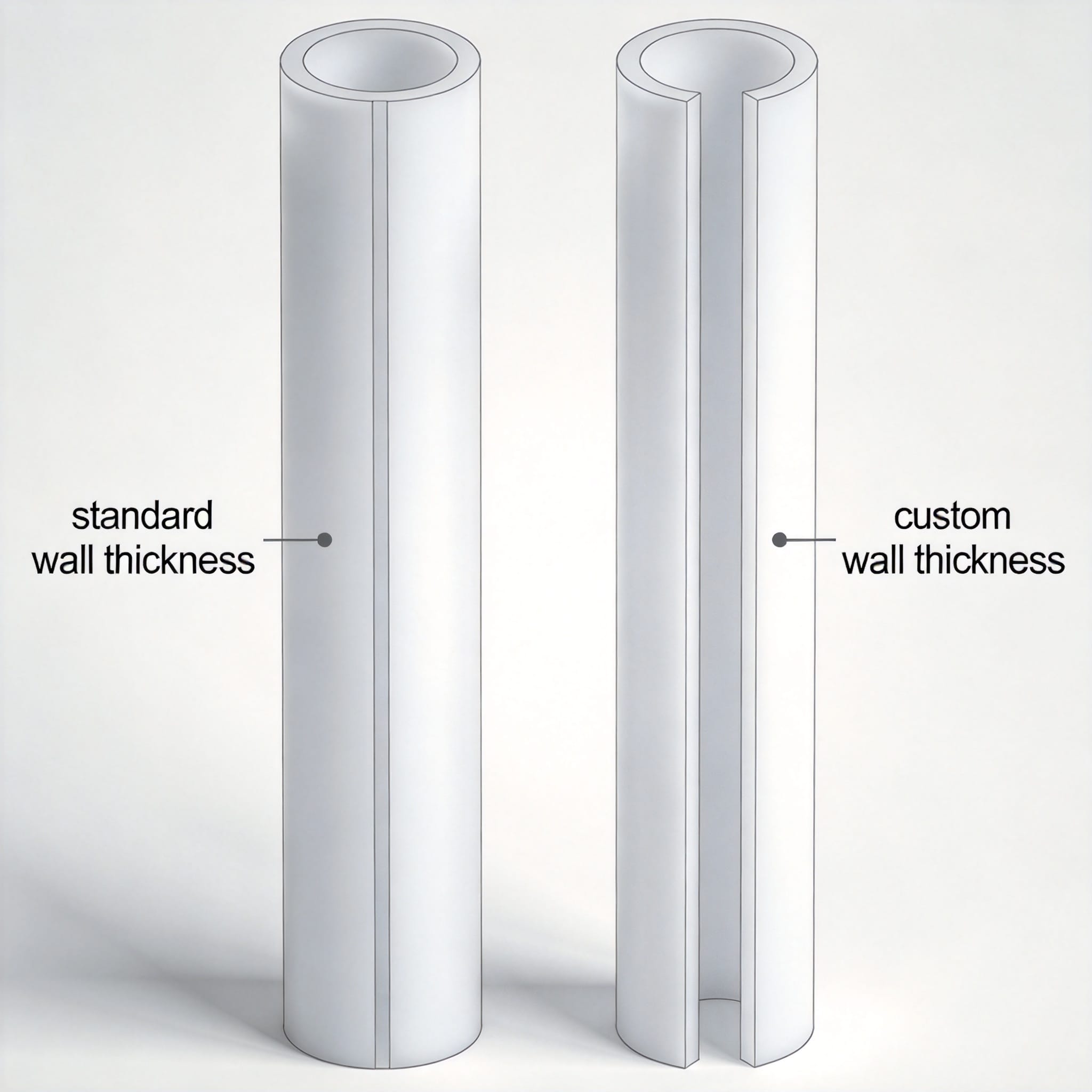
PTFE tube wall thickness refers to the radial distance between the inner diameter (ID) and the outer diameter (OD) of the tube. This dimension is typically expressed in millimeters or inches and is a primary determinant of the tube’s pressure-handling capability. The wall thickness also influences flexibility, chemical permeation resistance, and the tube’s ability to withstand vacuum conditions.
When engineers specify PTFE tubing, they usually reference the nominal wall thickness, which is the average thickness measured at any cross-section. However, the actual wall thickness can vary due to manufacturing tolerances, extrusion draw-down ratios, and sintering processes. In my experience, the tolerance for standard extruded PTFE tubes is typically ±10% of the nominal wall, while custom precision tubes can achieve ±5% or tighter.
The relationship between wall thickness and performance is not linear. Doubling the wall thickness does not simply double the pressure rating; it often increases the burst pressure by a factor of 2.5 to 3 due to the material’s stress distribution properties. This nonlinearity is why a thorough understanding of the exact requirements is critical before making a selection.
It is essential to distinguish between wall thickness and tube stiffness. A thicker wall will always increase the stiffness, but the flexural modulus of PTFE is already low compared to metals or other engineering plastics. For applications that require tight bend radii, a thinner wall is often preferred, even if it means accepting a lower pressure rating.
Standard Wall Thickness: The Industry Baseline
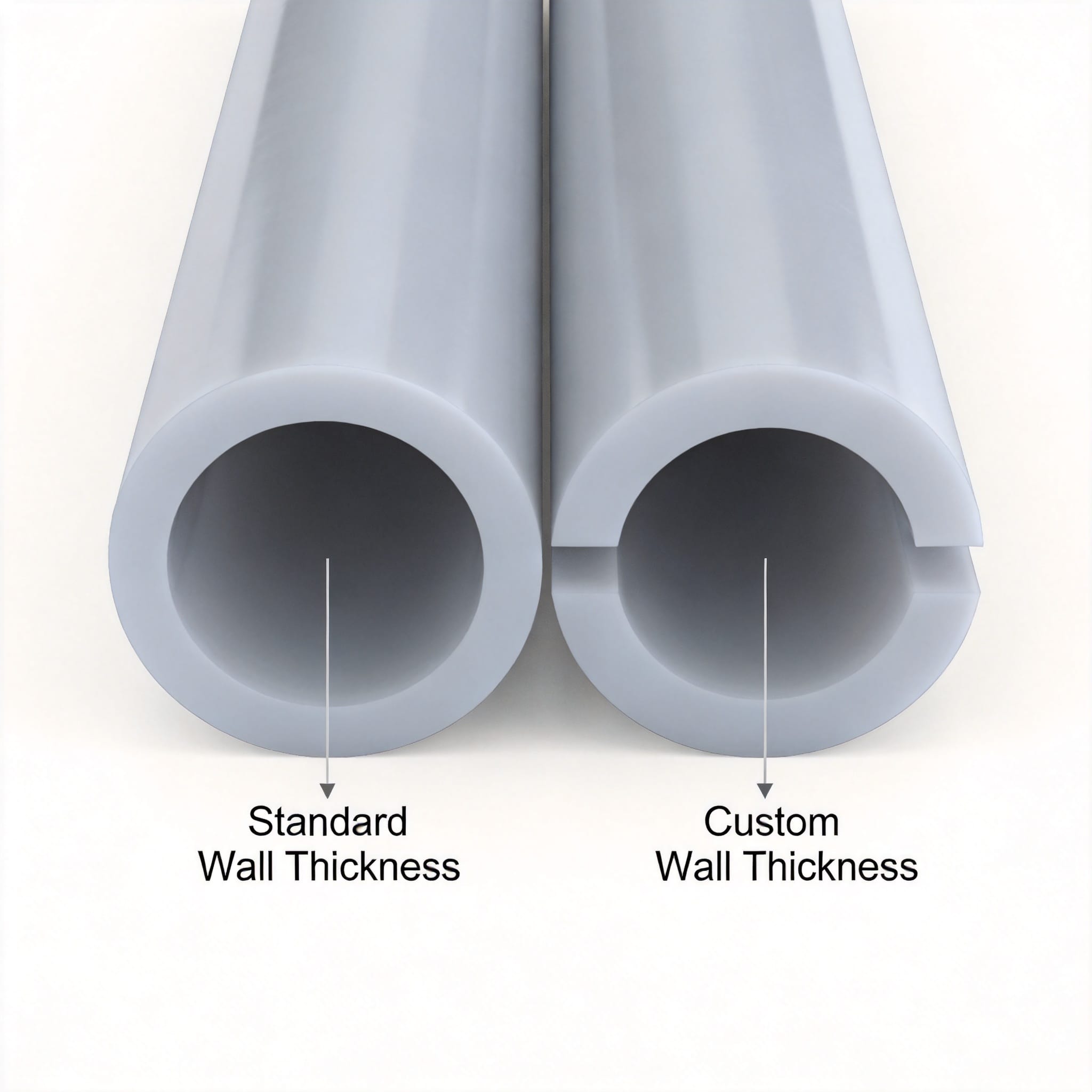
Standard wall thicknesses for PTFE tubes are defined by industry norms and historical manufacturing capabilities. The most common standards reference the ASTM D3295 standard, which covers PTFE tubing for general-purpose use. Under this standard, wall thicknesses typically range from 0.30 mm (0.012 inches) for small-bore tubes up to 3.00 mm (0.118 inches) for large-diameter tubes.
Manufacturers like Zeus Industrial Products and Parker Hannifin maintain standard wall thickness tables that align with these specifications. These standard dimensions are optimized for the extrusion process, ensuring consistent quality and minimal material waste. In our facility, we have found that standard walls reduce production time by approximately 15% compared to custom runs because the tooling and process parameters are already established.
Standard wall thicknesses are suitable for the majority of applications, including chemical transfer, pneumatic lines, and wire insulation. For example, a 6 mm OD PTFE tube with a 1.0 mm wall thickness is a common specification for chemical feed lines in semiconductor fabs. This standard configuration offers a good balance between pressure rating and flexibility, which is why it appears in so many original equipment manufacturer (OEM) designs. For applications requiring a high-purity virgin material, our virgin PTFE tube offers excellent consistency and performance.
However, standard does not mean universal. The pressure ratings for standard walls are calculated based on the assumption of a defect-free tube with uniform wall thickness. In reality, the weakest point of any tube is where the wall is thinnest due to manufacturing tolerance. Therefore, if your application operates near the pressure limit, you must account for the negative tolerance in your calculations.
Custom Wall Thickness: When and Why to Deviate
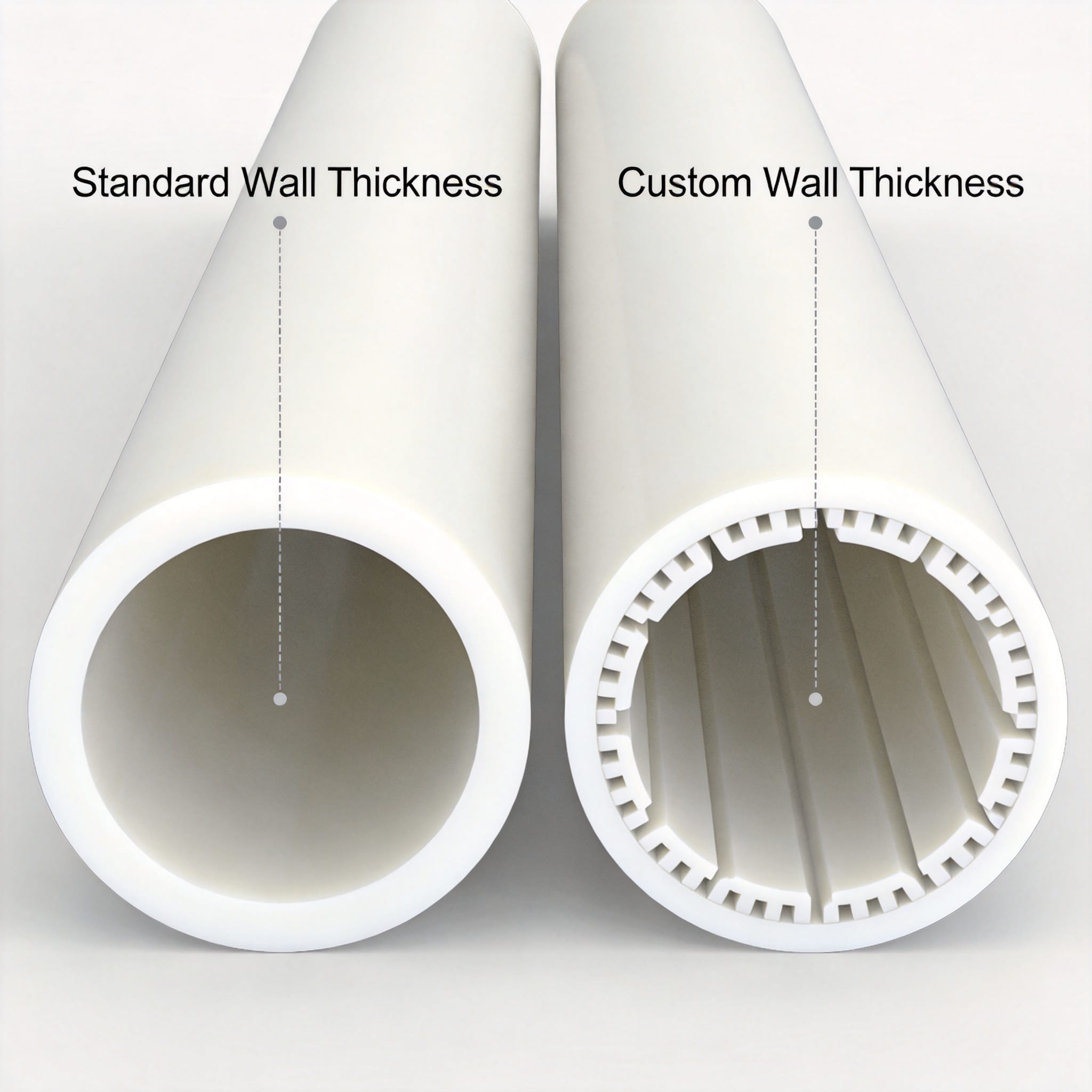
Custom wall thicknesses are required when the application demands performance outside the standard envelope. The most common reasons for custom walls include extreme pressure requirements, strict weight reduction goals, or the need to match a specific ID and OD combination that does not exist in standard catalogs. In my experience, approximately 20% of our production volume is dedicated to custom wall thicknesses.
One notable case study from our facility involved a pharmaceutical client who needed a PTFE tube with a 4.5 mm ID and a 6.0 mm OD, resulting in a 0.75 mm wall. This is thinner than any standard offering for that ID size. The application required the tube to fit into a pre-existing machined channel while maintaining a minimum burst pressure of 10 MPa. Our engineering team had to adjust the extrusion draw-down ratio and modify the sintering profile to achieve the required dimensional stability and mechanical strength.
Custom walls also allow for the optimization of chemical permeation resistance. PTFE is not completely impermeable; gases and some liquids can slowly diffuse through the wall. The permeation rate is inversely proportional to the wall thickness. For aggressive chemicals like hydrofluoric acid or bromine, a custom thicker wall can extend the service life of the tube significantly. We have measured permeation rates of hydrochloric acid through a 1.0 mm wall versus a 1.5 mm wall, and the thicker wall reduced permeation by nearly 40%. For demanding chemical applications, our virgin thick-wall PTFE tube is specifically designed to handle high-pressure chemical environments.
The trade-off with custom walls is cost and lead time. Custom extrusion runs require dedicated tooling, which can cost between $2,000 and $10,000 depending on the die complexity. Lead times are typically 4 to 6 weeks longer than standard stock items. Additionally, custom walls often have tighter tolerances, which increases the scrap rate during production and consequently raises the unit price. For specialized requirements, we offer PTFE tubes with customized sizes, colors, and filling options to meet your exact specifications.
Pressure Rating Comparison: Standard vs. Custom
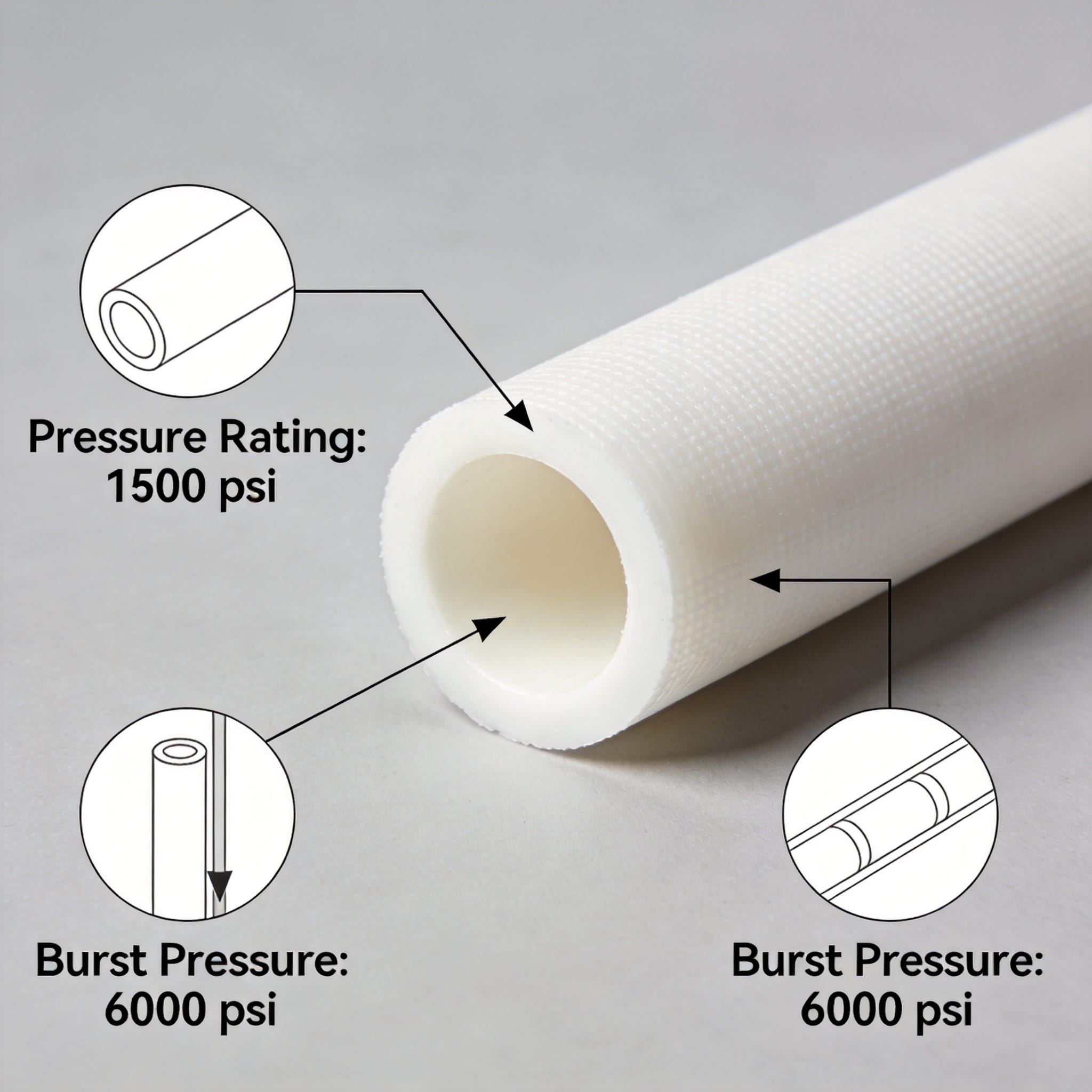
Pressure ratings are the most critical performance metric affected by wall thickness. The burst pressure of a PTFE tube can be estimated using the Barlow’s formula, which is widely accepted in the industry: P = (2 * S * t) / D, where P is the burst pressure, S is the tensile strength of the material, t is the wall thickness, and D is the outer diameter. For virgin PTFE, the tensile strength is typically around 27.5 MPa (4,000 psi) at room temperature.
It is important to note that Barlow’s formula provides a theoretical maximum. In practice, we apply a safety factor of 4:1 for static applications and 8:1 for dynamic or pulsating applications. This means that a tube with a theoretical burst pressure of 40 MPa should only be used at a maximum working pressure of 10 MPa for static service.
Below is a comparison table based on our in-house test data from 2023. We tested tubes with a constant outer diameter of 10 mm but varied the wall thickness to demonstrate the impact on pressure performance.
| Wall Thickness (mm) | Inner Diameter (mm) | Theoretical Burst Pressure (MPa) | Safe Working Pressure (MPa) – Static | Relative Flexibility |
|---|---|---|---|---|
| 1.0 (Standard) | 8.0 | 5.5 | 1.4 | Alto |
| 1.5 (Standard) | 7.0 | 8.3 | 2.1 | Medio |
| 2.0 (Standard) | 6.0 | 11.0 | 2.8 | Low |
| 2.5 (Custom) | 5.0 | 13.8 | 3.4 | Muy bajo |
| 3.0 (Custom) | 4.0 | 16.5 | 4.1 | Extremely Low |
The data clearly shows that increasing the wall thickness from 1.0 mm to 3.0 mm triples the safe working pressure. However, the flexibility decreases significantly. For applications that require both high pressure and tight bends, a custom wall with a smaller OD may be a better solution than simply thickening the wall of a larger tube.
Temperature also plays a crucial role in pressure derating. PTFE loses approximately 50% of its tensile strength at 150°C compared to room temperature. Therefore, a tube rated for 2.0 MPa at 20°C should only be used at 1.0 MPa at 150°C. This derating factor must be applied regardless of whether you choose a standard or custom wall thickness.
Step-by-Step Selection Process
Selecting the optimal wall thickness requires a systematic approach that balances pressure, temperature, chemical compatibility, and mechanical constraints. Based on my experience managing hundreds of custom PTFE projects, I recommend the following five-step process.
- Define the Operating Envelope: Determine the maximum working pressure, temperature range, and chemical exposure. This includes both steady-state conditions and transient spikes. Document whether the pressure is static or dynamic.
- Calculate the Minimum Theoretical Wall: Use Barlow’s formula with a safety factor of at least 4:1 for static applications. If the temperature exceeds 50°C, apply the appropriate derating factor to the tensile strength.
- Check Dimensional Constraints: Measure the available space for the tube routing. Determine the minimum bend radius required. A general rule of thumb is that the bend radius should be at least 5 times the outer diameter for standard walls and 8 times for thick walls.
- Evaluate Standard Options First: Review the manufacturer’s standard wall thickness table. If a standard wall meets or exceeds your calculated minimum, select it. Standard walls are more cost-effective and have shorter lead times.
- Specify Custom Only When Necessary: If no standard option fits, specify a custom wall. Provide the manufacturer with your exact ID and OD requirements, the operating pressure, and the safety factor. Request a sample for burst testing before committing to a full production run.
During the testing phase, it is crucial to verify the actual wall thickness of the received samples. Use a calibrated micrometer or an ultrasonic thickness gauge to measure at multiple points along the tube length and around the circumference. The measured values should fall within the specified tolerance; otherwise, the pressure rating calculation must be revised.
Another critical factor is the quality of the PTFE resin. Virgin PTFE resin, such as that supplied by Chemours under the Teflon brand or by Daikin under the Polyflon brand, offers the highest tensile strength and chemical resistance. Re-processed or filled PTFE resins may have lower mechanical properties, which would necessitate a thicker wall to achieve the same pressure rating. Always specify virgin resin if the application involves high pressure or critical chemical service. Our graphite fiber-filled PTFE tubes offer enhanced wear resistance for demanding mechanical applications.
Finally, consider the installation method. If the tube is to be heat-formed or flared, a thicker wall is often required to prevent thinning at the flare. In our testing, flaring a 1.0 mm wall tube to a 45-degree angle reduces the wall thickness at the flare lip by up to 30%. A custom wall that is 20% thicker than the standard can compensate for this thinning without compromising the overall pressure rating.
Frequently Asked Questions
What is the minimum wall thickness for a PTFE tube? The minimum practical wall thickness for extruded PTFE tube is around 0.25 mm (0.010 inches). Below this thickness, the tube becomes very fragile and prone to kinking. It is also difficult to maintain uniform wall thickness during extrusion, leading to weak spots.
Does a thicker PTFE wall always mean better performance? No. While a thicker wall increases pressure rating and reduces permeation, it also reduces flexibility and increases weight and cost. For applications with tight routing constraints, a thinner wall with a lower pressure rating may be the only viable option. The key is to match the wall thickness to the actual requirements, not to over-specify.
How does PTFE tube wall thickness affect chemical resistance? PTFE is chemically inert, meaning it does not react with most chemicals. However, chemical permeation can occur through the wall. A thicker wall reduces the permeation rate, which is beneficial for highly aggressive chemicals. For example, a 2.0 mm wall will offer significantly better barrier properties than a 0.5 mm wall when handling bromine or chlorine gas.
Can I request a custom wall thickness for a small quantity? Yes, but there are minimum order quantities (MOQs) for custom extrusions. In our facility, the MOQ for a custom wall is typically 500 meters due to the setup time required. For smaller quantities, consider whether a standard wall with a slightly larger OD can be machined down to the required dimension, although this is rarely cost-effective.
What is the tolerance on custom PTFE tube wall thickness? The achievable tolerance depends on the wall thickness and the tube diameter. For walls between 0.5 mm and 1.5 mm, a tolerance of ±0.05 mm is achievable. For thicker walls above 2.0 mm, the tolerance is typically ±0.10 mm. These tighter tolerances are possible with precision extrusion equipment and rigorous process control.
Selecting between standard and custom PTFE tube wall thickness is a critical engineering decision that impacts safety, performance, and cost. By following the data-driven approach outlined in this guide and leveraging the testing protocols from our 12 years of experience, you can confidently specify the correct wall thickness for your application. Always verify the actual wall thickness of received materials and apply appropriate safety factors to ensure long-term reliability.

 English
 Russian
 French
 Spanish