
Short answer: PTFE is chemically attacked by almost nothing at process temperatures — only molten alkali metals and elemental fluorine are genuine exceptions — so in real equipment the failures you will actually see are permeation, absorption into the polymer, and mechanical issues mistaken for chemical attack. Evaluating application data means checking those three, in that order, with concentration, temperature and mixtures in hand.
Chemical-resistance charts put “PTFE: compatible” next to nearly every substance, which makes them nearly useless for design decisions. Two suppliers can quote the same chart and one system will fail. This guide explains what the charts do not show, and how to evaluate your application’s data like a materials engineer rather than a browser of compatibility tables.
What the charts actually measure — and what they skip
Compatibility ratings describe degradation: chain scission, swelling, embrittlement. PTFE’s fully fluorinated carbon backbone is essentially immune to degradation across the entire industrial pH range, which is why the charts are green everywhere. But three other transport and mechanical phenomena cause field failures while the chart stays green:
- Permeation: small molecules (chlorine, HCl, bromine, solvents, moisture) diffuse through the wall without changing it. Rate scales with temperature, partial pressure gradient and inversely with thickness. The liner looks perfect and the fluid appears behind it.
- Absorption: some solvents enter the polymer mass (a few percent by weight in the worst cases), causing dimensional change and blowing out during rapid temperature rise.
- Mechanically-assisted failure: permeate trapped behind a rigid liner expands on heat-up — “blistering” that looks chemical but is a pressure phenomenon.
Evaluating your application data in five steps
- Define the worst case, not the normal case: highest concentration (including out-of-spec excursions), maximum temperature (including steam-out and cleaning), and the mixture effects. Mixtures can behave differently from any single component — charts rarely cover them.
- Check degradation last: screen for the genuine exclusions (molten alkali metals, elemental fluorine at elevated temperature, some complex amines at high temperature for PFA/PTFE blends).
- Quantify permeation for small molecules: for chlorine, HCl and low-boiling solvents, ask for thickness recommendations and field data at your temperature band rather than a yes/no rating.
- Ask for absorption data on solvent service if the part is dimension-critical or will see rapid thermal ramps.
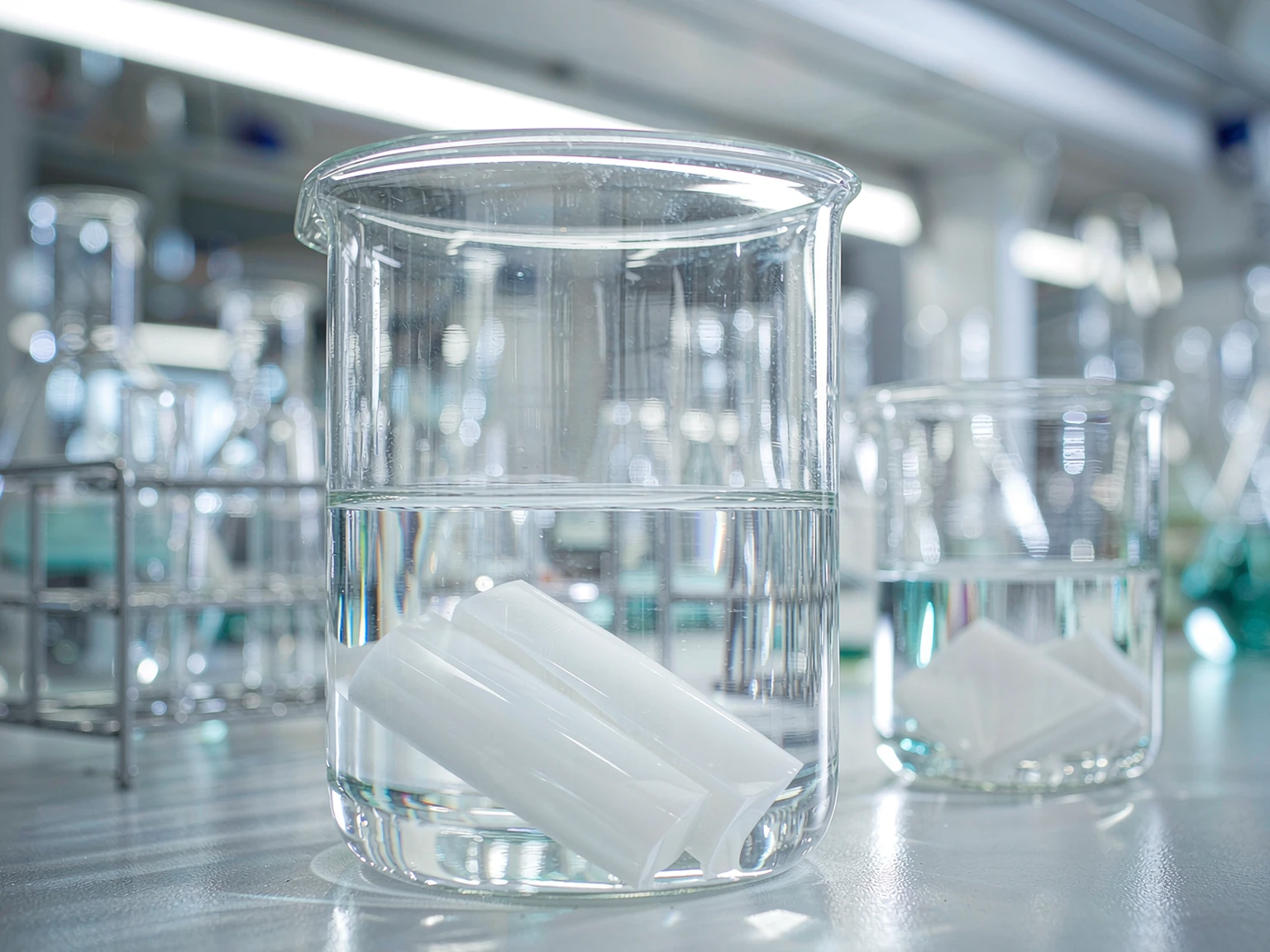
- Validate with a coupon test when the duty is unusual: measured weight/dimensional change and visual inspection after exposure at real conditions beats any chart. A serious manufacturer supports coupon testing; Chunhuan does for non-standard duties.
Quick reference: common media behavior in PTFE service
| Media | Degradation risk | Practical watch-point |
|---|---|---|
| Sulfuric/hydrochloric acid (all conc.) | Negligible | Permeation of HCl through thin liners at elevated temperature |
| Caustic (NaOH/KOH) | Negligible below molten state | None material-related; design for thermal cycling |
| Chlorine (wet/dry) | Negligible | Permeation and adsorption; venting and thickness matter |
| Aromatic solvents (toluene, xylene) | Negligible | Absorption a few percent possible; check dimensional stability |
| Molten alkali metals / elemental F₂ | Attack | Genuine exclusions — do not use PTFE |
Turning evaluation into a specification
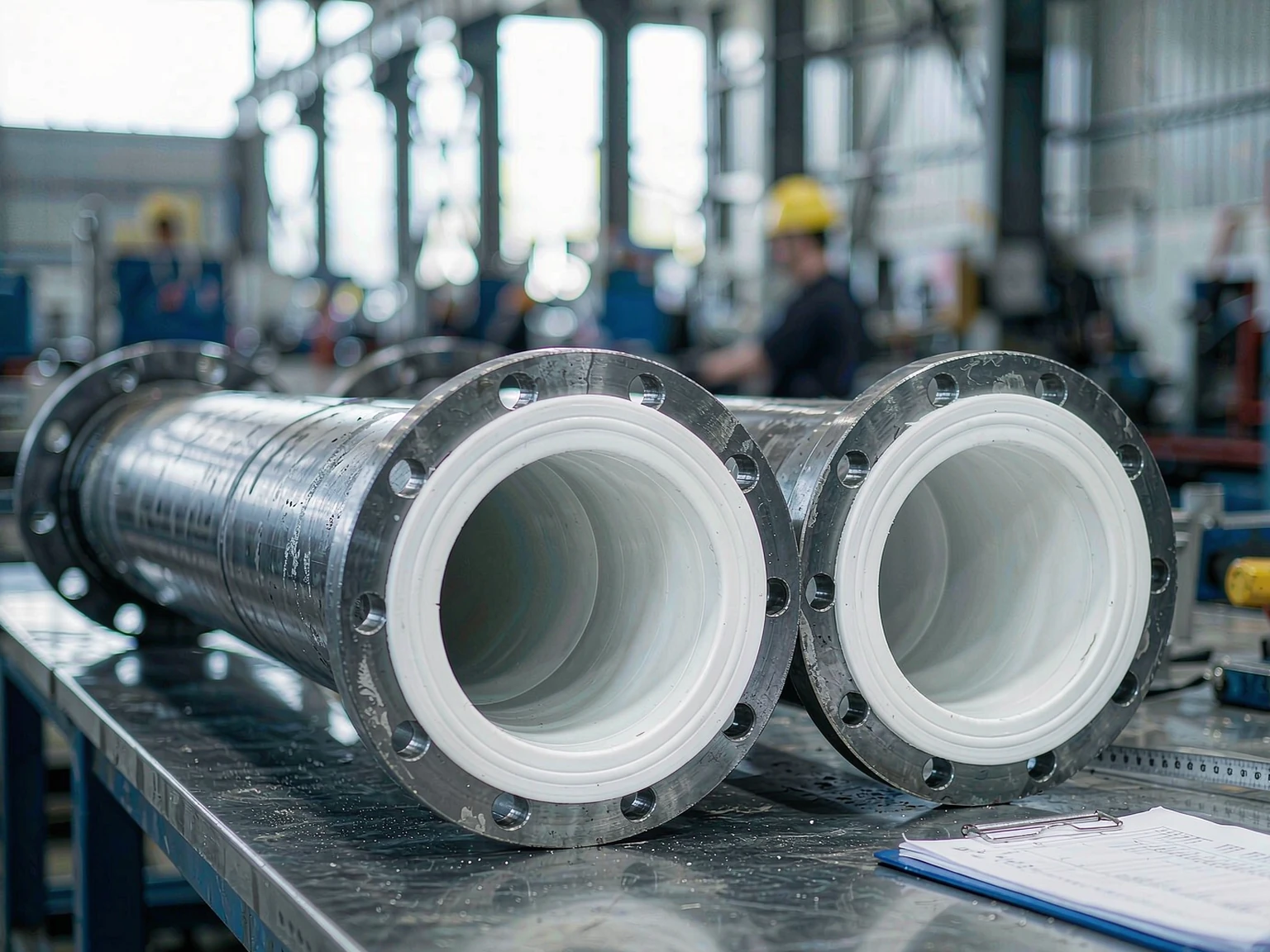
End every evaluation with three numbers in the spec: lining or wall thickness justified by permeation duty (not just catalogue default), maximum design temperature including excursions, and the acceptance test (spark test for liners, dimensional criteria where absorption matters). Chunhuan Group formulates filled and modified PTFE compounds — over 10,000 grades — for anti-corrosion lining and PTFE semi-finished products, and can provide application data and coupon-test support against your actual duty. Submit the media, concentrations and temperature band; the answer you get should cite data, not adjectives.
Frequently Asked Questions
What chemicals attack PTFE?
Practically only molten alkali metals and elemental fluorine at elevated temperature degrade PTFE. Everything else in industrial service is a transport or mechanical issue, not degradation.
If PTFE is compatible with everything, why do linings fail?
Field failures are usually permeation through the liner, solvent absorption, or pressure blisters during thermal cycling — none of which appear on compatibility charts.
How should I validate PTFE for an unusual chemical duty?
Run a coupon test at real conditions (concentration, temperature, duration) measuring weight, dimensional change and visual condition. Reputable manufacturers support coupon testing.
PTFE or PFA for aggressive chemical lining?
PTFE covers most duties to ~200-230°C; PFA offers better permeation resistance and smoother finish at higher cost. Decide on permeation duty and thermal cycling, not on the compatibility chart.

 English
 Russian
 French
 Spanish
