
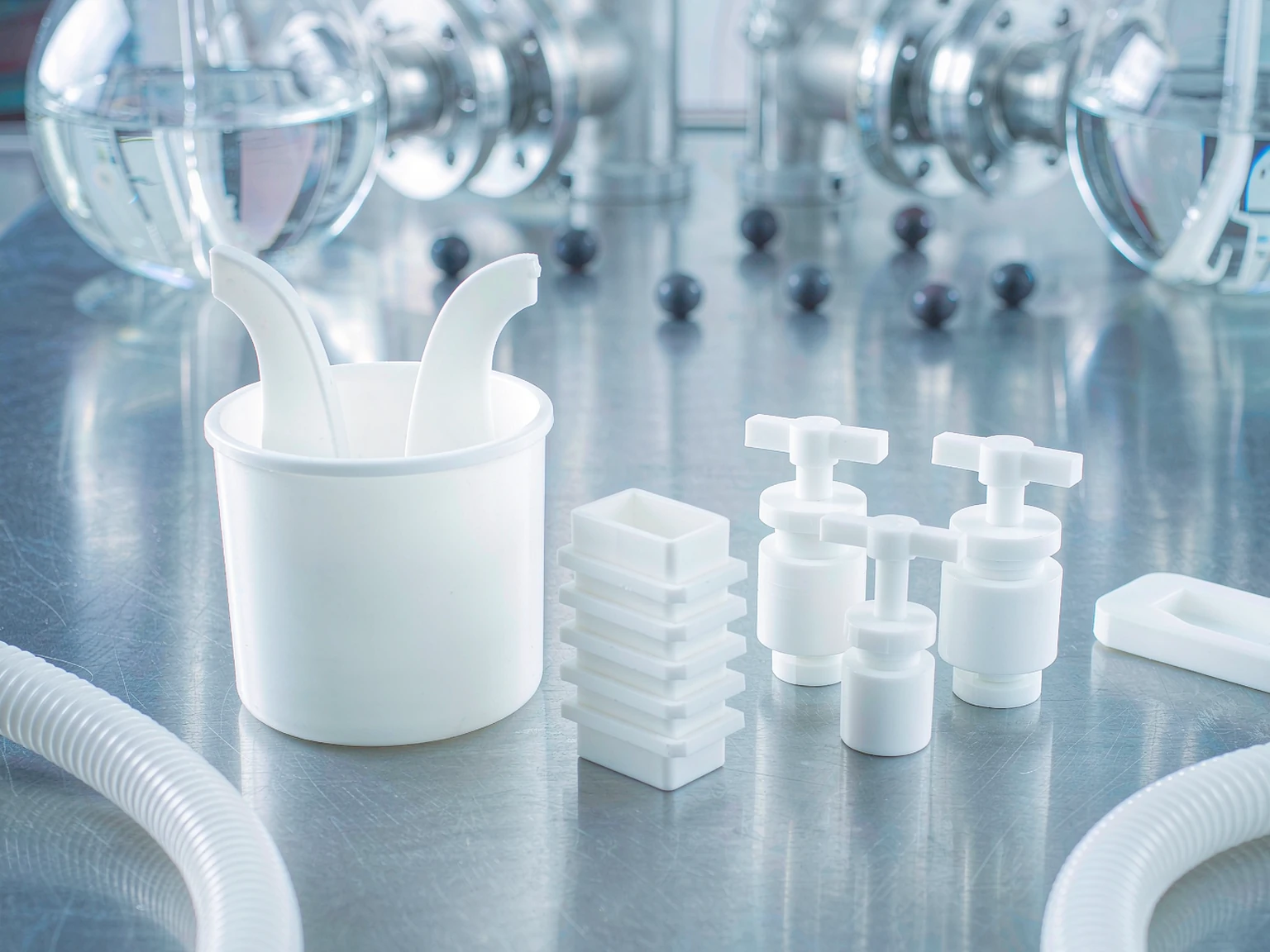
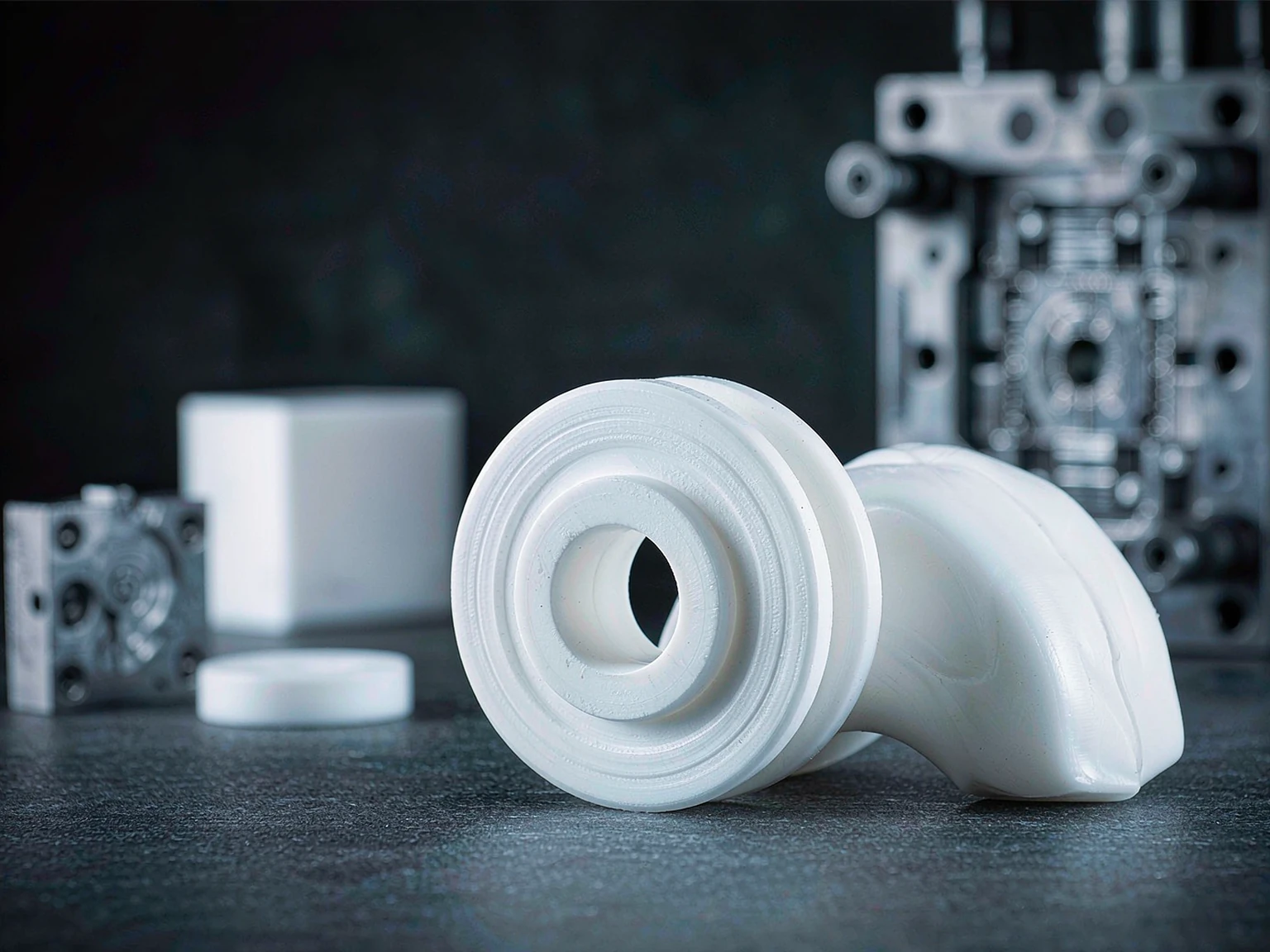
Short answer: specifying PTFE components for laboratory equipment means three things beyond dimensions: purity class (virgin resin, no additives for contact parts), the functional property as a test (dielectric, chemical exposure, dimensional stability), and clean-compatible geometry (radiused corners, no dead volume). Lab parts are small; the specification discipline is not.
Common lab components and their deciding spec
| Component | Deciding spec |
|---|---|
| Stirrer blades, impellers | Balance and shaft interface; virgin PTFE |
| Valve seats, stopcocks | Dimensional stability at temperature; machining grade |
| Insulating bushings | Dielectric strength per lot (10+ kV/mm thin wall) |
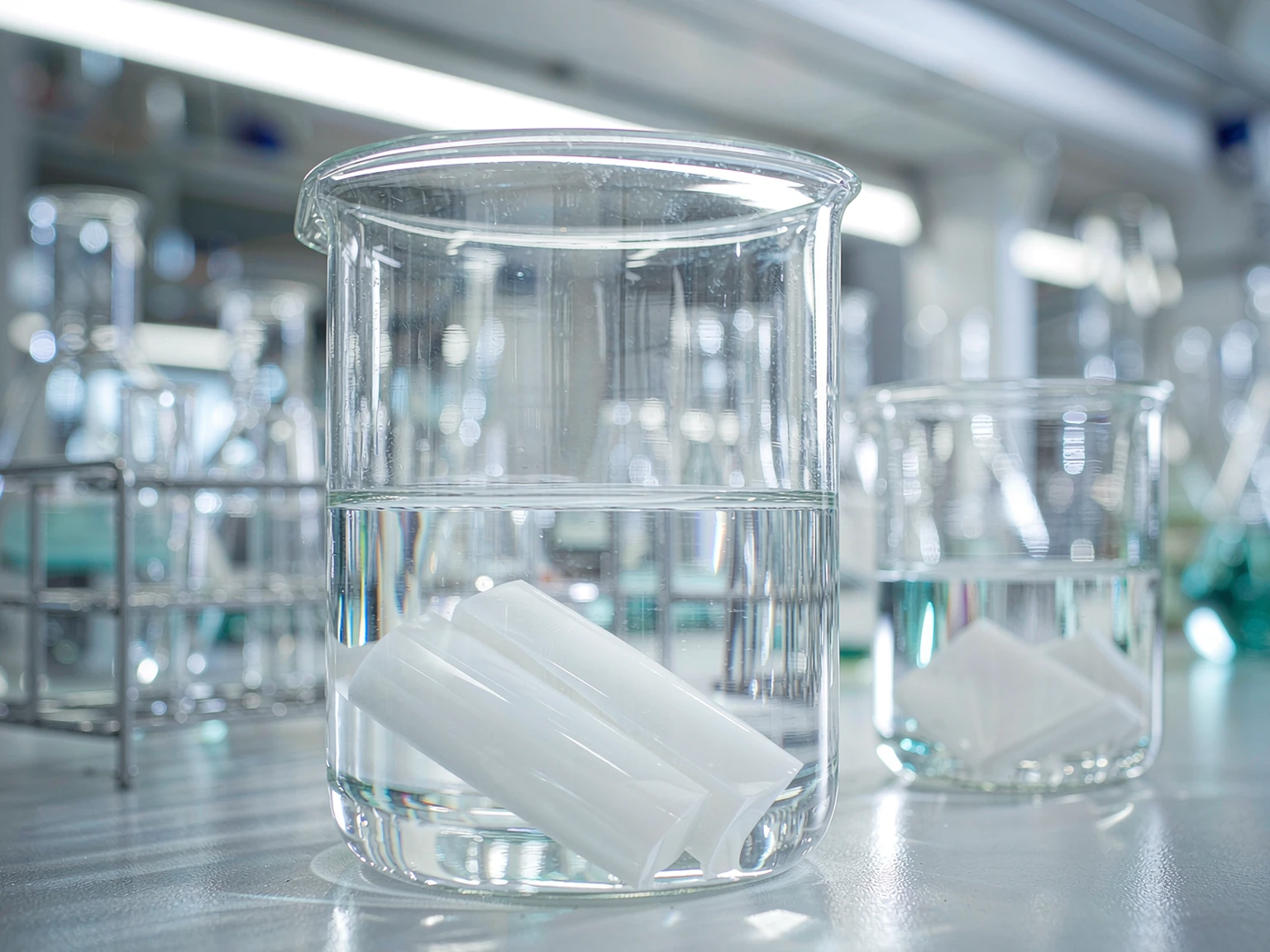
| Sample handling parts | Purity: extractables documentation |
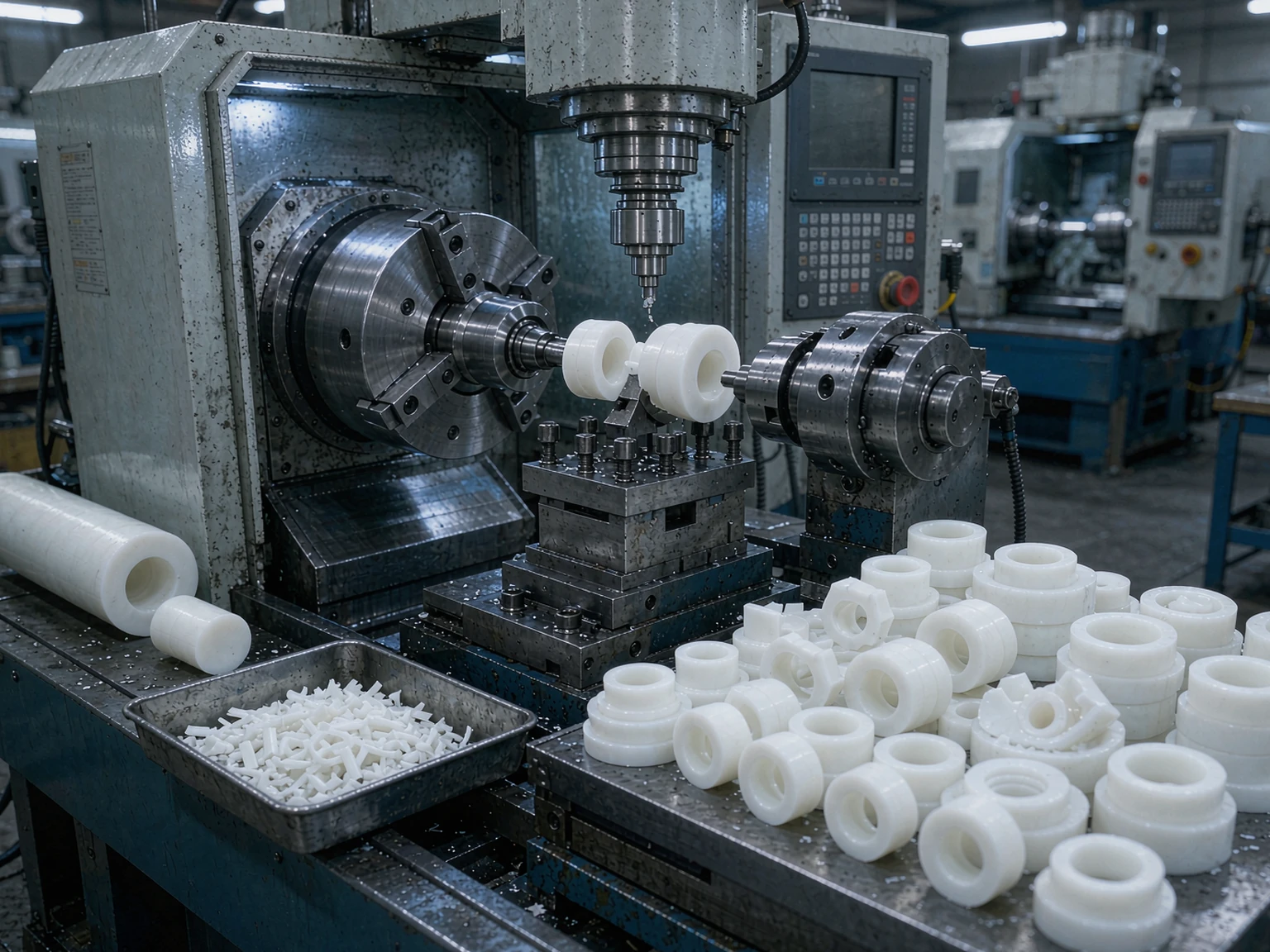
Chunhuan machines lab-scale PTFE parts from its own stock since 1985 with lot certificates — see the program. Send the function and exposure; low volumes are welcome and prototypes fast.
Frequently Asked Questions
What PTFE grade for laboratory equipment?
Virgin resin for contact and insulating parts; dielectric or extractables data as the applicable functional test, per lot.
Are prototype quantities viable for lab PTFE parts?
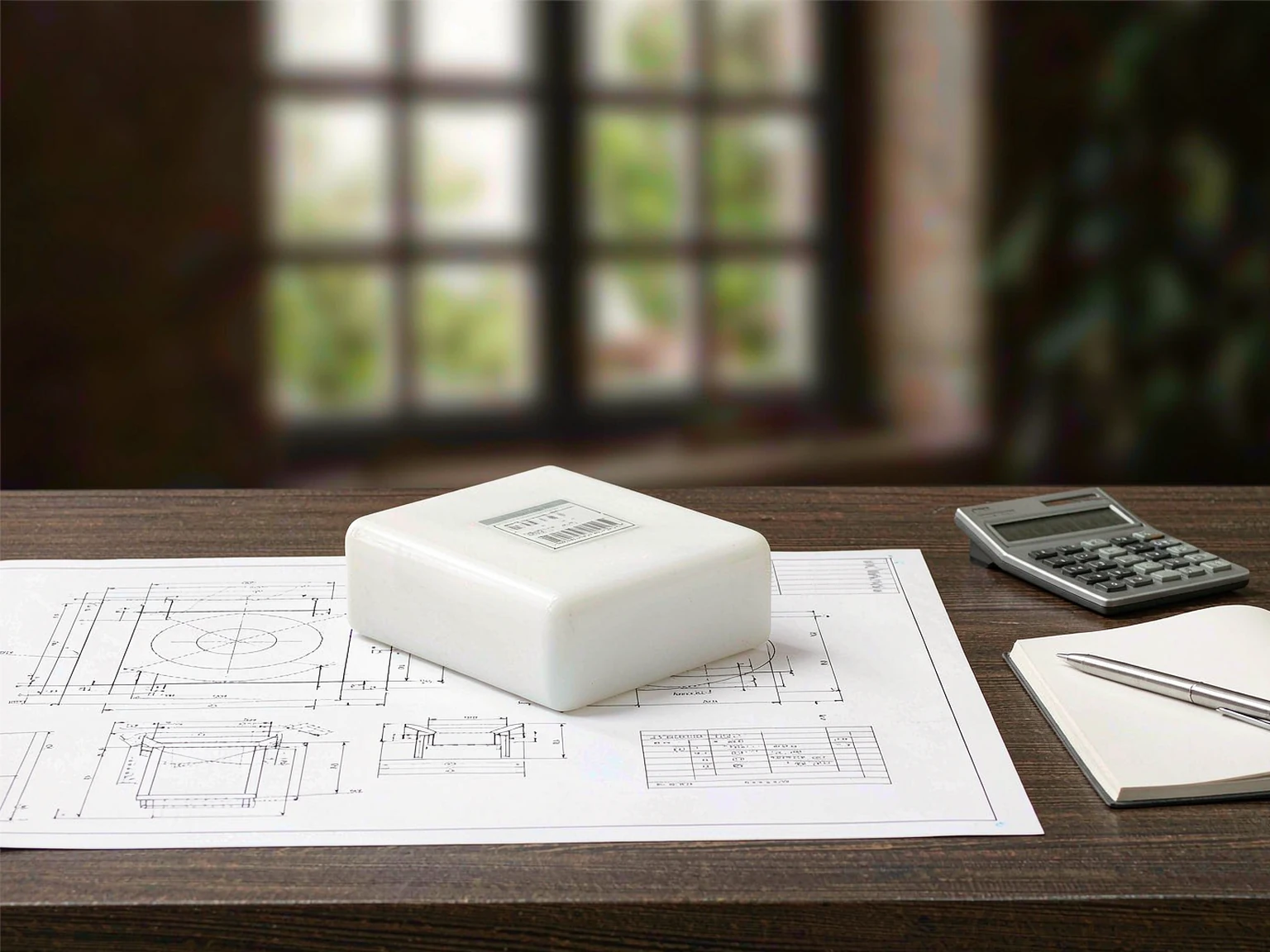
Yes — machining from stock requires no tooling; single pieces to low hundreds are routine.
What geometry suits lab cleaning?
Radiused corners, smooth bores, no dead volume — specify it; PTFE machines it easily.

 English
 Russian
 French
 Spanish
