
Short answer: compare virgin and filled PTFE gaskets on three axes: creep resistance (filled wins 2–5x), chemical universality (virgin wins marginally), and cost (virgin wins). If your gasket failed by leaking at a hot or cycled flange, filled is the answer; if it failed chemically at near-ambient service, neither grade was the problem.
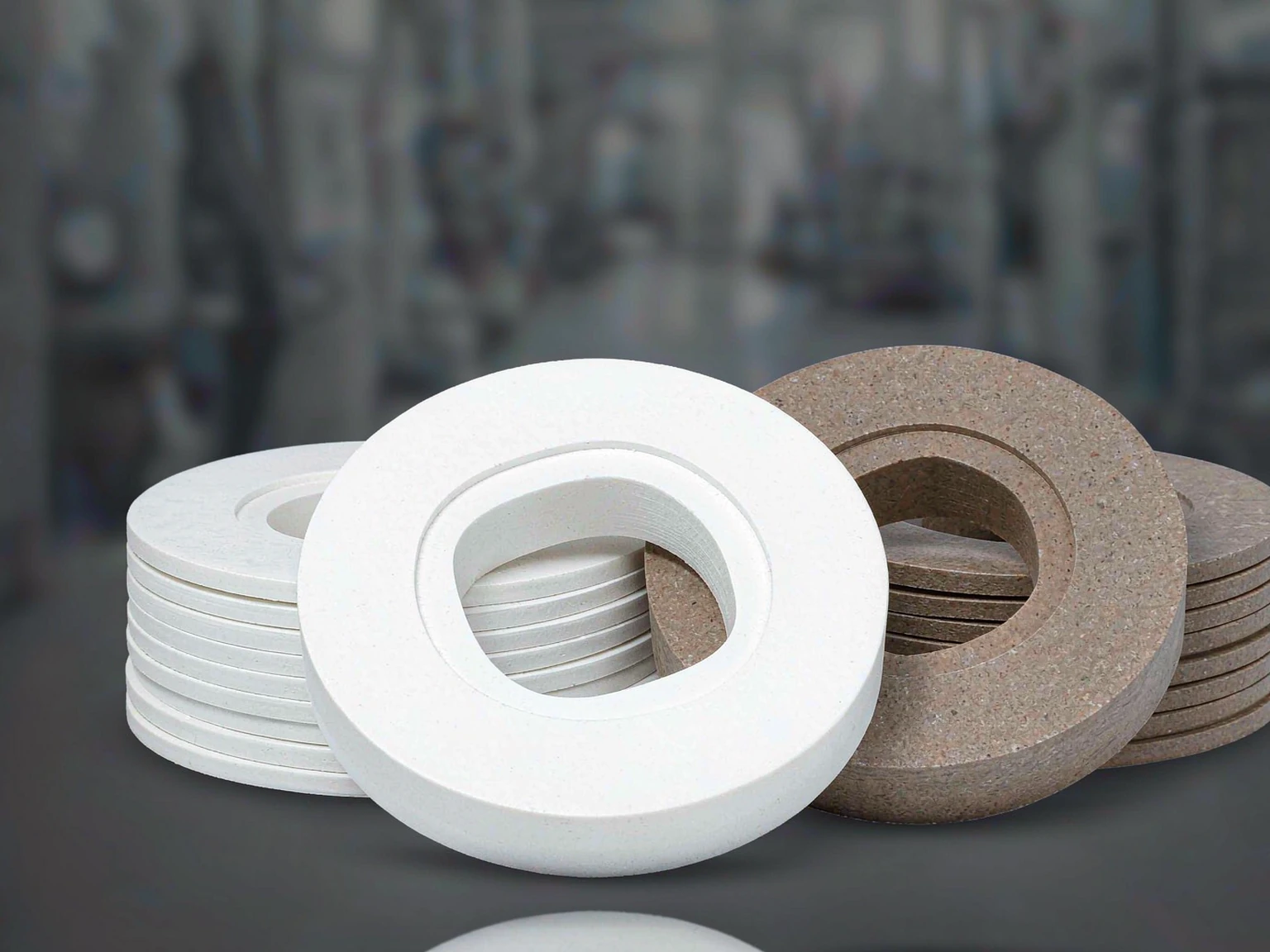
“Virgin versus filled” is usually framed as a quality question, which misleads. Both start from the same fluorocarbon backbone; fillers are added to fix specific weaknesses — creep, wear, thermal dimension stability — while trading away a little of the chemistry margin and dielectric performance. The comparison below is therefore per-property, with the typical values each grade delivers.
What fillers actually change
| Свойство | Первичный ПТФЭ | 15–25% glass-filled | Carbon/graphite-filled | Bronze-filled |
|---|---|---|---|---|
| Creep resistance | Baseline | 2–3x better | 2–3x better | 3–5x better |
| Compressive strength | Low | Better | Better | Much better |
| Wear in sliding | Poor | Better | Best (self-lubricating) | Better |
| Dielectric strength | Excellent | Reduced | Conductive — unsuitable | Reduced |
| Chemical range | Universal | Watch alkali attack on glass | Watch oxidizers on carbon | Watch acids on bronze |
| Relative price | 1× | ~1.2–1.3× | ~1.2–1.4× | ~1.1–1.3× |
Each filler has its own chemistry caveat — glass dislikes strong alkali, carbon oxidizes in strong oxidizers, bronze corrodes in acids. That is why “filled” without naming the filler is not a specification you can hold anyone to.
Decision scenarios from the field
- Steam-traced caustic line: glass-filled — but confirm alkali concentration against filler exposure.
- Large storage flange, low bolt load: expanded PTFE often beats both — the comparison is not always virgin-vs-filled.
- Pump body gasket with vibration: bronze-filled for compressive strength.
- Instrument flange needing insulation: virgin only — carbon-filled conducts.
How to run the comparison on quotes
Demand tested values on finished sheet (tensile, elongation, density), the filler name and percentage, and a stated reason for the grade against your duty. Chunhuan formulates both families across PTFE gasket sheet with lot certificates since 1985. Send the flange data; the answer should name a grade and a torque practice.
Frequently Asked Questions
Is filled PTFE always better than virgin for gaskets?
No. Filled grades fix creep and wear; virgin keeps maximum chemical range and dielectrics. Choose by failure mode: leaks at hot flanges need filled, cold ambient service rarely does.
Which filler for which service?
Glass for hot general chemical duty (caution in strong alkali), carbon/graphite for sliding wear (unsuitable where insulation matters), bronze for compressive load (caution in acids).
How much better is creep resistance with fillers?
Typically 2-5x depending on filler type and content, measured as deformation under sustained load. This is the main reason filled gaskets stop hot-flange leaks.

 English
 Russian
 French
 Spanish
