
Short answer: Planning bulk PTFE rod and sheet supply as repeat purchases comes down to three moves: lock a written specification (grade, route, tolerances, certificates) so every batch is comparable, agree a call-off or framework structure with defined lead times instead of spot orders, and monitor batch consistency via certificates rather than re-testing everything. Price per kilo matters least across a year of purchases — consistency and availability matter most.
Bulk PTFE buying behaves like buying any engineered consumable: the real cost shows up in machining scrap and line-down events caused by inconsistent material, not in the invoice.
Move 1: The Locked Specification
One document: grade (with filler % if any), manufacturing route, size list with tolerance bands, certificate scope, packaging/marking. Attach it to the framework agreement so every release quotes against it — new batches are comparable to old ones by construction.
Move 2: Call-Off Structure
| Model | Best for |
|---|---|
| Fixed quarterly volumes | Predictable consumption; best pricing |
| Call-off against framework | Variable demand with guaranteed lead time |
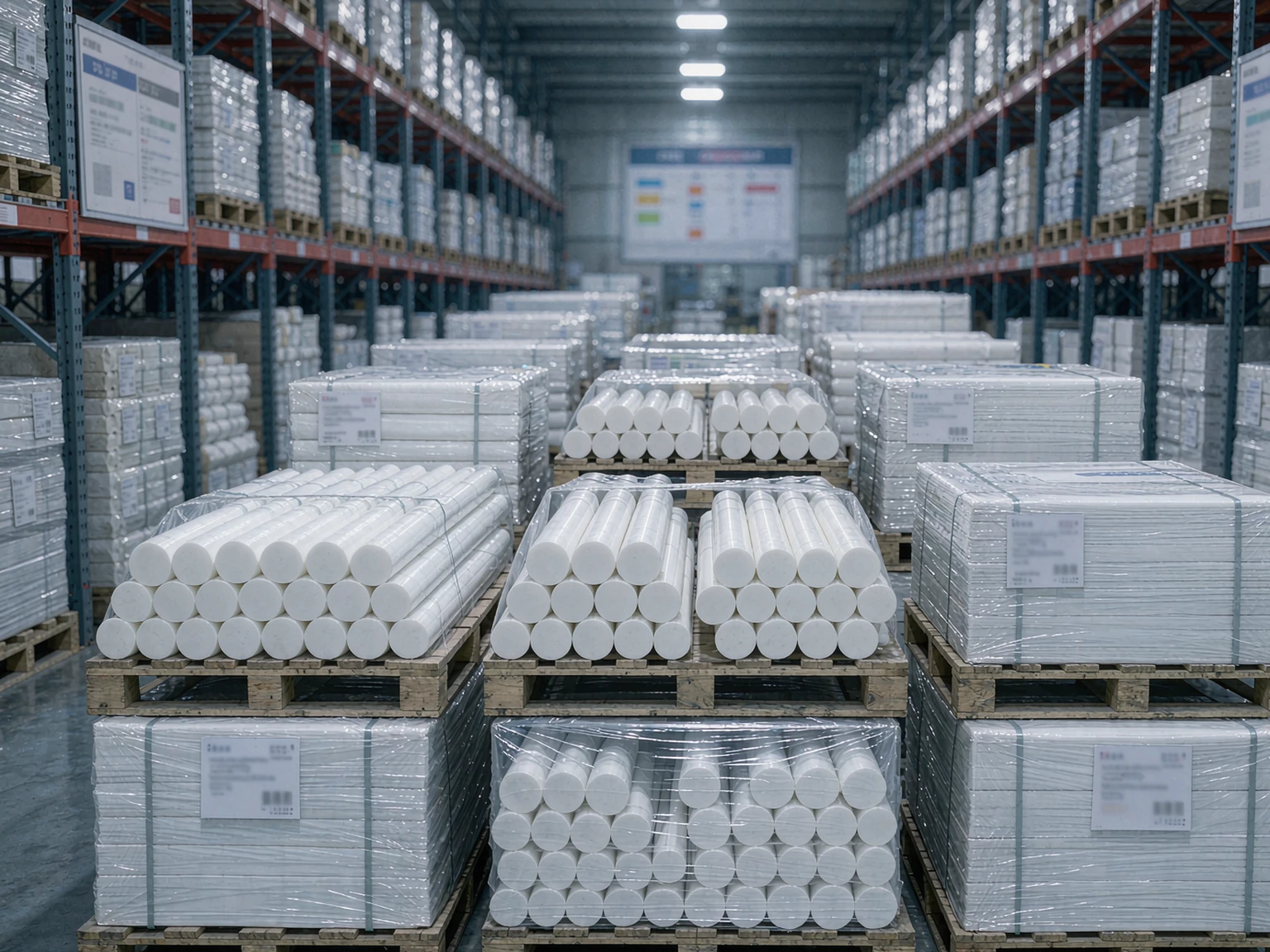
| Safety stock at supplier | Critical SKUs; supplier holds 2–3 months of your consumption |
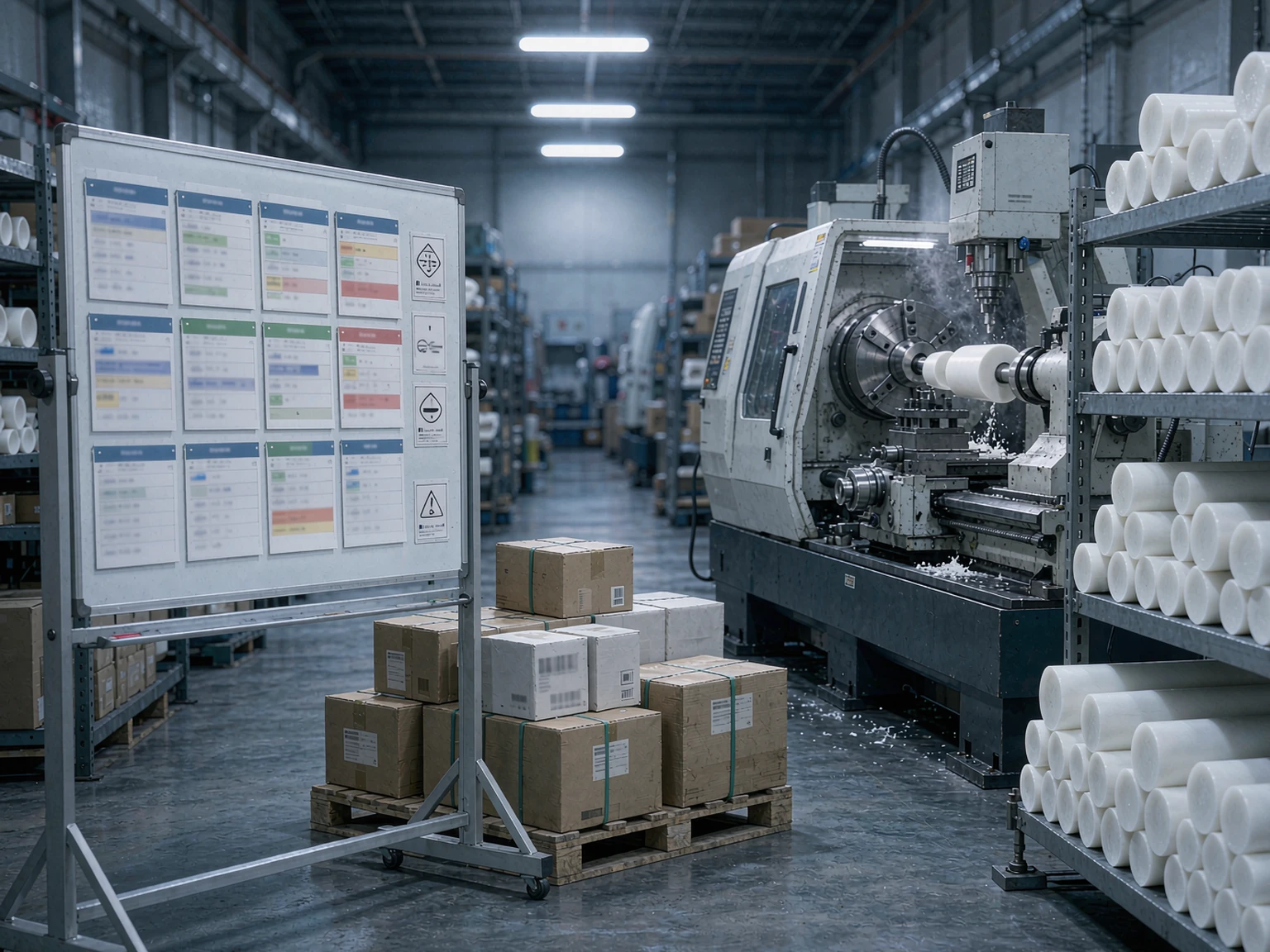
Discuss safety-stock terms explicitly — for a machining shop, running out of 50 mm rod stops a line; the stock agreement is worth more than a 3% discount.
Move 3: Certificate-Based Monitoring
Review lot certificates on arrival: density, dimensional band, and lot references against your spec. Spot-audit occasionally (send one batch for independent testing) rather than testing everything — the audit keeps the certificate honest.
Negotiating Without Poisoning the Well
Volume discounts are real; “requote everything every quarter” erodes the supplier’s willingness to hold safety stock and prioritize your orders. The stable-relationship discount beats the adversarial one over any 3-year horizon. Chunhuan supplies bulk rod and sheet against locked specs with call-off agreements, lot certificates, and safety-stock programs for machining customers — own molding since 1985 means batch comparability is structural, not promised.
Frequently Asked Questions
How should bulk PTFE purchases be structured?
A locked written specification plus a framework/call-off agreement with defined lead times — spot orders make batches incomparable and lead times unreliable.
What is a call-off agreement for PTFE stock?
A framework contract fixing spec and pricing, under which you release orders as needed — combining volume pricing with demand flexibility.
Should I ask my PTFE supplier to hold safety stock?
Yes for critical SKUs — 2–3 months of consumption at the supplier protects against line-down events, often worth more than a small unit-price discount.
How do I monitor bulk PTFE quality without testing every batch?
Review lot certificates against the locked spec on arrival, and spot-audit with independent lab testing occasionally to keep certificates honest.


 English
 Russian
 French
 Spanish
