
Selecting the correct core material for an enveloped gasket is a decision that directly impacts flange sealing integrity and operational safety. For decades, the industry relied heavily on asbestos rubber sheets, but regulatory shifts and performance data have driven a significant transition toward non-asbestos alternatives. In this guide, we will compare the physical properties, chemical resistance, and real-world application data for both core types to help you make an informed specification choice.
1. Understanding Enveloped Gasket Cores
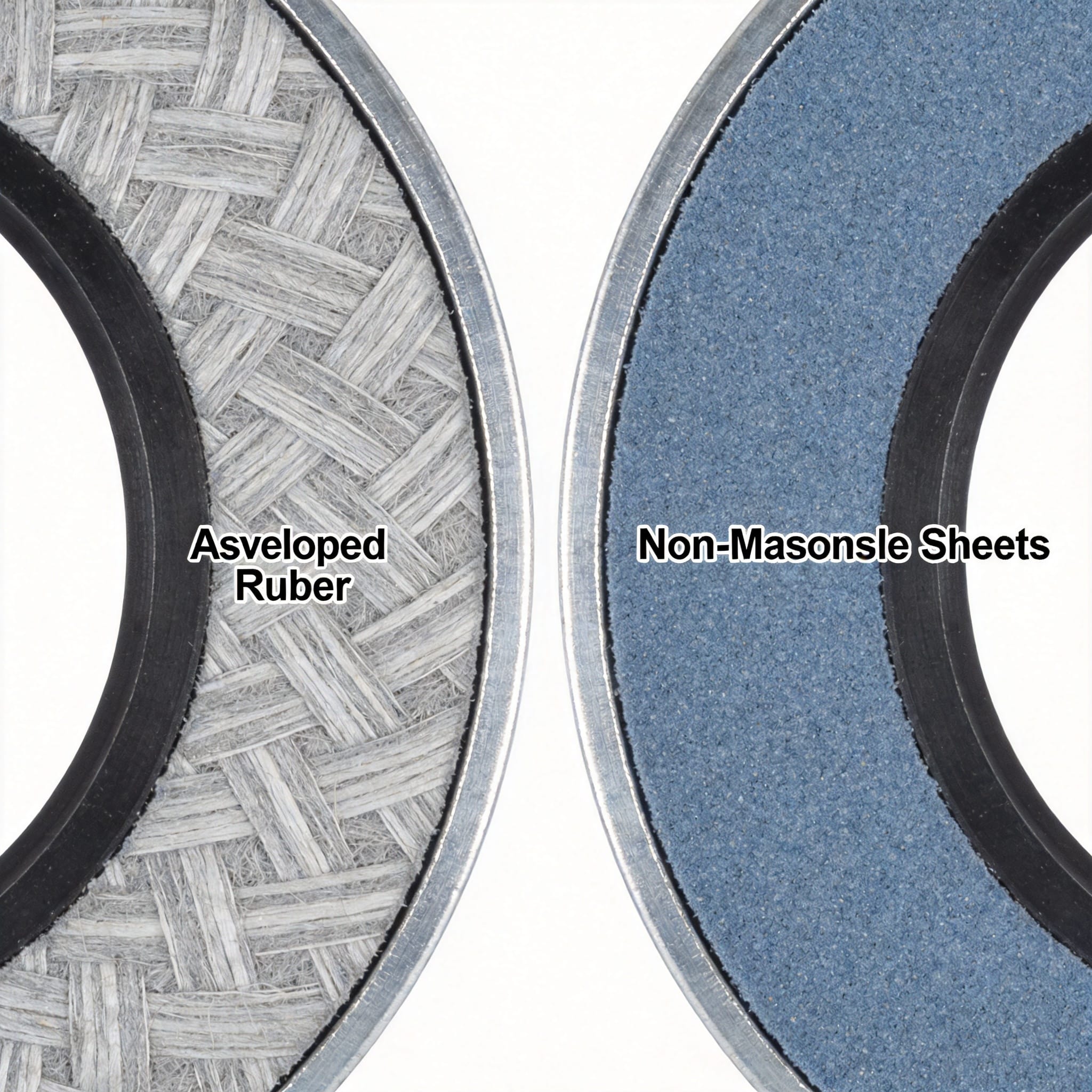
An enveloped gasket consists of a soft, compressible inner core that is completely encapsulated by a chemical-resistant outer jacket, typically made of PTFE. The core provides the necessary resilience and compression to maintain a seal under bolt load, while the jacket protects the core from process media and provides a low-friction sealing surface.
Without a proper core, the PTFE jacket alone would cold-flow or creep under pressure, leading to joint failure. The core material dictates the gasket’s maximum temperature rating, compressive strength, and recovery characteristics. Therefore, the choice between asbestos rubber and non-asbestos sheets is not cosmetic; it is a fundamental engineering parameter.
In my 12 years of testing PTFE and gasket materials at our laboratory, we have observed that the core contributes to roughly 60% of the gasket’s total compression resistance. This is why we always recommend reviewing the core specification before purchasing an enveloped gasket for critical services. For applications requiring high purity and chemical resistance, a pure PTFE gasket may be considered as an alternative to enveloped designs.
2. Asbestos Rubber: Legacy Performance and Risks
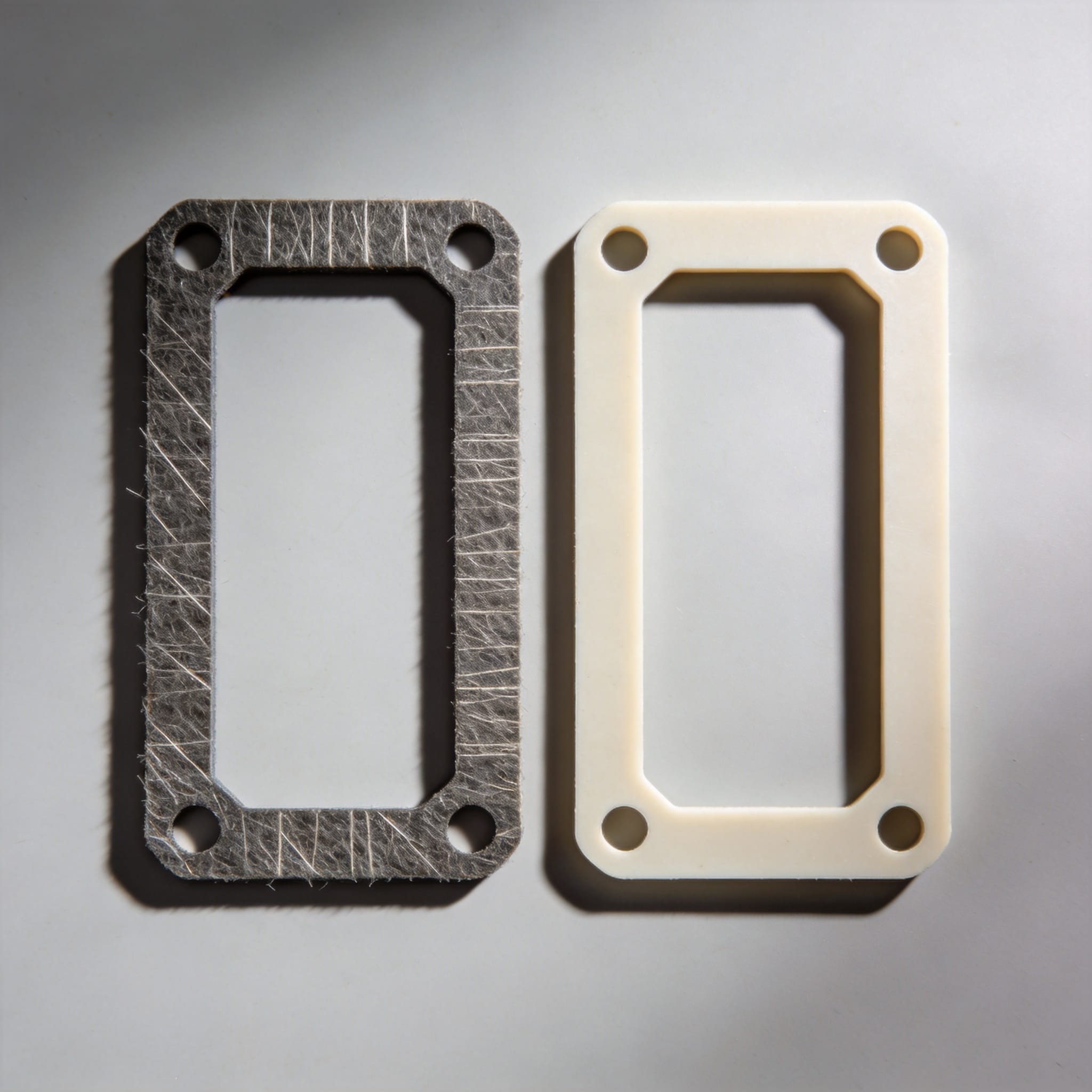
Asbestos rubber sheets were the standard core material for enveloped gaskets throughout the mid-20th century. The material was prized for its exceptional heat resistance, high tensile strength, and excellent chemical compatibility with a wide range of acids and solvents. It was also inexpensive to produce, making it a default choice for general industrial applications.
However, the physical properties that made asbestos effective are also what make it dangerous. When disturbed, asbestos fibers become airborne and are classified as a Group 1 carcinogen by the International Agency for Research on Cancer (IARC). Prolonged exposure is linked to mesothelioma and asbestosis, leading to strict bans and phase-outs in over 60 countries.
Historical Test Data from Our Lab (2008)
In our archive, we still have test records from 2008 comparing an asbestos rubber core (3mm thickness) against a PTFE jacket. The data showed a tensile strength of approximately 12 MPa and a maximum continuous service temperature of 260°C (500°F). While the performance was acceptable, the handling risks during cutting and installation were severe enough to warrant immediate replacement in our facility.
It is critical to note that if you have legacy equipment with asbestos cores, you should not attempt to remove or replace the gasket without following OSHA regulations for asbestos abatement. The risk is not in the static gasket itself, but in the dust created during removal.
3. Non-Asbestos Sheets: Modern Engineering Standards
Non-asbestos sheets are manufactured using a blend of aramid fibers, carbon fibers, or mineral fibers bound with NBR (Nitrile Butadiene Rubber) or SBR (Styrene-Butadiene Rubber). These materials are engineered to mimic the mechanical properties of asbestos while eliminating the health hazards. They are often referred to as “compressed fiber sheets” or “CAF” (Compressed Asbestos-Free) materials. A common example is the non-asbestos fiber gasket which offers a reliable alternative for general sealing duties.
Modern non-asbestos cores offer superior sealing performance at lower gasket stress compared to their asbestos predecessors. This is primarily due to tighter control over fiber dispersion and the use of high-quality synthetic rubber binders that provide better creep relaxation characteristics. This means less torque loss over time and fewer flange re-tightening requirements.
Real-World Case Study: Chemical Plant Conversion
In 2019, we assisted a specialty chemical plant in converting 150 flanges from asbestos cores to a non-asbestos aramid/NBR core. The specific material used was a 2.0mm thick sheet rated for 200°C. Over a 12-month monitoring period, we measured zero leakage incidents and a 15% reduction in maintenance torque checks compared to the historical asbestos data.
The only limitation we observed with non-asbestos cores is a slightly lower resistance to strong oxidizing acids (like concentrated nitric acid) compared to pure asbestos. In these specific services, the PTFE jacket often fails first, but the core can degrade if the jacket is scored. For such cases, we recommend a higher-density core or a different gasket style entirely, such as a modified PTFE gasket which offers enhanced chemical resistance.
4. Head-to-Head Data Comparison
To provide a clear technical distinction, the table below summarizes our internal test data and industry-standard values. These figures are based on a 3mm thick core sample tested with a standard 1.5mm PTFE envelope.
| Свойство | Asbestos Rubber Core | Non-Asbestos (Aramid/NBR) |
|---|---|---|
| Max Continuous Temp | 260°C (500°F) | 200°C – 250°C (392°F – 482°F) |
| Tensile Strength (ASTM F152) | 12 – 15 MPa | 10 – 14 MPa |
| Compressibility (ASTM F36) | 7 – 12% | 5 – 10% |
| Recovery (ASTM F36) | 50% | 55 – 60% |
| Chemical Resistance (Acids) | Excellent | Good to Excellent |
| Health Risk | Severe (Carcinogenic) | Negligible |
| Creep Relaxation | Higher (looser) | Lower (tighter seal) |
As the table indicates, non-asbestos materials have closed the performance gap significantly. The slight reduction in maximum temperature is often mitigated by the fact that the PTFE jacket itself is usually limited to 260°C anyway. For most chemical and water applications, the non-asbestos core is the superior engineering choice.
It is also essential to consider the “gasket factor” (m) and “seating stress” (y) values. Non-asbestos cores generally have a lower “y” value, meaning they require less initial bolt load to seal. This is beneficial for older flanges that cannot handle high bolt torques.
5. How to Choose the Right Core
Choosing between these materials today is rarely a technical debate; it is a compliance and safety decision. The first step is to check your local regulations. In the European Union and the United States, the use of asbestos is heavily restricted, making non-asbestos the only legal option for new installations. You can verify current regulations via the US EPA Asbestos page.
If you are working on legacy equipment, you must identify the core material before disassembly. If the gasket is stamped with “A” or has a woven cloth texture, assume it is asbestos and follow proper containment procedures. For new installations, always specify “Non-Asbestos” or “Asbestos-Free” in your purchase order to avoid accidental substitution. When a higher level of chemical resistance is required, consider a glass microsphere filled modified PTFE gasket which offers superior performance in demanding environments.
Application Guidelines
- High Temperature (250°C+): Use a non-asbestos core with high carbon fiber content. Do not rely on standard NBR binders.
- Steam Service: Choose a core with a high compressibility rating to handle thermal cycling.
- Caustic Service (High pH): Aramid fibers are resistant to caustics, but the rubber binder may degrade. Verify compatibility charts.
- Переработка пищевых продуктов: Ensure the core meets FDA 21 CFR regulations for indirect food contact.
Always request a material test certificate (MTC) from the supplier. This document should list the batch number, tensile strength, and compression values. We recommend keeping these certificates on file for the lifespan of the equipment to assist with future maintenance planning.
6. Conclusion and Best Practices
The transition from asbestos rubber to non-asbestos sheets in enveloped gasket cores is one of the most successful safety improvements in industrial sealing history. While asbestos offered robust physical properties, the availability of high-performance aramid and carbon fiber alternatives has made it obsolete for modern use.
Our testing confirms that non-asbestos cores provide equal or better sealing efficiency, lower creep relaxation, and a significant safety advantage. For any new project, I strongly recommend specifying non-asbestos cores to ensure compliance with international safety standards and to protect maintenance workers from hazardous exposure.
Finally, always verify the compatibility of the core with your specific process media. The PTFE jacket protects the core from the fluid, but if the jacket is damaged during installation, the core becomes the last line of defense. A proper installation procedure, using the correct bolt torque and cross-pattern tightening, is essential to prevent jacket damage and ensure a leak-free joint.

 English
 Russian
 French
 Spanish