
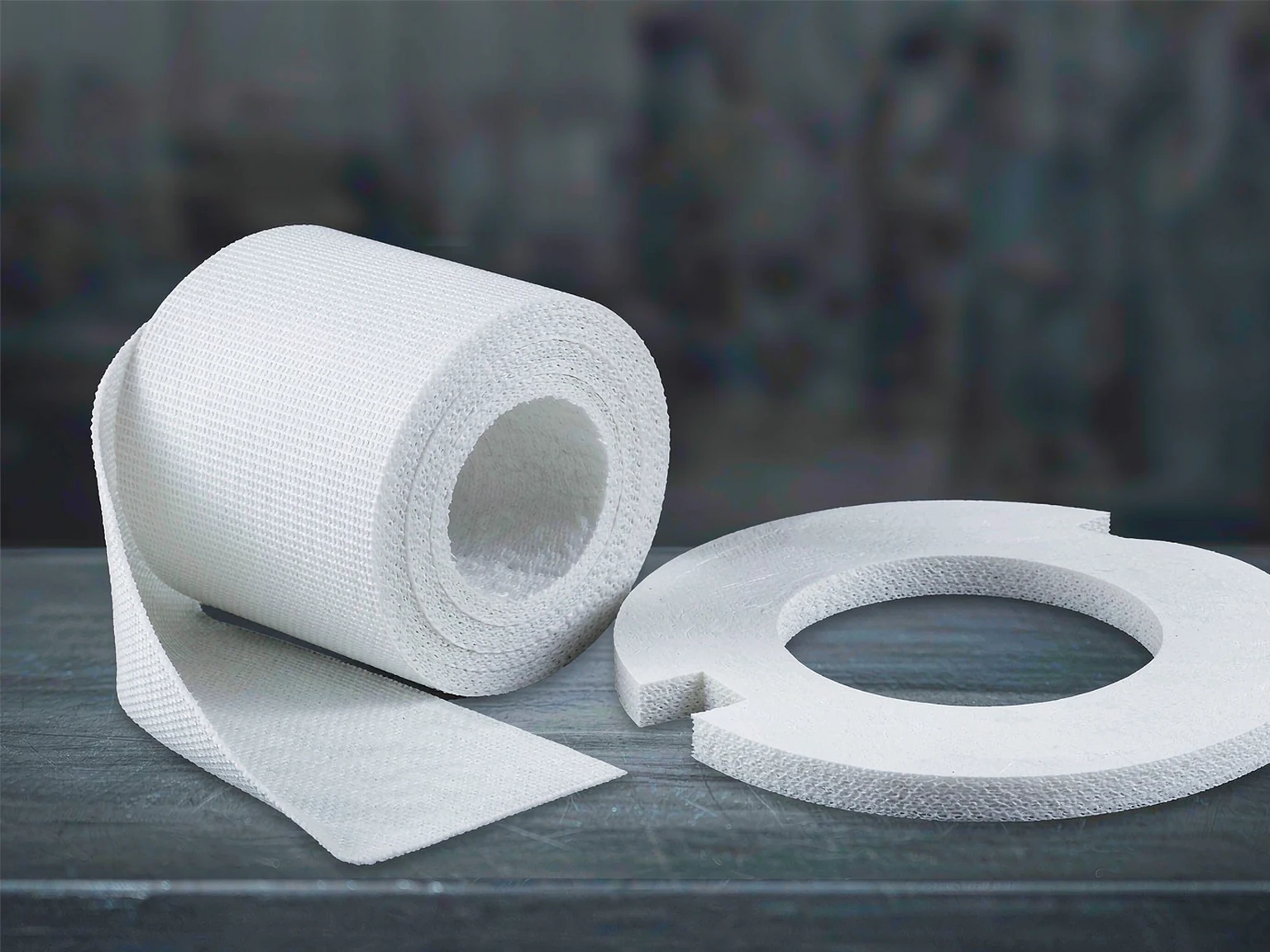
Short answer: Store PTFE rods, sheets and tubes flat, in original packaging, away from direct sunlight and heat sources, at stable room temperature. PTFE doesn’t degrade like rubber — no ozone or moisture worries — but it cold-flows under sustained point loads and absorbs almost nothing, so the real enemies are heavy stacking, sharp contact edges, and thermal distortion before machining.
PTFE storage is simple, which is why it’s done badly: warehouses treat it like metal, stack it like plywood, and then wonder why “flat” sheet arrives with a memory curve.
Four Storage Rules That Actually Matter
- Flat and supported for sheet. Sheet stored on edge or point-supported will take a set over months — PTFE creeps at room temperature under sustained load. Store flat on wide, even shelving; heavy plate on pallets with full-surface support.
- Original wrap until use. Packaging protects surfaces from scuffs and keeps machining stock clean. Unwrapped PTFE collects workshop dust and swarf that ends up in your spindle.
- Avoid heat sources and sunlight. Above roughly 60–80 °C continuous, creep accelerates dramatically; near a radiator or in direct sun, stored shapes deform. UV does not chemically degrade PTFE, but radiant heat warps stock.
- No point loads on rod/tube. Rod racked on narrow edges develops flats. Rack tubes on wide cradles; don’t hang heavy rod from one end.
Before Machining: Acclimatize
| Situation | Practice |
|---|---|
| Cold warehouse, warm shop | Let stock reach shop temperature before final cuts — PTFE’s high thermal expansion will move dimensions after machining otherwise |
| Tight-tolerance parts | Measure at controlled temperature and state it on the report |
| Long storage before machining | Check flatness/straightness before committing stock to a job |
Chunhuan ships stock shapes wrapped and lot-marked with storage guidance included, so material reaches your shop in the condition it left ours.
Frequently Asked Questions
How should PTFE sheet be stored to stay flat?
Flat on wide, even shelving with full support — point loads or edge storage cause permanent set because PTFE creeps at room temperature over time.
Does PTFE degrade in storage like rubber?
No — no ozone, moisture or hardening concerns. The practical risks are cold-flow deformation under stacking loads and heat-driven warping.
Why acclimatize PTFE stock before machining?
PTFE’s thermal expansion is high; machining cold stock in a warm shop means dimensions move after the part cools or warms to service temperature.
What temperature should PTFE stock avoid in storage?
Sustained heat above roughly 60–80 °C (radiators, sunlight through windows) accelerates creep and warps shapes before they’re ever machined.


 English
 Russian
 French
 Spanish
