
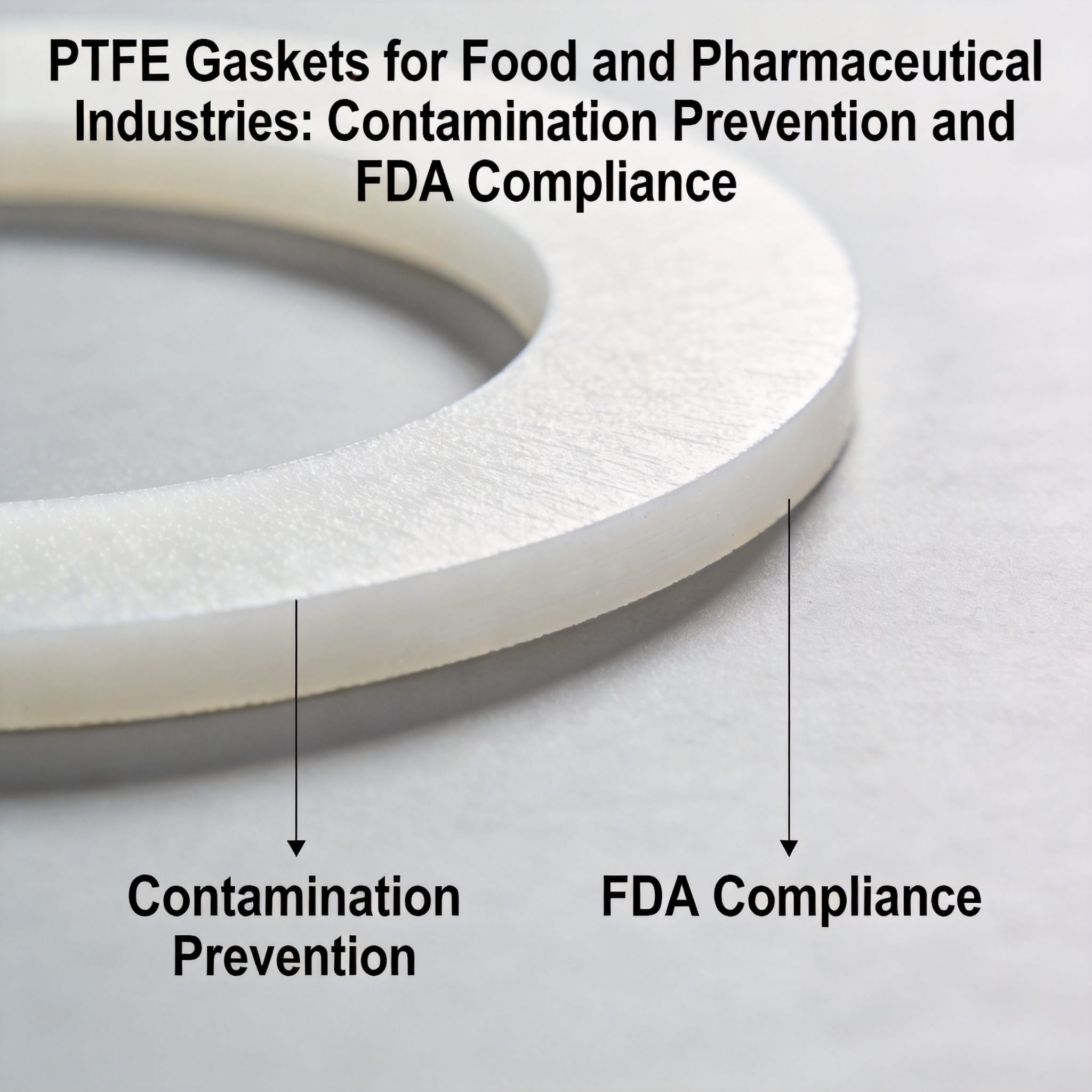
PTFE gaskets for food and pharmaceutical industries are sealing components made from polytetrafluoroethylene that comply with FDA regulation 21 CFR 177.1550, meaning the material can safely contact food and drugs without leaching contaminants. To prevent contamination, you must select a gasket that meets the correct FDA grade, verify its extractables and temperature limits, install it without surface damage, and replace it on a defined schedule before it degrades. After reading this guide, you will be able to evaluate a PTFE gasket’s compliance status, install it correctly, and build a replacement schedule that keeps your process audit-ready.
Table of Contents
Why PTFE Works for Hygienic Sealing
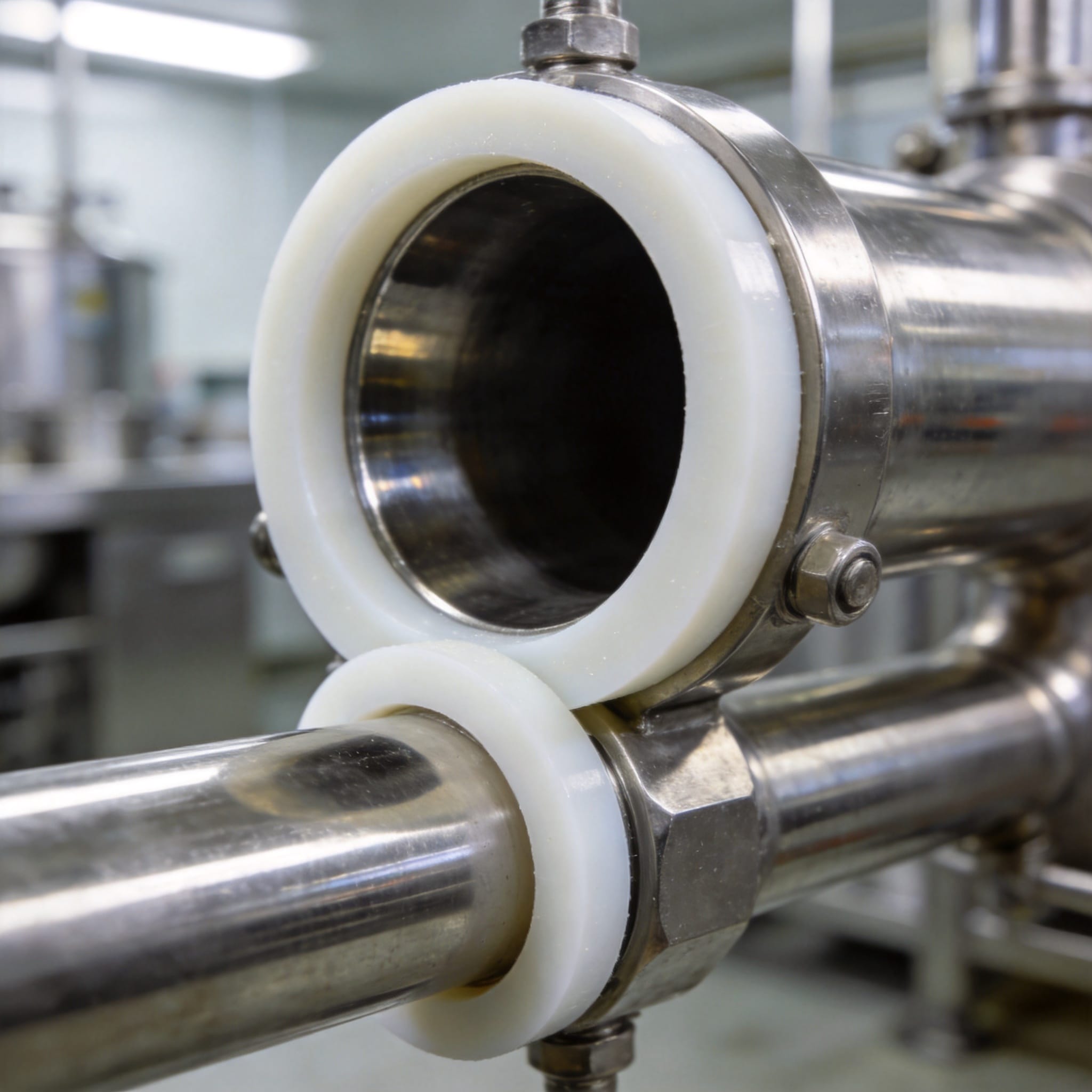
PTFE is chemically inert across almost the entire pH range, so it does not react with acids, caustics, solvents, or cleaning agents like sodium hydroxide and nitric acid used in clean-in-place (CIP) cycles. Its surface is non-porous and has a very low coefficient of friction, which means bacteria and product residue have little opportunity to adhere or become trapped. These two properties — chemical resistance and a smooth, non-stick surface — are the core reasons PTFE is trusted in hygienic applications.
The material also tolerates a wide temperature range. Virgin PTFE operates continuously from about -100°F to 500°F (-73°C to 260°C), which covers pasteurization, sterilization, and most pharmaceutical processing steps. The FDA recognizes PTFE under 21 CFR 177.1550 as a substance that may safely contact food, provided it meets the specification’s extractable limits.
One number matters more than most: extractables. The regulation sets a maximum of 0.01 mg per square inch of PTFE surface for the finished article. A gasket that passes this limit will not transfer harmful quantities of material into your product stream under normal operating conditions.
Where PTFE Fits Compared to Other Sealing Materials
| Материал | FDA Food Contact | Max Continuous Temp | Химическая стойкость |
|---|---|---|---|
| Первичный ПТФЭ | Yes (21 CFR 177.1550) | 500°F / 260°C | Excellent, near-universal |
| EPDM | Yes (varies by grade) | 300°F / 149°C | Good, poor with oils |
| Silicone | Yes (varies by grade) | 400°F / 204°C | Fair, swells with solvents |
| Nitrile (Buna-N) | Limited grades | 250°F / 121°C | Good with oils, poor with ketones |
Use this table as a first filter. If your process exceeds 300°F or handles aggressive solvents, PTFE is usually the only compliant choice among common elastomers.
How to Select and Install a Compliant PTFE Gasket
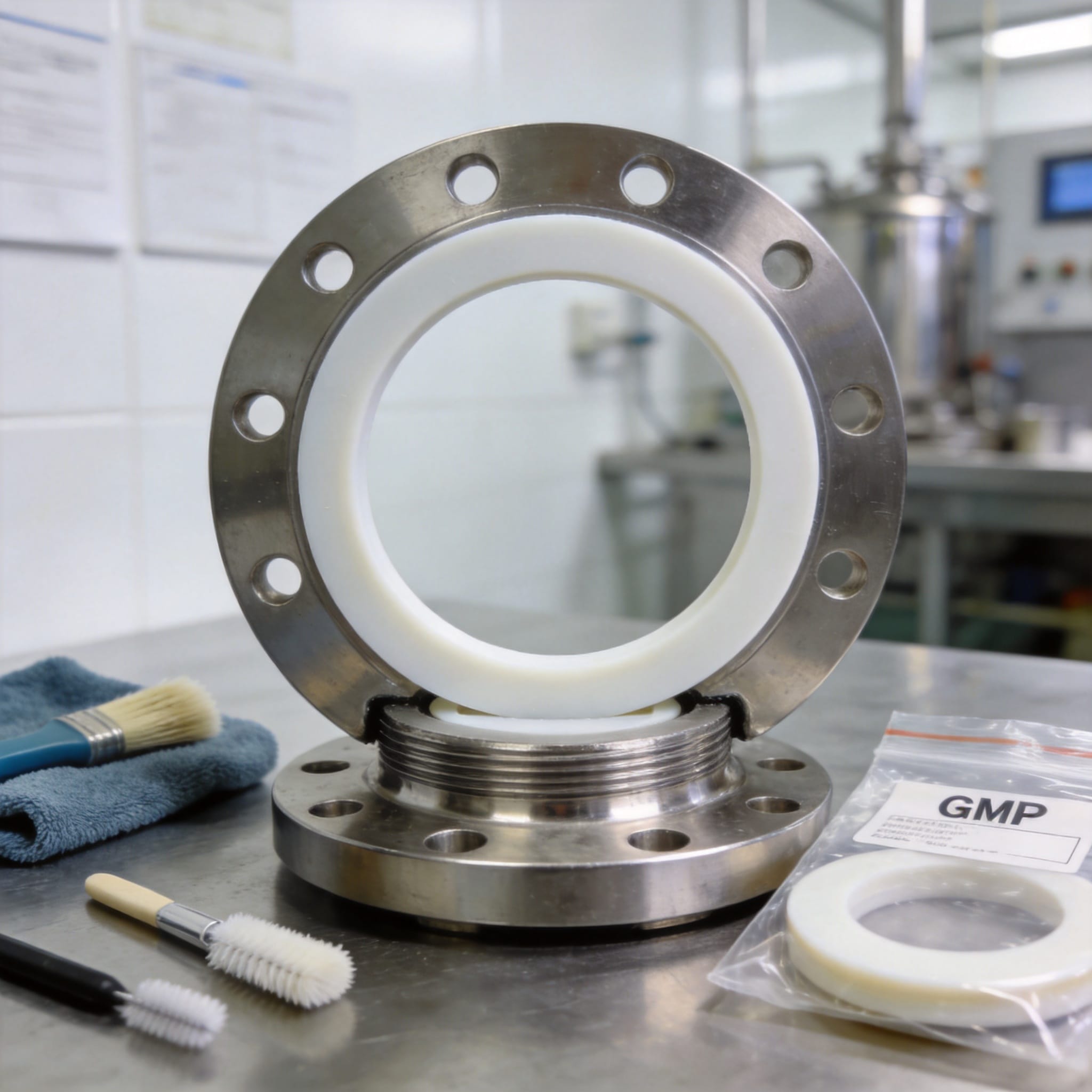
Follow these steps in order. Each one produces a verifiable output you can document for an audit.
- Confirm the FDA grade on the certificate of analysis (CoA). Ask your supplier for a CoA that cites 21 CFR 177.1550 and states the extractables result. If the CoA does not mention extractables, the gasket is not verifiably compliant — request a new one.
- Match the gasket to your flange standard. Measure the flange outer diameter, bolt circle, and inner bore. A 2-inch Tri-Clamp sanitary flange needs a different gasket than a 2-inch ANSI 150# flange. A mismatch creates an offset gap where product pools.
- Check the temperature and pressure rating against your process. Compare your maximum CIP temperature and line pressure to the gasket’s rated limits. Add a 20% safety margin. For a 250°F CIP cycle, choose a gasket rated to at least 300°F.
- Inspect the gasket surface before installation. Hold it under bright light and look for nicks, scratches, or embedded particles. Any visible defect is a contamination risk — discard the gasket.
- Clean the flange faces. Wipe both mating surfaces with a lint-free cloth and a food-grade solvent. Residual product or old gasket material prevents a flush seal.
- Center the gasket and tighten fasteners in a star pattern. Hand-tighten all bolts first, then torque in a crossing sequence in three passes (about 30%, 60%, then 100% of target torque). This distributes load evenly and prevents pinching.
- Record the installation date and torque value. Write these on a tag or in your maintenance log. This record drives your replacement schedule.
- Perform a leak and swab test after startup. Run the line at operating pressure for 10 minutes, check for weepage, then swab the joint interior and send the swab for microbial testing. A passing result confirms the seal is hygienic.
For pharmaceutical applications, the FDA guidance library and the United States Pharmacopeia (USP) both emphasize documented material traceability. Keep the CoA, installation record, and swab results together in one file per gasket.
Replacement Schedule: A Worked Example
Suppose a dairy plant runs a pasteurizer at 165°F with a daily 180°F CIP cycle. Based on field data from a 12-year sealing maintenance program, virgin PTFE gaskets in this service typically show compression set after 6 to 9 months. Set the replacement interval at 6 months and inspect at 3 months. If the 3-month inspection shows surface discoloration or a flattened profile, shorten the interval to 4 months. Document the change and the reason.
Common Mistakes and How to Fix Them
These four errors account for most contamination events traced to gaskets.
- Mistake: Using a non-FDA grade because it looks identical. Symptom: the gasket passes visual inspection but fails a swab test or an extractables check. Fix: always require a CoA citing 21 CFR 177.1550 before the gasket enters the plant. Reject any shipment without it.
- Mistake: Over-torquing the flange. Symptom: the gasket extrudes into the product path or cracks at the edge. Fix: torque to the manufacturer’s stated value in three passes, and use a calibrated torque wrench. Never tighten “until it feels right.”
- Mistake: Reusing a gasket after disassembly. Symptom: a slow weep at the joint that worsens over weeks. Fix: treat every PTFE gasket as single-use in hygienic service. Once compressed, it will not reseal reliably.
- Mistake: Ignoring temperature spikes during sterilization. Symptom: the gasket deforms after a steam-in-place (SIP) cycle at 250°F even though the line runs at 120°F. Fix: rate the gasket to the highest temperature it will ever see, not the normal operating temperature.
Quick Diagnostic Reference
| Symptom | Likely Cause | Corrective Action |
|---|---|---|
| Weep at joint | Reused or under-torqued gasket | Replace and re-torque in star pattern |
| Gasket extruding inward | Over-torque | Reduce to spec torque, replace gasket |
| Discoloration after CIP | Chemical attack or age | Shorten replacement interval |
| Failed swab test | Surface damage or trapped residue | Replace, clean flange faces, re-swab |
Часто задаваемые вопросы
Is all PTFE FDA compliant? No. Only PTFE that meets 21 CFR 177.1550 and carries a supporting CoA is compliant for food contact. Generic industrial PTFE may contain fillers or processing aids that fail the extractables limit. For critical hygienic service, specify a virgin PTFE sheet for medical and food processing with FDA so the base material itself is documented as compliant.
Can I use PTFE gaskets in a pharmaceutical cleanroom? Yes, provided the gasket is FDA-compliant and you can document material traceability. Many pharmaceutical operations also require USP Class VI testing, which is stricter than the food-contact rule. In these cases, a custom PTFE gasket for chemical, food, and semiconductor sealing can be machined to your exact flange profile with full material certification.
How often should I replace PTFE gaskets? In most hygienic service, replace every 6 to 12 months. Shorten the interval if your process exceeds 300°F, uses aggressive CIP chemicals, or cycles pressure frequently. Base the final number on your own inspection data, not a generic rule.
Does PTFE leach anything into food or drugs? Virgin, compliant PTFE is chemically inert and does not leach under normal conditions. The extractables limit exists to confirm this. If a gasket fails an extractables test, the material is not compliant and must be replaced.
What is the difference between virgin PTFE and filled PTFE? Virgin PTFE is pure and preferred for food and drug contact. Filled PTFE contains additives like glass or carbon for mechanical strength, and those fillers may not be FDA-approved for direct contact. Use virgin PTFE unless you have a CoA confirming the filled grade is compliant. When a standard size will not fit your flange, a PTFE gasket with customizable shapes, dimensions, and sizes lets you match the bore and bolt circle precisely without compromising the seal.
With the selection steps, installation sequence, and replacement schedule above, you can keep every PTFE gasket in your process compliant, documented, and free of contamination risk.



 English
 Russian
 French
 Spanish