
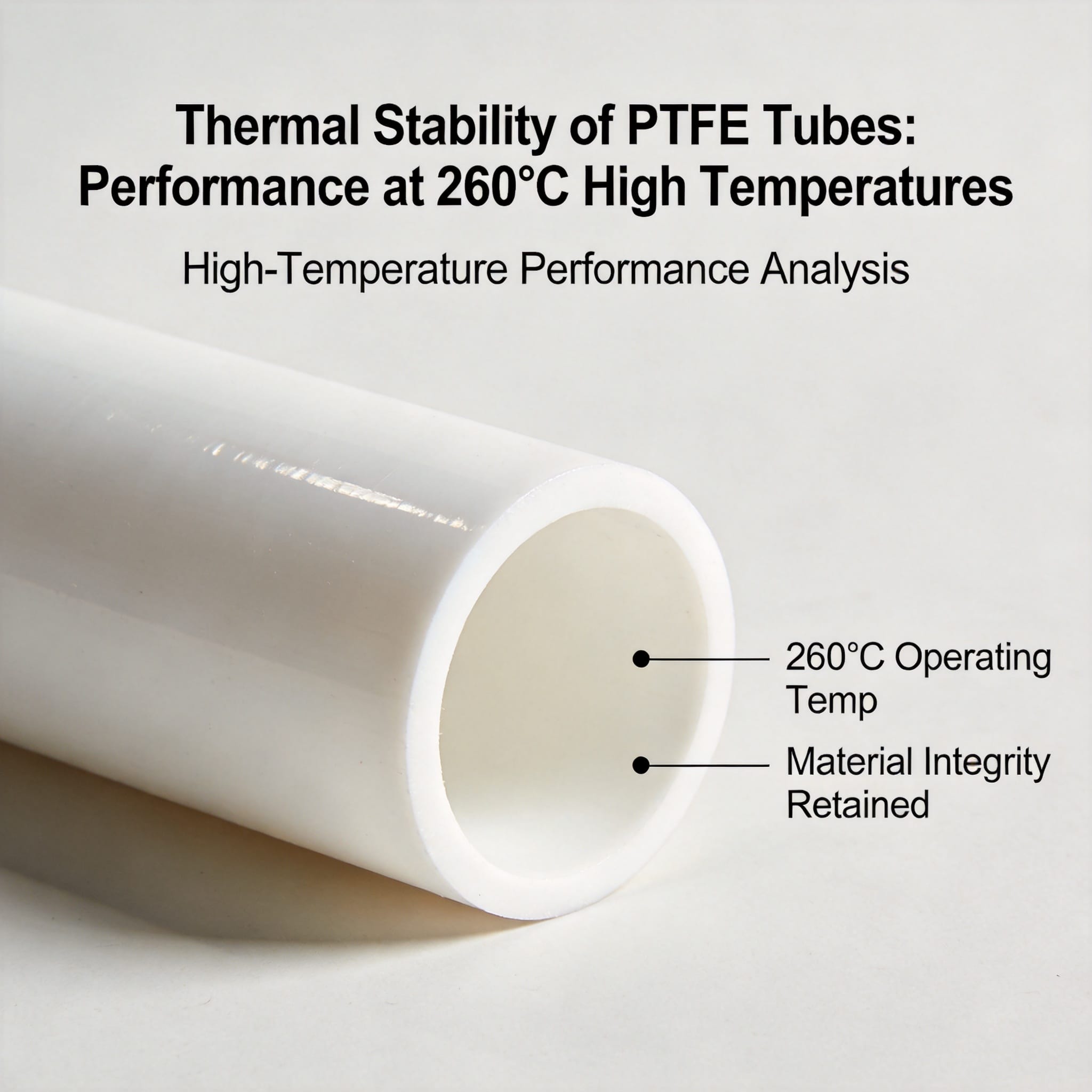
PTFE tubes are the wetted-flow-path component that carries ultrapure acids, bases, and solvents from a chemical supply cabinet to a semiconductor tool without leaching ions, absorbing moisture, or reacting with the fluid. They are chosen because polytetrafluoroethylene is chemically inert, has an extremely low coefficient of friction, and releases almost no particles or extractables into high-purity chemicals. This article explains the mechanism that makes them work, gives you a step-by-step procedure for installing and qualifying a PTFE transfer line, lists the mistakes that cause contamination and leaks, and answers the questions beginners ask most. After reading, you will be able to specify, install, and leak-test a basic PTFE chemical transfer line and recognize when a tube has failed.
Table of Contents
- Why PTFE Works in High-Purity Chemical Transfer
- How to Install a PTFE Chemical Transfer Line (Step by Step)
- Common Mistakes and How to Fix Them
- Frequently Asked Questions
Why PTFE Works in High-Purity Chemical Transfer
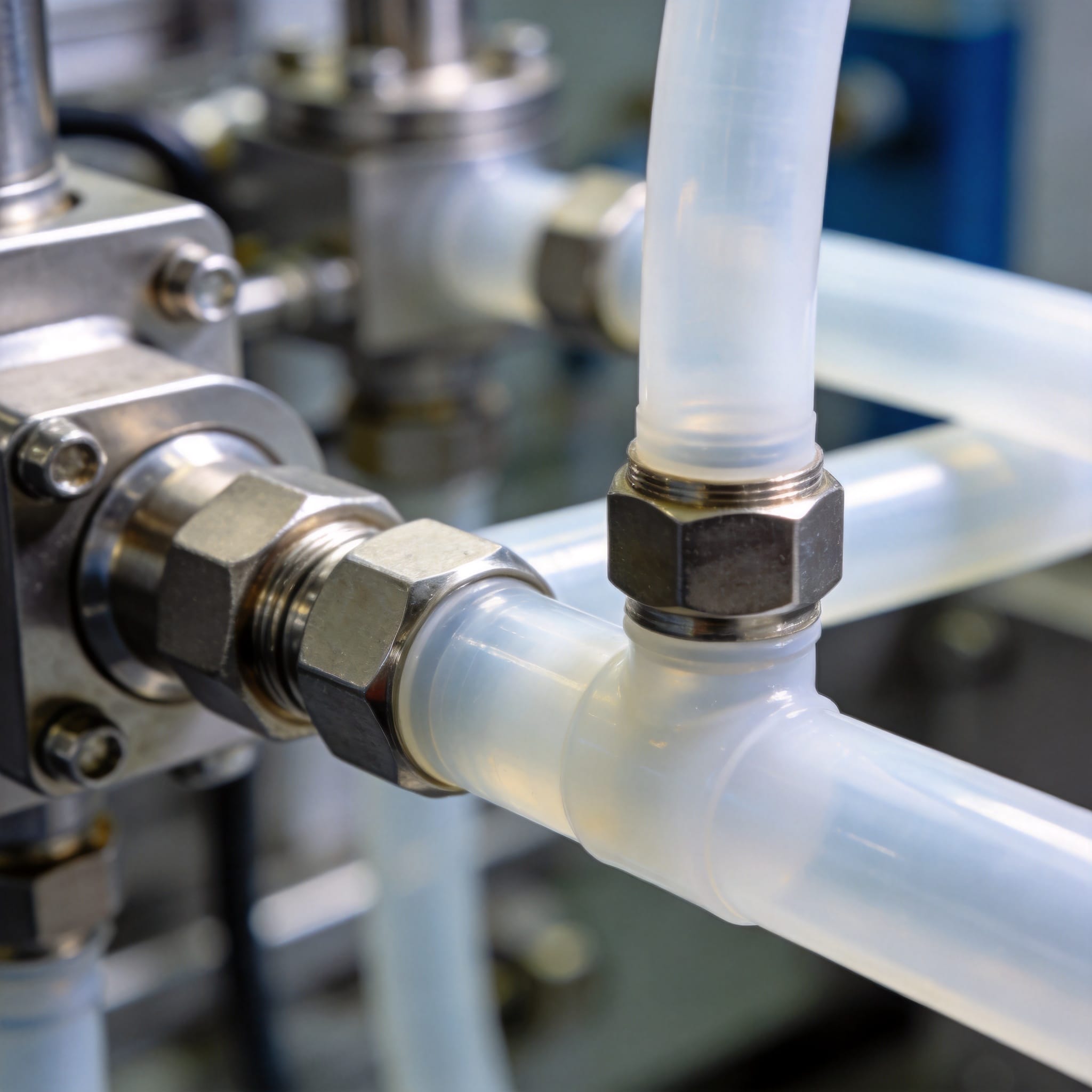
PTFE (polytetrafluoroethylene) is a fluoropolymer built from carbon and fluorine atoms. The carbon–fluorine bond is one of the strongest in organic chemistry, which is why the material resists attack from hydrofluoric acid, sulfuric acid, hydrogen peroxide, and ammonium hydroxide — the standard wet-chemistry reagents in wafer fabrication. Because the surface is non-polar, water and most solvents bead up instead of clinging, so chemical residue drains rather than accumulating on the wall.
Three properties matter most for high-purity transfer. First, low extractables: PTFE releases very few ions or organic compounds into the fluid stream compared with PVC, polyethylene, or metal tubing. Second, low particle shedding: the smooth bore produces far fewer particles than rough or porous surfaces. Third, chemical inertness: the tube does not degrade into the chemical, so the fluid composition reaching the process tool stays stable.
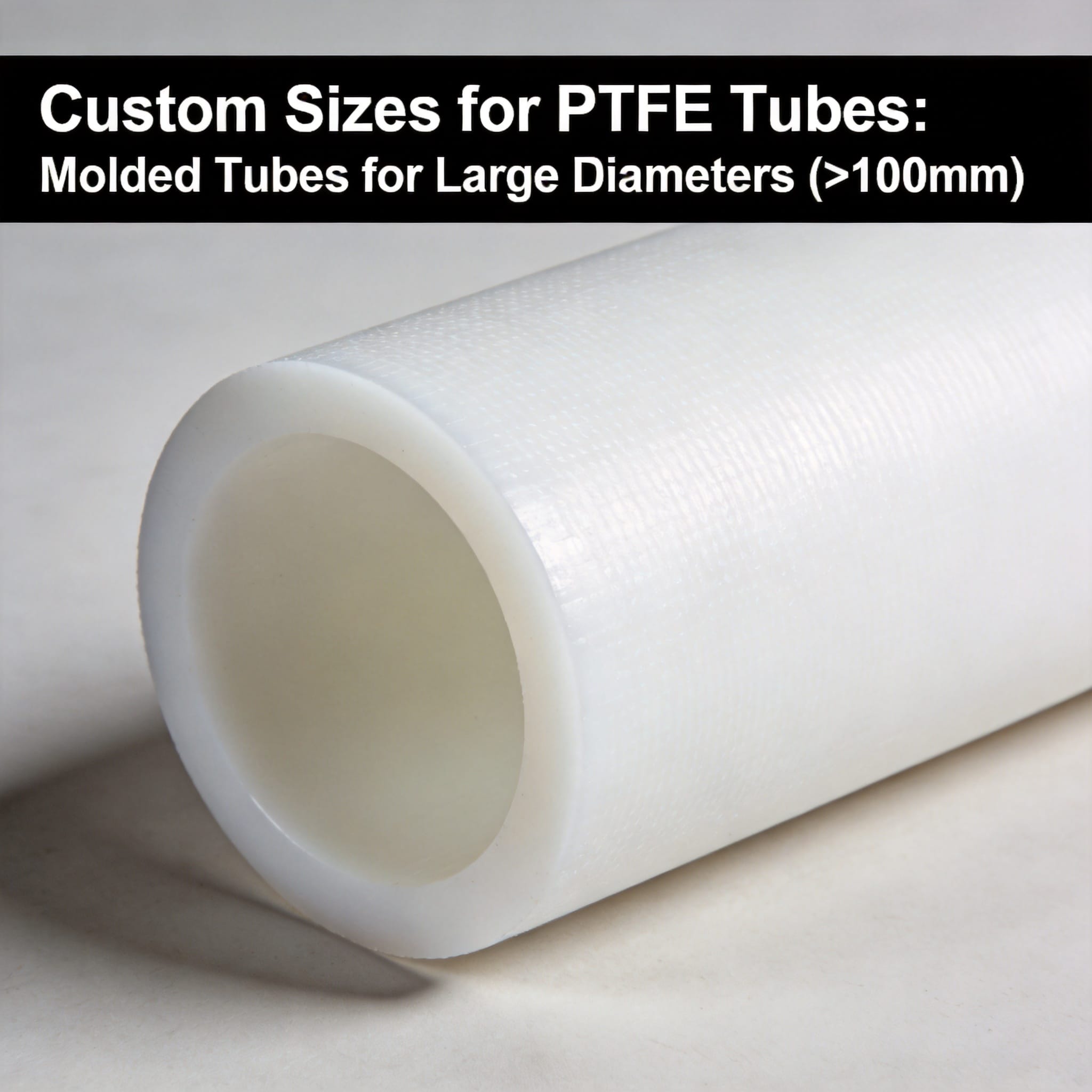
Semiconductor fabs measure these properties against standards such as SEMI F57, which specifies requirements for polymer components used in ultrapure water and liquid chemical distribution systems. A tube that meets the specification has documented extractable and particle performance rather than a marketing claim. For high-purity molded pipe constructions that pair with these transfer lines, see this virgin PTFE tube option.
| Свойство | ПТФЭ | PFA | Stainless Steel |
|---|---|---|---|
| Chemical inertness | Excellent | Excellent | Good, but corrodes in HF |
| Ion extractables | Very low | Very low | Can release metal ions |
| Гибкость | Moderate | Высокий | Rigid |
| Прозрачность | Opaque white | Translucent | Opaque |
| Typical use | Rigid runs, fittings | Flexible jumpers | Bulk bulk chemical lines |
For a beginner, the practical takeaway is this: PTFE is the default choice when the fluid is aggressive, the purity target is tight, and the tube can be supported in a fixed run. When you need a flexible connection that must bend repeatedly, PFA is usually substituted because it shares the same chemistry with better flex life — a good example being this PFA transparent tube.
How to Install a PTFE Chemical Transfer Line (Step by Step)
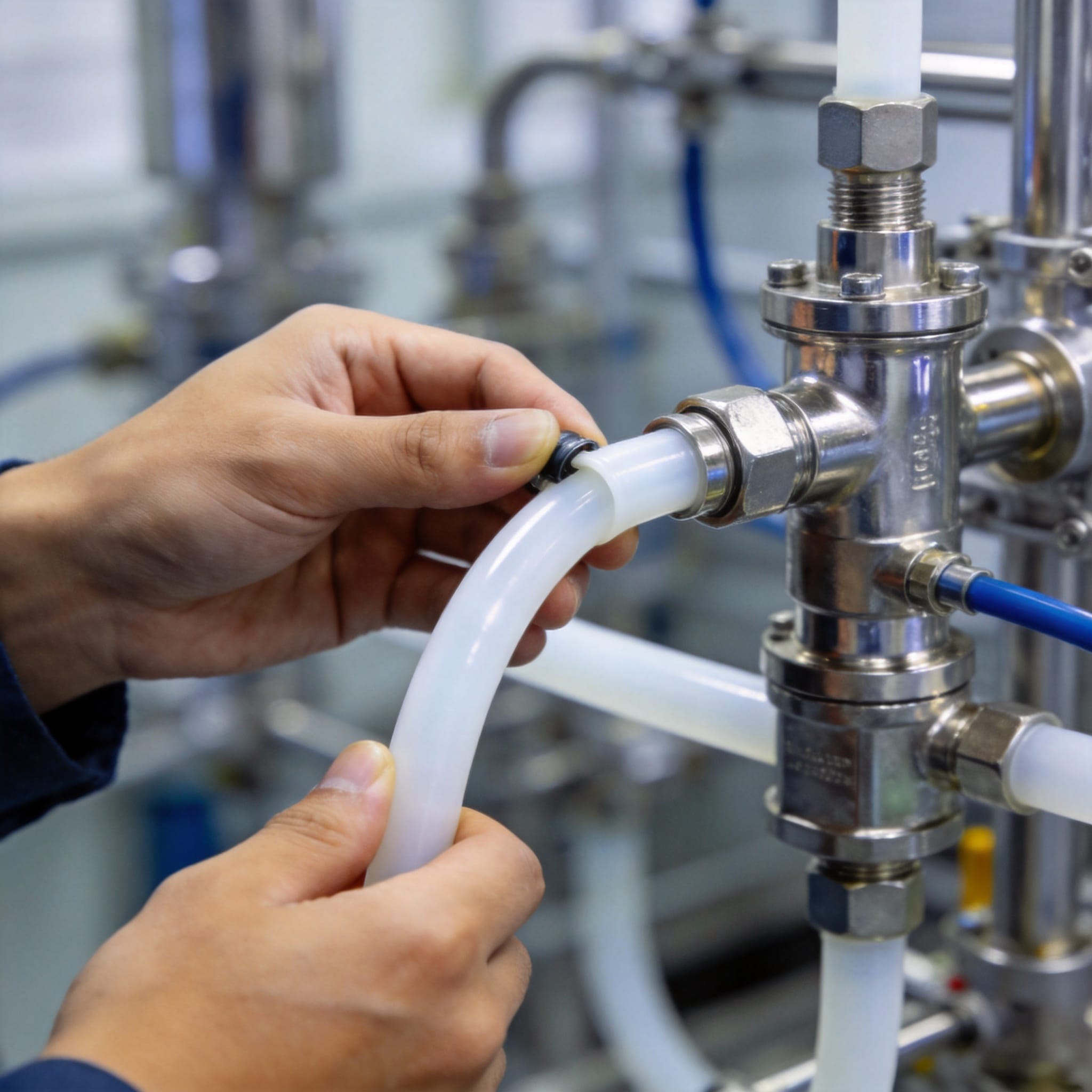
The procedure below assumes a single liquid chemical line from a source cabinet to a process tool, using flared or compression-style fluoropolymer fittings. Each step stands alone, so you can stop and verify before moving on.
- Verify the chemical compatibility. Confirm the fluid, concentration, and temperature against the tube manufacturer’s compatibility chart. If the temperature exceeds the tube’s rated limit, stop and select a different material.
- Measure and cut the tube. Cut with a dedicated tube cutter or a sharp blade to produce a square, burr-free end. A ragged cut creates a leak path and sheds particles.
- Deburr and clean the cut end. Wipe the end with a lint-free wipe dampened with high-purity isopropyl alcohol. Do not touch the cut face with bare hands afterward.
- Install the fitting per the manufacturer’s torque spec. Hand-tighten, then apply the specified quarter-turn or torque value. Over-tightening cracks fluoropolymer ferrules; under-tightening leaks.
- Support the run every 0.6 to 0.9 meters. PTFE creeps under load, so unsupported spans sag and stress the fittings over time.
- Flush the line with high-purity water or solvent. Flush for at least 30 minutes at the operating flow rate to remove manufacturing residue and particles.
- Pressure-test at 1.5× the operating pressure. Hold for 10 minutes and inspect every joint with a dry wipe. Any wet spot means a re-make.
- Sample the effluent. Send a flush sample for particle count and ion analysis. Accept the line only when results meet your fab’s specification.
A worked example: a 20-meter line carrying 49% hydrofluoric acid at 25°C, operating at 2 bar, should be pressure-tested at 3 bar for 10 minutes. If the particle count in the final flush sample exceeds your internal limit — for example, more than 100 particles per milliliter larger than 0.5 micrometers — re-flush and re-sample before connecting to the tool.
Common Mistakes and How to Fix Them
Most PTFE transfer-line failures trace back to a small number of repeatable errors. Each one below lists the symptom you will observe and the fix.
- Mistake: Over-tightening fittings. Symptom: a hairline crack at the ferrule or a slow weep that appears after thermal cycling. Fix: replace the ferrule, re-make the joint using a torque wrench set to the manufacturer’s value, and never “add one more turn for safety.”
- Mistake: Using the wrong tube grade. Symptom: elevated ion or TOC results in the flush sample that will not drop no matter how long you flush. Fix: confirm the tube meets SEMI F57 or an equivalent high-purity specification, and replace non-compliant stock.
- Mistake: Contaminating the bore during installation. Symptom: particle counts spike immediately after a new line is commissioned. Fix: cap both ends until the moment of connection, wear cleanroom gloves, and never lay an open tube end on a bench or floor.
- Mistake: Skipping support along the run. Symptom: sagging tube, stress marks at fittings, and leaks that appear months after installation. Fix: add clamps at the interval in Step 5 and re-check fitting torque.
- Mistake: Reusing fittings after disassembly. Symptom: a joint that leaks immediately on re-pressurization. Fix: treat fluoropolymer ferrules as single-use and replace them every time a joint is opened.
If you remember only one rule, make it this: purity is decided at the cut end and the fitting, not by the tube’s brand name. A premium tube installed with a contaminated cut and an over-torqued ferrule will still fail the flush sample. Where the line terminates at a flange or tool interface, a custom PTFE gasket for semiconductor sealing helps preserve that same purity at the connection point.
Frequently Asked Questions
How long do PTFE tubes last in a chemical transfer system?
In a correctly installed, supported line running at ambient temperature, a service life of five or more years is common. The limiting factor is usually the fitting joint or mechanical stress, not the tube wall itself. Replace the tube when you see discoloration, swelling, or a persistent leak that re-making the joint does not fix.
Can I use PTFE tubing for hydrofluoric acid?
Yes. PTFE is one of the standard materials for HF service because it resists attack across the concentrations used in wafer cleaning. The critical caveat is temperature: stay within the tube’s rated limit, and always verify against the manufacturer’s compatibility data for your specific concentration and temperature.
What is the difference between PTFE and PFA tubing?
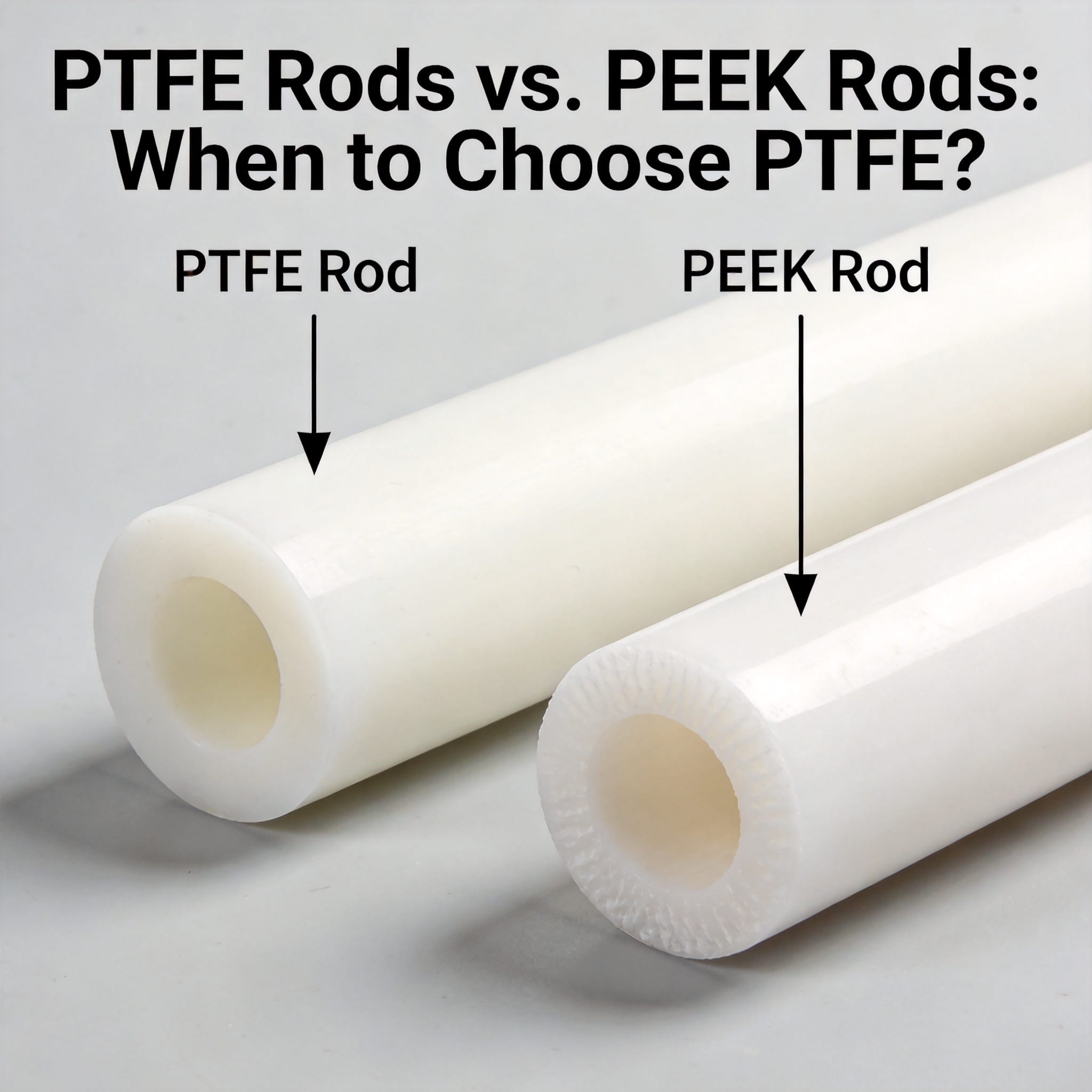
Both are fluoropolymers with nearly identical chemical resistance. PFA is more flexible and translucent, which makes it easier to route and inspect, while PTFE is stiffer and typically less expensive in rigid runs. Choose PFA for flexible jumpers and PTFE for fixed, supported lines.
How do I know if my PTFE line is clean enough?
You cannot judge cleanliness by looking. Flush the line, collect an effluent sample, and test it for particle count and ionic contamination against your fab’s specification. The line is clean when the sample meets that limit, not when it “looks clear.”
Do I need to flush a new PTFE tube before use?
Yes, always. New tubing carries manufacturing residue and loose particles. Flush with high-purity water or solvent for at least 30 minutes at operating flow, then sample the effluent before connecting to any process tool.
What to Do Next
Start with the compatibility check and the square cut, because those two steps determine whether everything downstream can succeed. Then follow the numbered installation sequence, pressure-test at 1.5× operating pressure, and accept the line only on a passing flush sample. If a joint leaks, replace the ferrule rather than tightening further. For the underlying material requirements, consult the SEMI F57 standard and the CDC/NIOSH guidance on hydrofluoric acid safety before working with HF service lines.

 English
 Russian
 French
 Spanish