
1 The New Standard in Engine Sealing Technology
15% and 25% glass fiber reinforced PTFE flat gaskets represent a breakthrough in sealing solutions for modern automotive engines. These composite gaskets offer customized performance through precise glass fiber content control.
2 Material Properties Comparison
2.1 15% Glass Fiber Reinforced
- 40% higher tensile strength
- Operating range: -50°C to +200°C
- Maintains PTFE’s chemical inertness
- Ideal for medium-pressure applications like turbocharger connections
2.2 25% Glass Fiber Reinforced
- 300% better creep resistance
- Continuous service up to 230°C
- Compression set <15%
- Designed for high-stress areas like cylinder head sealing
3 Key Performance Advantages
3.1 Enhanced Mechanical Properties
The glass fiber network provides:
- 35% lower thermal expansion
- Excellent anti-knock performance
- Long-term stability with no stress relaxation
3.2 Uncompromised Chemical Resistance
Maintains PTFE’s legendary compatibility:
- Resists all engine oil types (including synthetics)
- Withstands fuel additives
- Compatible with various coolant formulations
4 Engine System Applications
4.1 Intake System Sealing
- Turbocharger flange connections
- Throttle body interfaces
- Intercooler piping
4.2 High-Temperature Zones
- Exhaust manifold gaskets
- EGR valve sealing
- Catalytic converter flanges
4.3 Critical Fluid Sealing
- Oil pan gaskets
- Fuel pump flanges
- Coolant pump connections
5 Selection Guide
5.1 15% Reinforcement Applications
- Sealing surfaces <8bar pressure
- Dynamic vibration components
- Connections requiring moderate flexibility
5.2 25% Reinforcement Applications
- High-pressure combustion areas
- Exhaust system components
- Applications demanding extreme dimensional stability
6 Installation & Maintenance
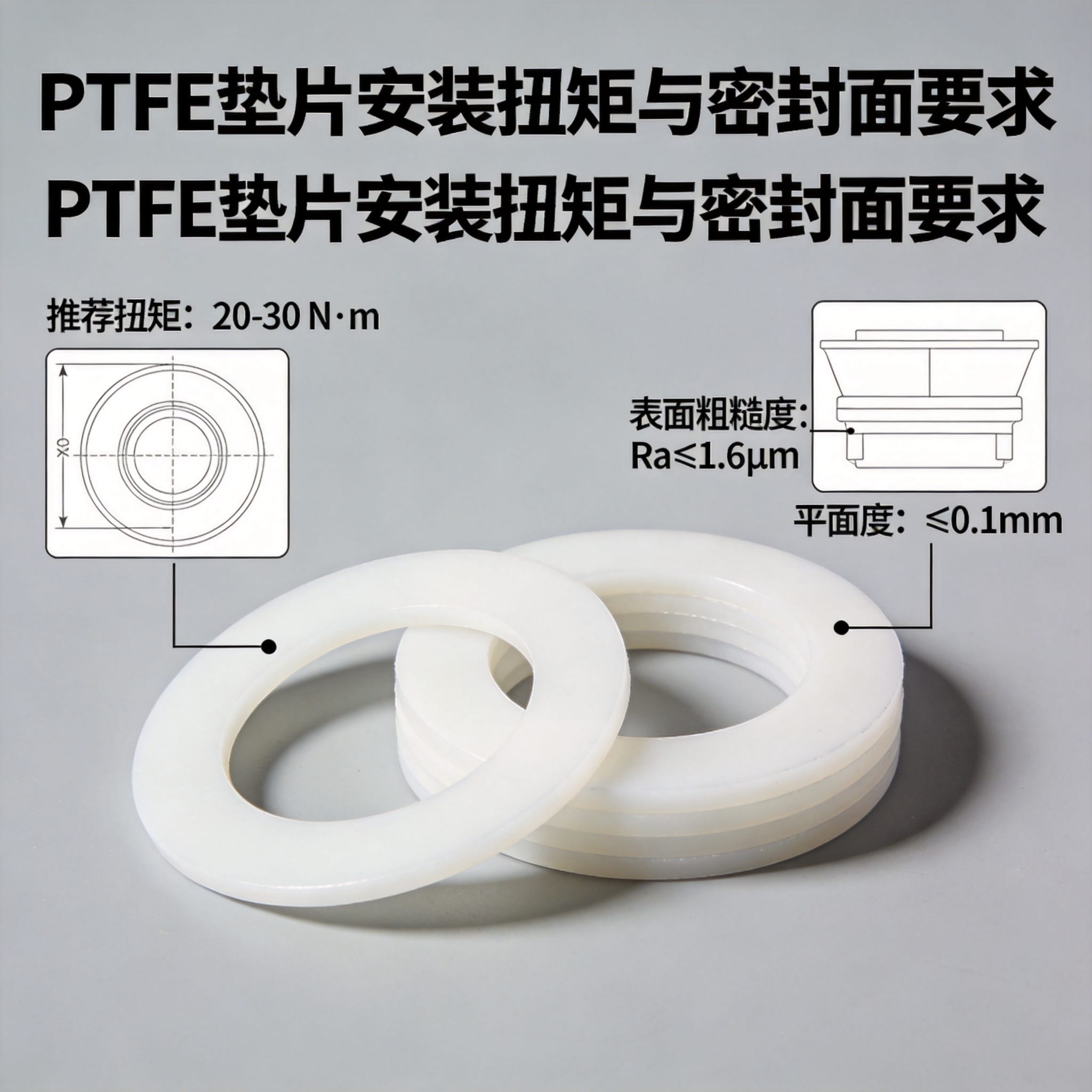
- Surface finish requirement: Ra≤3.2μm
- Recommended torque: 75% of bolt specification
- Inspection interval: Visual check every 30,000km
- Replacement cycle: 80,000-100,000km recommended
7 Industry Validation Data
- Endurance testing: Passed 2000-hour bench tests
- Sealing performance: Leakage rate <0.01cc/min
- Field failure rate: <0.5% (100,000km statistics)
8 Future Technology Trends
- Nanoscale glass fiber reinforcement
- Smart gaskets with integrated temperature sensing
- Eco-friendly fluorine-free alternatives
9 Frequently Asked Questions
Q1 Can both types be used together?
A Not recommended – use appropriate grade for each stress zone
Q2 Advantages over metal gaskets?
A 60% lighter weight with no galvanic corrosion
Q3 Extreme climate suitability?
A Verified for Arctic to desert conditions
Q4 Suitable for modified engines?
A Excellent for high-performance engine builds
10 Conclusion
Proper selection of glass fiber reinforced PTFE flat gaskets significantly enhances engine reliability and durability. The 15% and 25% options provide engineers with precise performance tuning capabilities for modern engines operating under increasingly demanding conditions. As material technology advances, these composite gaskets will play an even more critical role in next-generation engine designs.

 English
 Russian
 French
 Spanish