
Navigating the world of industrial materials can often feel like deciphering an entirely different language. Among these critical components, PTFE envelope gaskets stand out for their unique properties and vital applications across numerous industries. But how do you accurately interpret their specifications to ensure you’re making the right choice for your needs? This essential guide delves into the intricacies of PTFE envelope gasket specification, designed to shed light on a subject that’s often shrouded in technical jargon.
Consider this: You’re responsible for maintaining the integrity of crucial systems in a high-stakes environment. Every piece of equipment relies on the perfect seal—an assurance only a correctly specified PTFE envelope gasket can provide. This guide will not only break down complex specifications into digestible insights but also equip you with the knowledge to make informed decisions, ensuring efficiency and safety in your operations. Prepare to transform your understanding and application of these indispensable components.
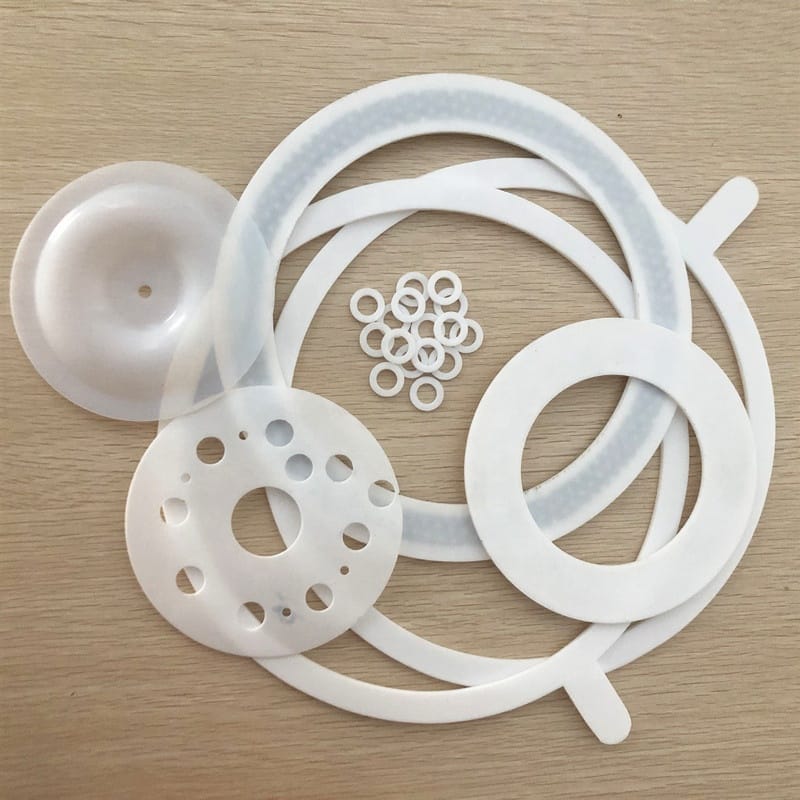
Importance of PTFE Envelope Gaskets in Industrial Applications
PTFE envelope gaskets have become a cornerstone in sectors such as chemical processing, oil and gas, pharmaceuticals, and food production. Their ability to withstand extreme temperatures, resist aggressive chemicals, and maintain a reliable seal under fluctuating pressures makes them invaluable for critical applications. Unlike traditional gasket materials that may degrade or harden over time, PTFE’s inherent stability and low coefficient of friction ensure longevity and consistent performance. By choosing the right PTFE envelope gasket specification, you not only mitigate leak risks but also reduce downtime and maintenance costs.
Beyond their mechanical advantages, these gaskets contribute to overall operational safety. In facilities handling corrosive or toxic substances, a failed seal can lead to hazardous leaks, environmental contamination, and costly regulatory fines. PTFE envelope gaskets offer a secure barrier, protecting both personnel and the environment. Additionally, their inert nature means they won’t react with process media, preserving product purity in sensitive industries like pharmaceuticals and food processing. Investing in properly specified PTFE envelope gaskets ultimately translates to enhanced reliability, safer work environments, and improved bottom-line performance.
Understanding PTFE Envelope Gasket Specifications
Interpreting ptfe envelope gasket specification requires familiarity with several key parameters. The most critical include gasket dimensions (inner and outer diameter), envelope wall thickness, core material properties, and surface finish. Accurate measurement of these dimensions ensures the gasket fits precisely between flange faces, preventing misalignment and uneven compression, which can compromise seal integrity. Core materials—typically stainless steel, graphite, or other metals—provide the necessary spring load and recovery, while the PTFE envelope offers chemical resistance and low friction.
Surface finish and envelope thickness also impact sealing performance. A smoother finish on flange faces demands a thinner envelope for better conformity, whereas rougher surfaces may require a slightly thicker PTFE layer to fill microscopic irregularities. Furthermore, certain applications dictate specific envelope thicknesses to balance chemical resistance with mechanical strength. When reviewing ptfe envelope gasket specification sheets, pay close attention to tolerances and acceptable deviations. This attention to detail will ensure the gasket performs as expected under real-world conditions, preventing costly mistakes and ensuring system reliability.
Factors Influencing Gasket Thickness in PTFE Envelope Gaskets
The thickness of the PTFE envelope in a gasket plays a pivotal role in sealing effectiveness. Thicker envelopes can compensate for surface irregularities and flange imperfections, but may reduce compressive strength and increase the risk of extrusion under high pressure. Conversely, thinner envelopes offer greater mechanical robustness but might not adequately conform to rough flange surfaces. Finding the optimal thickness involves balancing these trade-offs to match the demands of your specific application.
When selecting the correct ptfe envelope gasket specification, consider operating pressure, temperature range, and flange condition. High-pressure systems often require a stiffer, thinner PTFE envelope backed by a strong core material to resist blowout. In contrast, low-pressure, chemically aggressive environments may benefit from a thicker envelope that prioritizes corrosion resistance and chemical inertness over mechanical rigidity. By evaluating these factors holistically, you can determine the ideal envelope thickness that delivers reliable sealing performance without compromising safety or longevity.
Chemical Compatibility and Resistance in PTFE Envelope Gaskets
One of the standout qualities of PTFE is its near-universal chemical resistance. It remains stable in contact with acids, alkalis, solvents, and most organic compounds, making ptfe envelope gasket specification crucial for processes involving aggressive media. However, certain oxidizing agents—such as molten alkali metals and fluorine—can attack PTFE at elevated temperatures. Understanding these exceptions is vital when designing systems that push chemical compatibility limits.
Consulting compatibility charts and manufacturer data sheets will help you match gasket materials to your process media. For example, in chlorine or nitric acid applications, PTFE’s inertness makes it an excellent choice, but confirming temperature thresholds is essential to prevent envelope degradation. Additionally, pay attention to core material corrosion resistance; a stainless-steel core may suffice for mild chemicals, but graphite or Hastelloy cores could be necessary for highly corrosive environments. A well-specified ptfe envelope gasket combines the best attributes of PTFE with an appropriately selected core, ensuring uncompromised performance in the harshest chemical settings.
Conclusion: Optimizing Performance with Proper PTFE Envelope Gasket Specification
Choosing the right ptfe envelope gasket specification is more than just selecting a part—it’s about safeguarding your entire operation. By understanding critical parameters like envelope thickness, core material, and chemical compatibility, you ensure maximum seal integrity and system reliability.
Armed with this guide, you can confidently interpret specifications, make informed selections, and maintain peak performance in demanding industrial environments. Properly specified PTFE envelope gaskets not only protect equipment and personnel but also drive efficiency and cost savings in the long run.

 English
 Russian
 French
 Spanish