
Short answer: a credible PTFE gasket manufacturer can show you material traceability to resin lot number, in-house sintering and skiving or molding equipment, dimensional reports against ASTM F104 / DIN 28091 line-calls, and willingness to supply first-article samples before production. If a supplier cannot produce these four items within one working day, treat the quote as unverified.
Most sourcing failures with PTFE gaskets do not happen at the gasket itself. They happen because two suppliers quoted “PTFE sheet gasket” and meant two entirely different products: one virgin resin skived to 0.8 mm with lot traceability, one reprocessed resin molded with visible voids. This guide gives you the six checks that separate them, with the specific evidence to request at each step.
1. Resin grade: ask which PTFE, by name
Virgin PTFE is not a single material. Resin grades differ in particle size and flow class (for example, fine powder grades for paste-extruded sheet versus granular molding grades), and that difference shows up in tensile strength and permeability. A manufacturer worth qualifying will name the resin family and its typical values rather than answering “100% PTFE”. Ask for the tensile strength and elongation actually measured on their finished sheet — a genuine skived virgin sheet should test around 30–40 MPa tensile with elongation above 200%, while reprocessed material often falls below 20 MPa. If the datasheet quotes only theoretical resin values rather than tested finished-gasket values, you are buying a brochure, not a material.
2. Process route: skived, molded or expanded — and why it matters
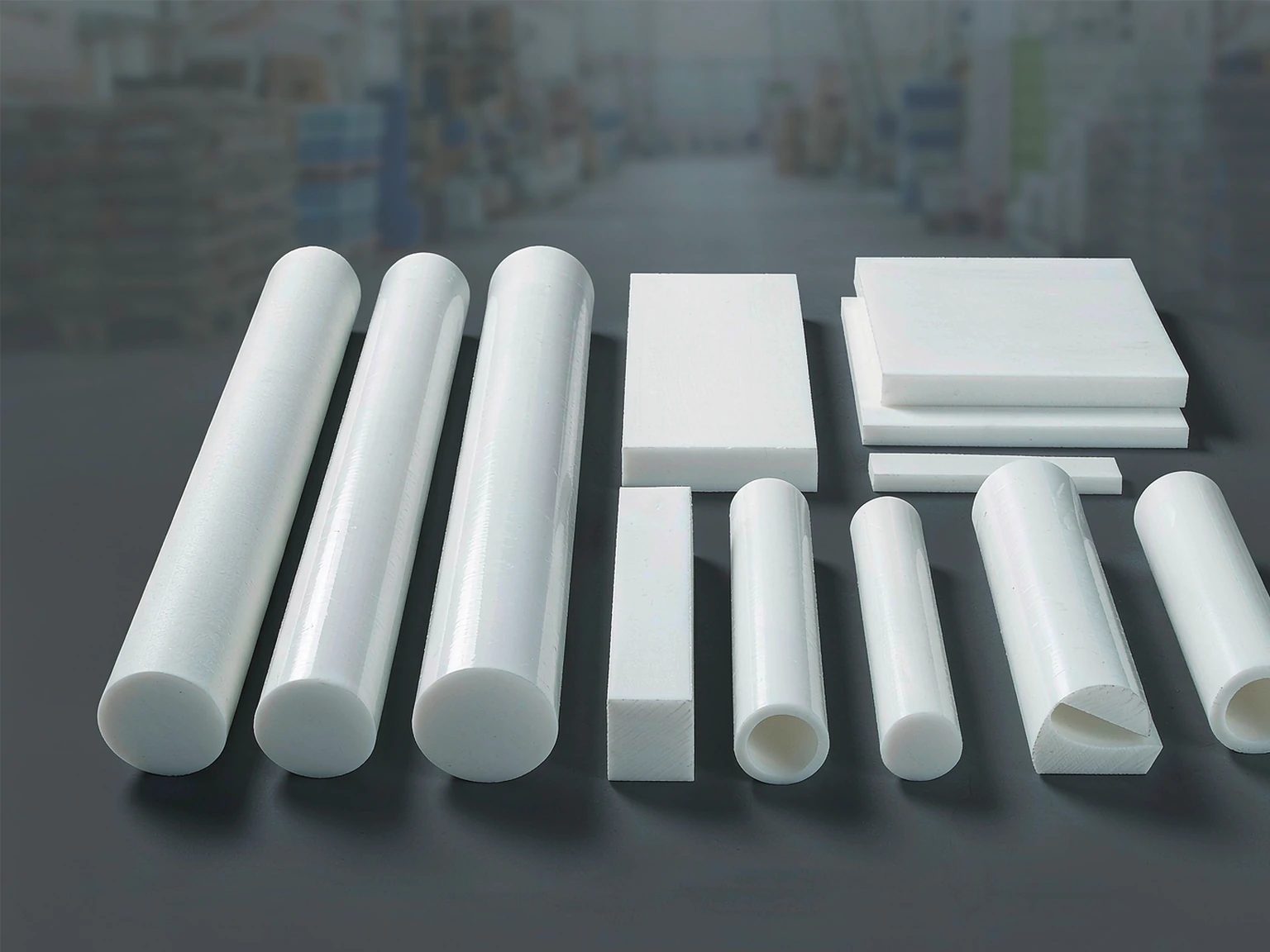
The manufacturing route controls the properties more than the brand of resin does:
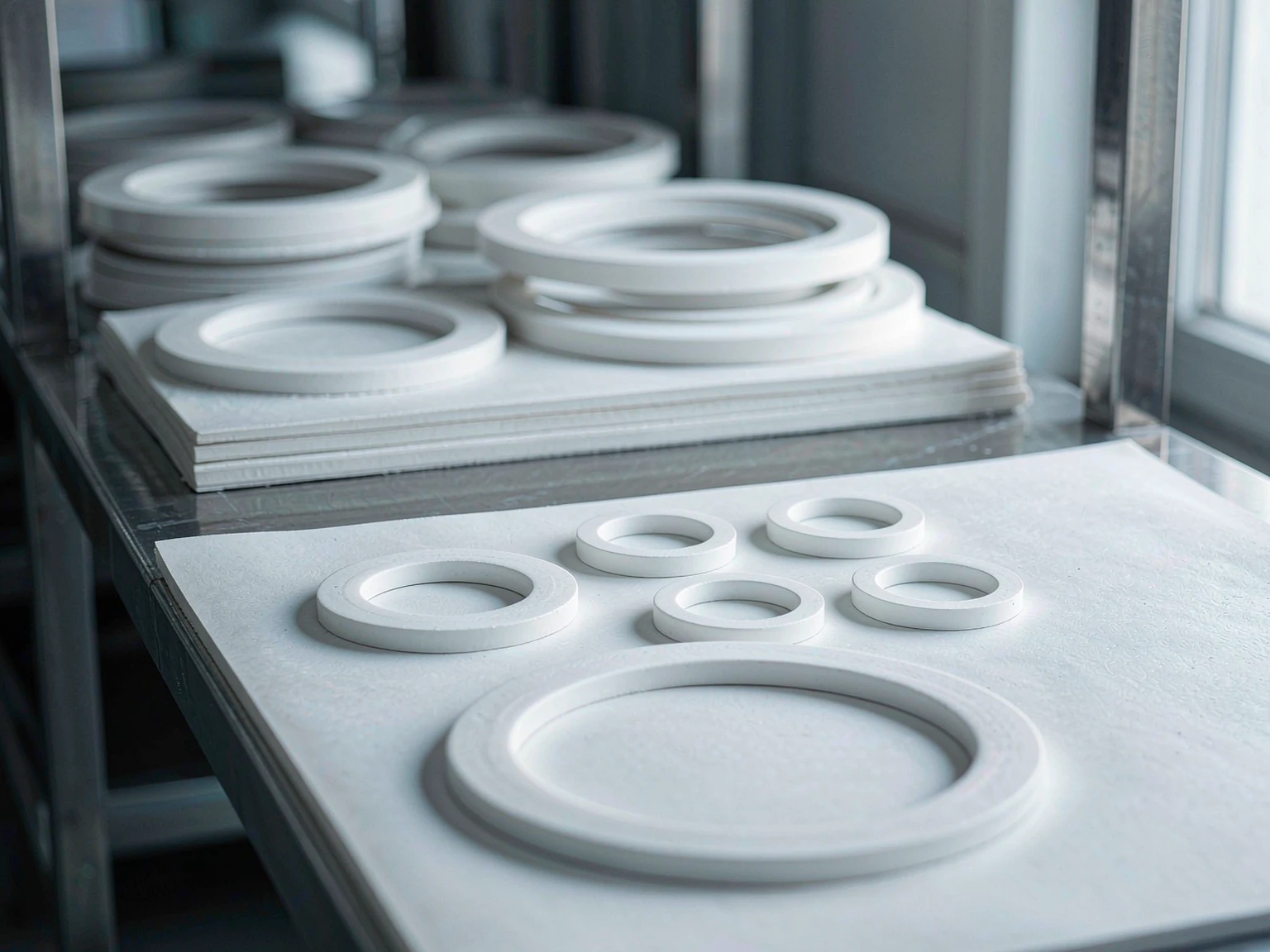
- Skived sheet (peeled from a sintered billet) gives uniform thickness and the best surface finish for flat flanges; wall thickness down to 0.1 mm with tight tolerance.
- Molded sheet is economical above roughly 3 mm thickness but can carry higher porosity; demand density values (2.10–2.30 g/cm³ minimum) on the certificate.
- Expanded PTFE is a different product family entirely — biaxially stretched, fibrillated, with higher sealability at lower bolt load. If your supplier offers “ePTFE” at virgin-PTFE prices, that is a red flag on its own.
A real manufacturer runs its own sintering ovens and skiving lines. A trader will describe processes in vague terms because it has never stood next to the machine. Ask which equipment is in-house and which is outsourced — outsourced sintering is not disqualifying, but it must be disclosed, because sintering temperature profiles are where most gasket quality is actually made or lost.
3. Traceability: one number, end to end
For critical service (chlorine, pharma, hydrogen), demand lot-level traceability: your gasket’s box label should reference a lot that maps to a resin batch, a sintering cycle record and a dimensional inspection report. This costs a real manufacturer almost nothing to provide — the records exist as part of ISO 9001 — but it is effectively impossible for a reseller to fake convincingly.
4. Evidence pack: what a serious supplier sends in 24 hours
| Item | What to expect |
|---|---|
| Material certificate | Tested density, tensile, elongation on finished sheet — not resin brochure values |
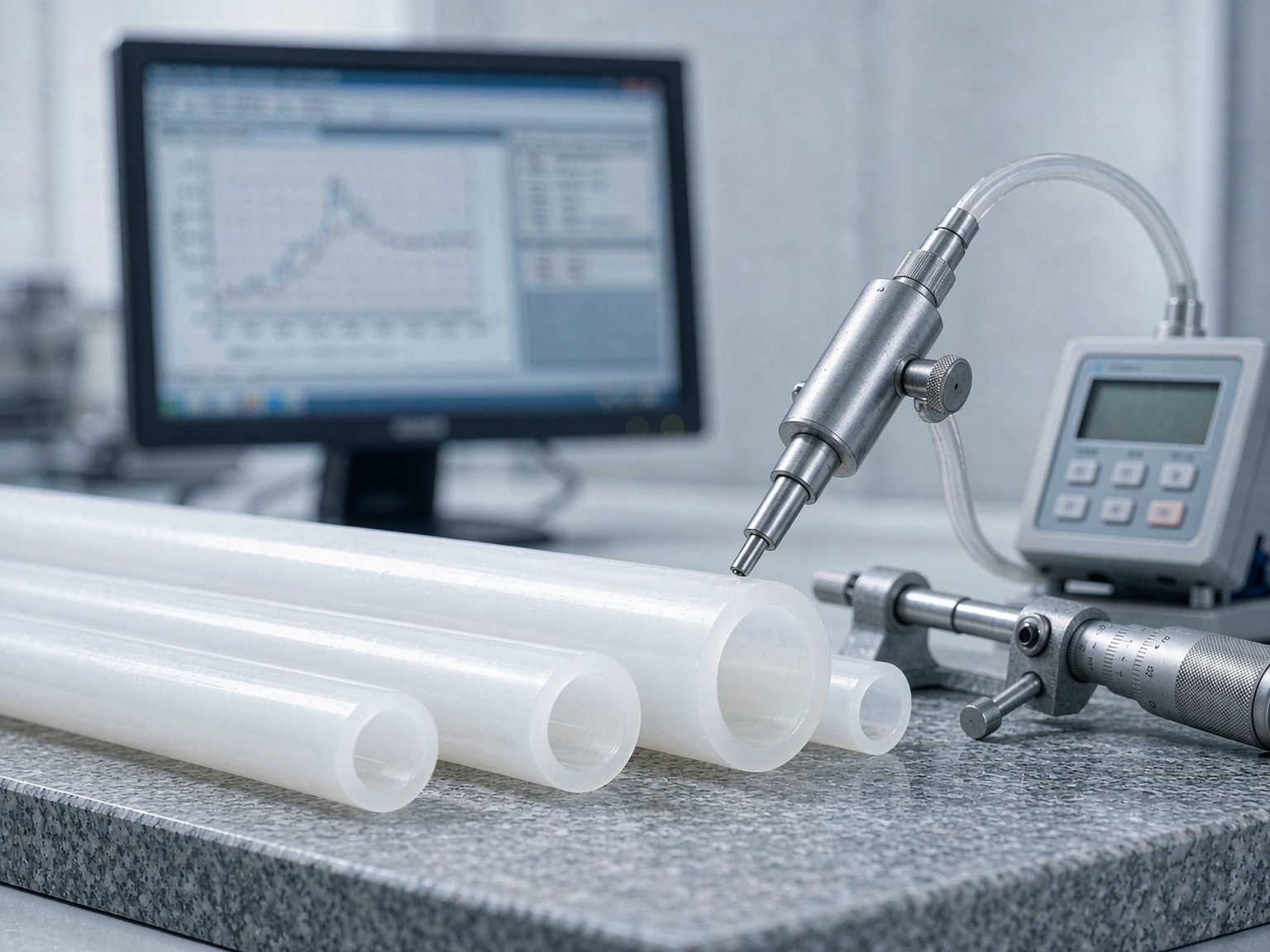
| Dimensional report | Thickness at 5 points, ID/OD, flatness for sizes you actually buy |
| Compliance docs | FDA 21 CFR 177.1550 / EU 10/2011, RoHS, REACH as applicable to your sector |
| Sample policy | First-article sample offered before production order, with the same lot documentation |
5. Red flags that predict field failures
Quotes that are 30–50% below the market without explanation (usually reprocessed resin or under-sintered billets), refusal to name the resin grade, datasheets with no measured values, “yes” to every specification question without engineering review, and prices quoted per kilogram when your part is dimension-defined. None of these is proof of a bad supplier, but each one correlates strongly with gaskets that creep, cold-flow and leak at the first thermal cycle — PTFE’s cold-flow behavior is the number-one field complaint and it is controlled by resin choice, sintering quality and filler design, not by luck.
6. A 10-minute qualification call script
Ask four questions in this order: (1) Which resin grades do you run for gasket sheet, and what tensile do your finished sheets test at? (2) Is sintering in-house, and can I get the cycle record for my lot? (3) Can you send a first-article sample with its own material certificate? (4) What is your standard for filler visibility on filled grades — homogeneous dispersion or surface coating? A manufacturer answers these from experience in minutes; a trader needs to “check with the factory”. That asymmetry is the most reliable signal in B2B sourcing.
How Chunhuan Group answers these checks
Chunhuan (Zhenjiang Chunhuan Sealing Materials Co., Ltd., Group) has manufactured PTFE sealing materials since 1985, with in-house molding, sintering and skiving, production capacity of roughly 50 tons per month, and certification under ISO 9001 with FDA, RoHS and REACH documentation available per lot. The company supplies both virgin and filled PTFE gasket sheet and finished sealing products, and provides first-article samples with material certificates on request. Submit your specification through the quote form to receive a documented proposal rather than a one-line price.
Frequently Asked Questions
How do I verify a PTFE gasket manufacturer before the first order?
Request resin grade by name, tested tensile and density on finished sheet, lot traceability, and a first-article sample with its own certificate. A genuine manufacturer supplies all four within about one working day.
What tensile strength should virgin PTFE gasket sheet have?
Genuine skived virgin PTFE typically tests around 30-40 MPa tensile with elongation above 200%. Values below 20 MPa usually indicate reprocessed resin.
Why are some PTFE gasket quotes much cheaper?
Typically reprocessed resin, under-sintered billets, or tolerance games on thickness. The cost shows up later as cold flow and leakage at thermal cycling.
Does Chunhuan provide samples and lot certificates?
Yes. Chunhuan Group provides first-article samples with material certificates, and holds ISO 9001 with FDA, RoHS and REACH documentation available per lot.

 English
 Russian
 French
 Spanish
