
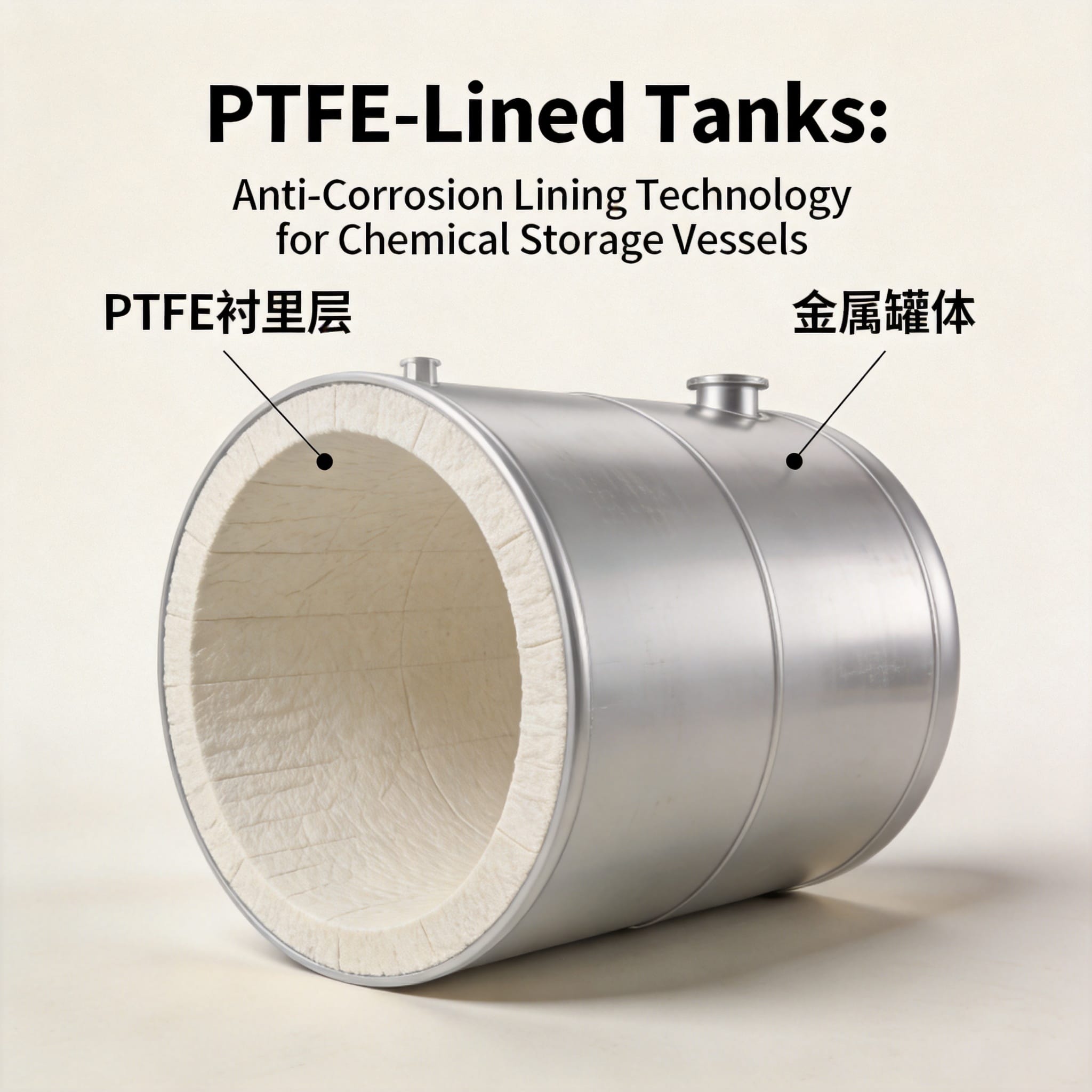
A PTFE-lined tank is a chemical storage vessel whose interior surface is covered with a bonded sheet of polytetrafluoroethylene (PTFE), a fluoropolymer that resists attack from almost all industrial acids, bases, and solvents. The PTFE sheet acts as an inert barrier: the aggressive chemical touches only the fluoropolymer, while the structural steel or FRP shell behind it carries the mechanical load. By the end of this article, you will be able to explain how the lining works, walk through the lining installation sequence step by step, and spot the four mistakes that cause most premature lining failures.
Table of Contents
How PTFE Lining Protects a Tank
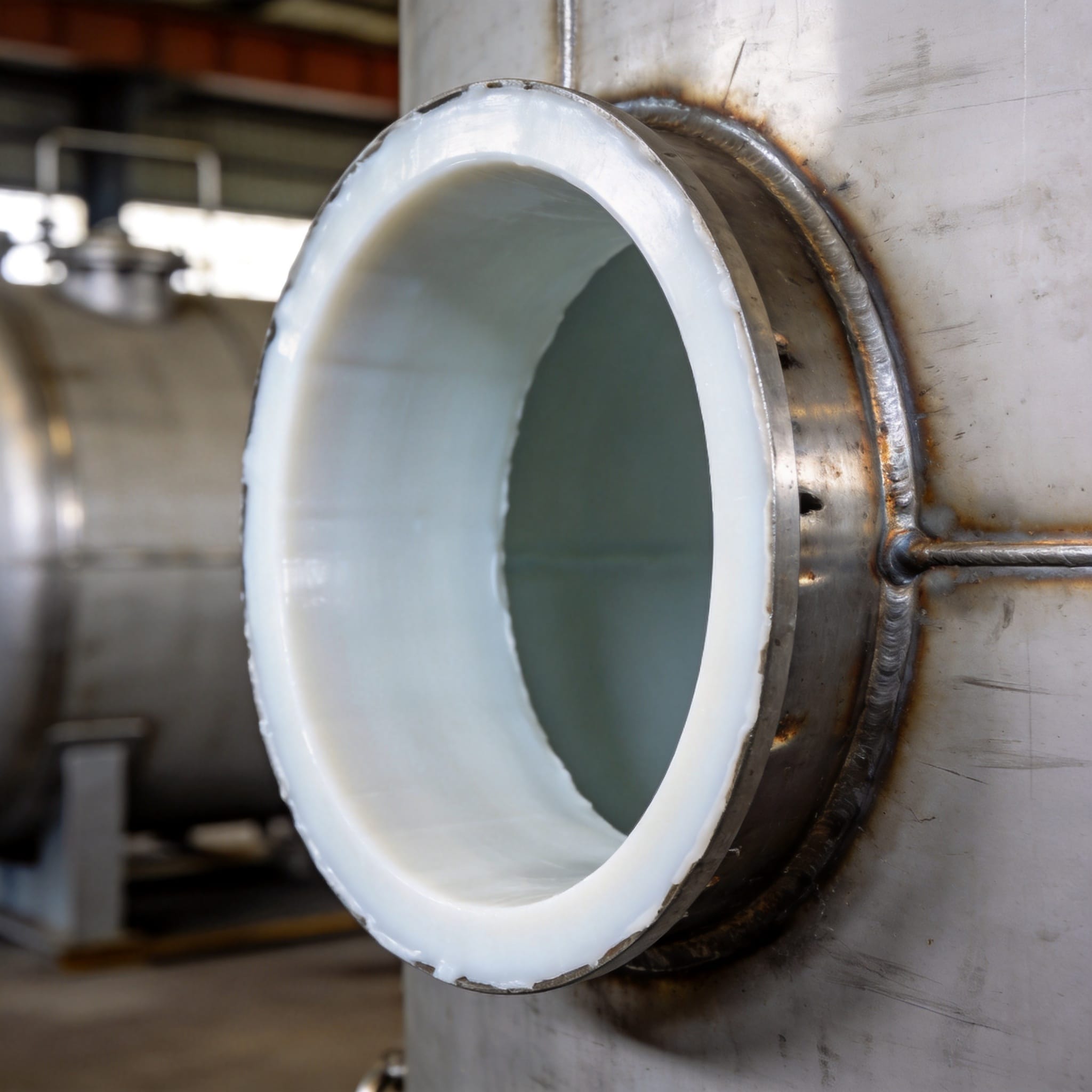
PTFE is a carbon-fluorine polymer. The carbon-fluorine bond is one of the strongest in organic chemistry, which is why the material survives exposure to hydrochloric acid, sulfuric acid, sodium hydroxide, and most organic solvents at temperatures up to roughly 260 °C (500 °F). The ASTM F20 committee maintains the standard test methods used to qualify fluoropolymer linings for this service.
The protection is purely physical. The PTFE sheet forms a continuous, pore-free membrane across the wetted surface, so the corrosive fluid never reaches the metal substrate. Two properties matter most:
- Chemical inertness: PTFE does not react with the stored medium, so it does not dissolve, swell, or leach.
- Low permeability: A properly bonded sheet blocks diffusion of ions and moisture toward the steel.
The critical failure point is never the PTFE itself. It is the bond between the PTFE and the substrate, or the seams where sheets overlap. That is why the installation sequence below is dominated by surface preparation and seam testing, not by the sheet material.
How to Line a Tank with PTFE: 8 Steps
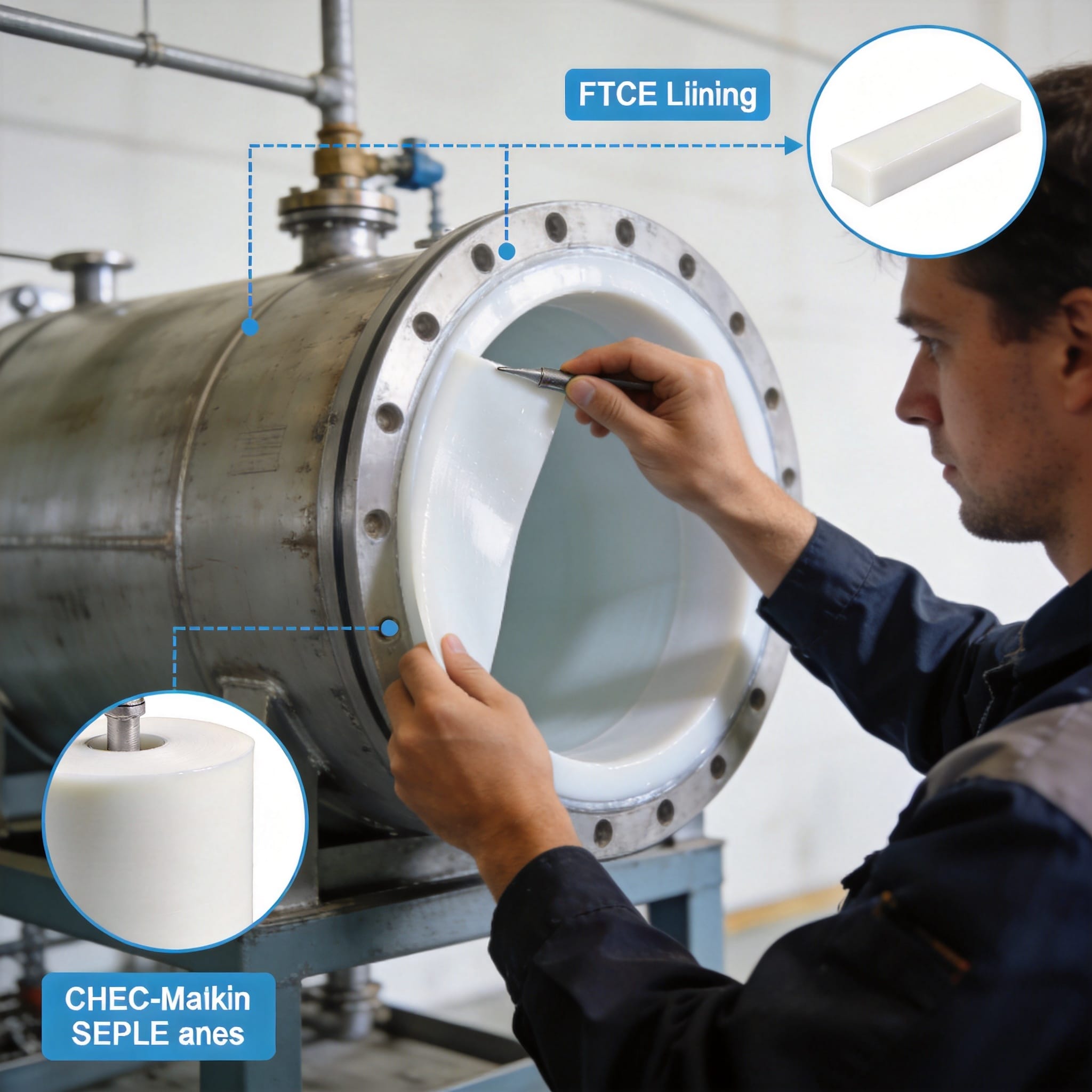
Each step below is independently verifiable. Do not proceed to the next step until the current one passes its check.
- Inspect and prepare the substrate. Grit-blast the steel interior to a white-metal finish (SSPC-SP 5 / NACE No. 1). Verify surface profile is 50–75 µm using a replica tape. Any rust, mill scale, or oil left here becomes a disbond later.
- Apply the primer or adhesive system. Brush or spray the bonding agent to the specified wet-film thickness, typically 25–50 µm. Record the batch number and ambient temperature.
- Cut and fit the PTFE sheets. Lay out sheets with a minimum 25 mm overlap at every seam. Allow the sheet to relax at room temperature for at least 2 hours before bonding so it does not shrink after installation. For large vessels, a large-size white square PTFE skived sheet reduces the number of seams that must be welded.
- Bond the sheets to the wall. Roll each sheet from the center outward to push trapped air to the edges. Use a hand roller with steady pressure; air pockets are the number-one cause of blistering.
- Weld or seal the seams. For welded linings, use a hot-air or extrusion welder at the temperature specified by the sheet supplier. For adhesive-sealed linings, apply the sealant bead and smooth it. Every seam must be continuous.
- Test the seams. Run a high-voltage spark test (also called a holiday test) across every weld and overlap. Set the voltage per the sheet thickness; a 3 mm sheet is typically tested at 15–20 kV. Any spark indicates a pinhole and must be repaired.
- Inspect the finished lining. Visually check for wrinkles, blisters, and foreign inclusions. Tap-test bonded areas for hollow spots.
- Document and cure. Record all test results, then allow the lining to cure per the manufacturer’s schedule before filling the tank. Fill with water first as a leak check before introducing the process chemical.
The entire sequence for a 20 m³ tank typically takes 5–8 working days, with surface preparation and seam testing consuming about 60% of that time.
4 Common Lining Mistakes and Their Fixes
These four failures account for the majority of premature lining breakdowns I have seen in 12 years of field inspection work.
- Mistake 1: Skipping the spark test. Symptom: a pinhole in a seam lets acid reach the steel, causing a pinhole corrosion pit within weeks. Fix: spark-test 100% of seams, not a sample. Repair any defect and re-test.
- Mistake 2: Bonding over a damp or oily surface. Symptom: the sheet lifts off in large patches, often within the first thermal cycle. Fix: verify substrate cleanliness with a water-break test before priming; re-blast if the water beads up.
- Mistake 3: Insufficient overlap. Symptom: seam separation as the sheet expands and contracts with temperature cycling. Fix: maintain the specified overlap (25 mm minimum) and never stretch the sheet to close a gap.
- Mistake 4: Filling the tank before full cure. Symptom: adhesive failure and solvent entrapment blisters. Fix: follow the cure schedule exactly; cure time depends on ambient temperature and adhesive type, so record both.
PTFE vs. Other Lining Materials
PTFE is not always the right choice. The table below compares it against the two linings most often specified for chemical storage.
| Propiedad | PTFE | PFA | Rubber (e.g., butyl) |
|---|---|---|---|
| Max continuous service temp. | ~260 °C | ~260 °C | ~80 °C |
| Chemical resistance | Broadest | Broadest | Moderate |
| Permeabilidad | Very low | Very low | Higher |
| Seam method | Welded or adhesive | Welded | Adhesive + vulcanized |
| Relative cost | Alto | Higher | Low |
Choose PTFE when the medium is aggressive and temperatures exceed 100 °C. Choose rubber when the medium is mild and cost is the dominant constraint. PFA offers similar performance to PTFE with better weldability, at a higher price. The NIST Materials Measurement Science Division publishes reference data on polymer permeation that is useful when comparing candidates.
Preguntas frecuentes
How long does a PTFE tank lining last?
A correctly installed and tested lining typically gives 10–20 years of service. The dominant factor is seam quality, not the PTFE sheet itself.
Can I repair a PTFE lining in place?
Yes, for localized defects. Small pinholes and blisters can be repaired with a welded patch, provided the surrounding sheet is still bonded. Large-area disbonding requires re-lining.
Does PTFE lining work for strong bases like sodium hydroxide?
Yes. PTFE resists concentrated sodium hydroxide at elevated temperatures, unlike many rubber linings that degrade under strong caustic service.
What thickness of PTFE sheet should I specify?
For most chemical storage vessels, 2–3 mm is standard. Thicker sheets resist permeation longer but are harder to form around nozzles and corners. A PTFE molded or skived thick plate is often specified for heavy-duty vessel walls.
How do I know if a lining has failed?
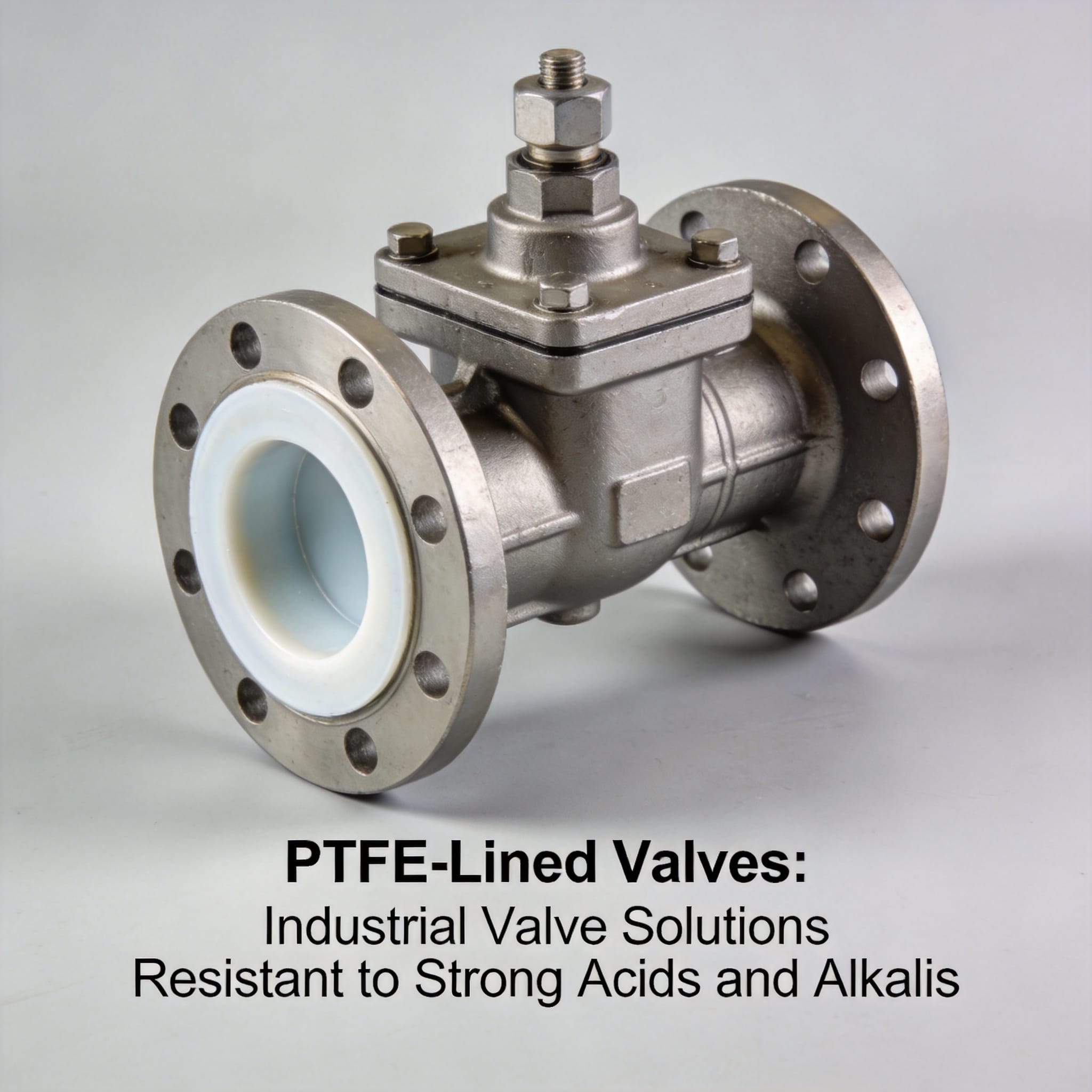
Look for blisters, discoloration at seams, or a sudden rise in dissolved iron in the stored product. A spark test or ultrasonic inspection can confirm disbonding before the tank leaks. Where the lining meets piping, a chemical-grade PTFE sheet gasket at the flange joint helps maintain a continuous barrier.

 English
 Russian
 French
 Spanish