
Short answer: a custom PTFE gasket RFQ needs seven fields to get a comparable quote: drawing with revision, material and filler, thickness and tolerance, quantity for first order plus annual forecast, duty conditions, required certificates, and delivery terms. Miss any one and suppliers will fill the gap with assumptions — each assumption widens the price gap between quotes.
Buyers comparing gasket quotes often find a 2x price spread and no way to tell which offer is real. The spread usually comes from the RFQ, not the suppliers: undefined thickness tolerance, unnamed filler, unknown bolt load. Below is an RFQ structure that forces like-for-like pricing, followed by the assumptions suppliers commonly make when a field is missing.
The seven fields, with what “good” looks like
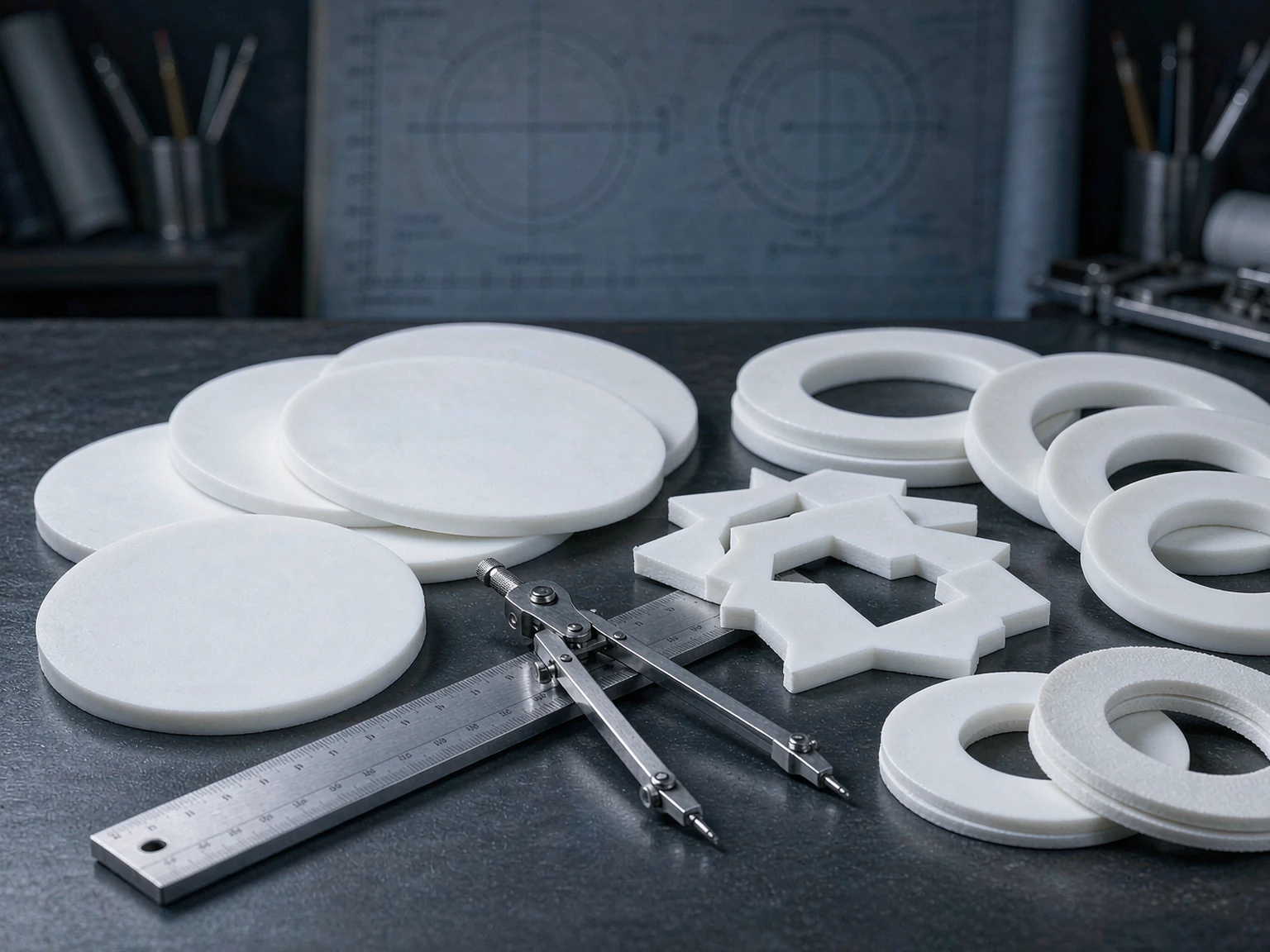
- Drawing with revision. Even for simple rings: ID, OD, thickness, and any bolt-hole pattern. State the revision and which dimensions are critical.
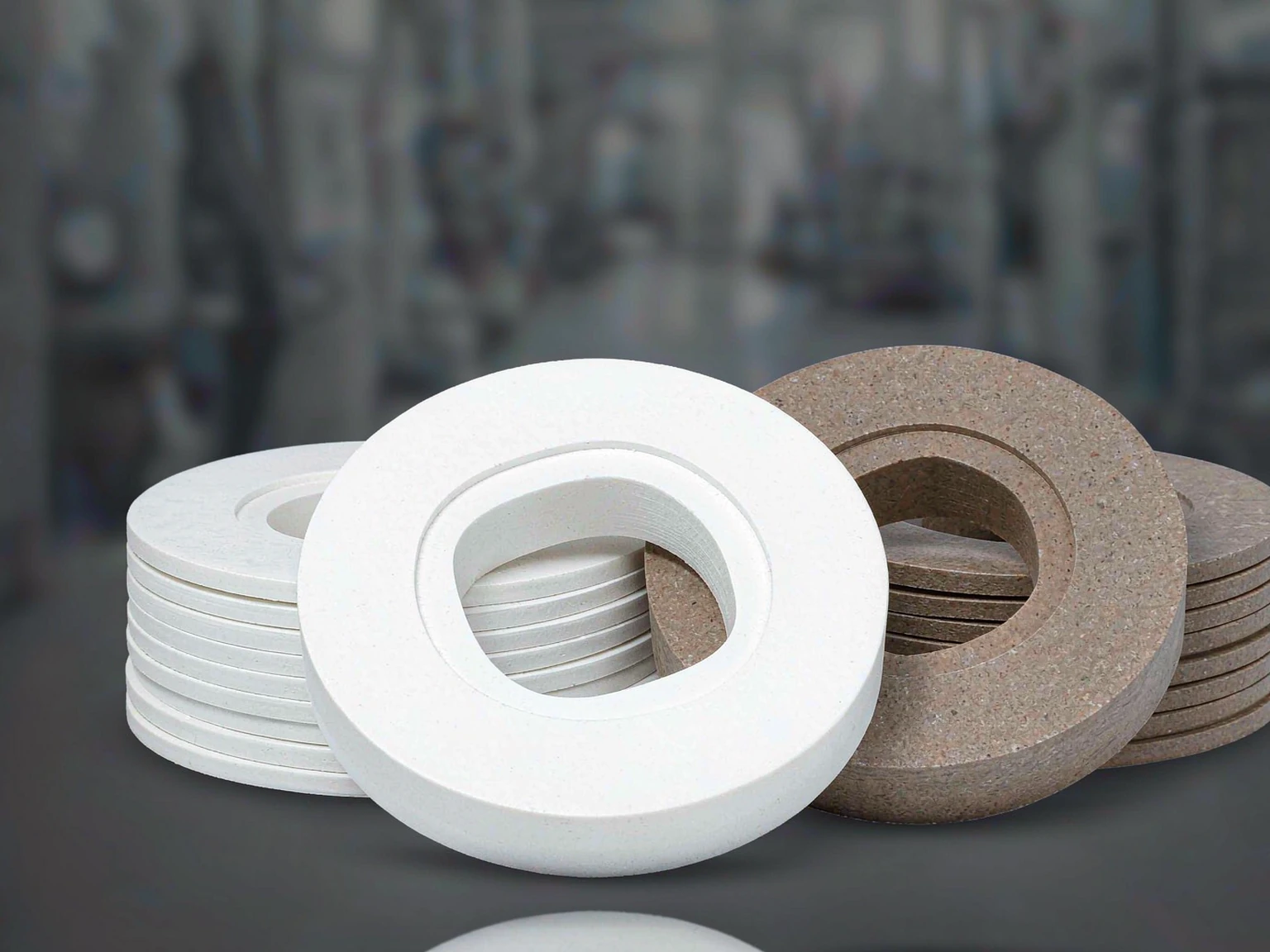
- Material and filler. “PTFE” is not a specification. Write virgin PTFE, or glass/bronze/carbon-filled with percentage — filled grades can differ by 30% in price and 3x in creep performance.
- Thickness and tolerance. Standard skived sheet runs 0.5–6 mm; state tolerance per thickness (±8% is typical commercial; tighter costs more). Cold flow is thickness-driven, so this field carries real engineering weight.
- Quantity and forecast. First order, expected annual volume, and order frequency. Gasket pricing at 100 pcs/quarter differs fundamentally from 1,000 pcs/once.
- Duty conditions. Media, temperature range (including excursions), pressure, bolt load available. This is where a manufacturer adds value: they may recommend an expanded or filled grade that outlasts virgin at your duty.
- Certificates. Material cert, dimensional report, FDA/RoHS/REACH as applicable, first-article inspection for new parts.
- Commercial terms. Incoterms, packaging (gaskets deform under poor packing), and lead time expectation.
Assumptions suppliers make when a field is missing
| Missing field | Typical assumption | Consequence |
|---|---|---|
| Filler | Cheapest virgin grade | Field creep failure; re-quote at award |
| Tolerance | Commercial class | Thickness scatter; sealing inconsistency |
| Volume | One-time order | Price 20–40% above repeat-order rates |
| Temperature | Ambient | Wrong grade recommended |
A one-line test for quote quality
Ask each bidder to state, in one sentence, which gasket property their recommendation optimizes — sealability, creep resistance, chemical range or cost — and why yours needs it. Manufacturers answer with a trade-off; resellers answer with a price. Chunhuan Group (est. 1985, ~50 t/month capacity, ISO 9001) quotes custom gaskets from PTFE gasket sheet and finished sealing products with first-article samples and lot certificates. Send the seven fields; you will get the trade-off sentence first, then the price.
Frequently Asked Questions
What information does a custom PTFE gasket RFQ need?
Drawing with revision, material/filler specification, thickness with tolerance, first-order and annual quantities, duty conditions, required certificates, and delivery terms.
Why do PTFE gasket quotes vary so much?
Usually because the RFQ left fields undefined, forcing each supplier to assume material grade, tolerance or volume. Defined RFQs produce comparable prices.
Should I specify filler content in the RFQ?
Yes. Glass, bronze and carbon-filled PTFE differ by ~30% in price and several times in creep resistance; ‘PTFE’ alone is not a specification.

 English
 Russian
 French
 Spanish
