
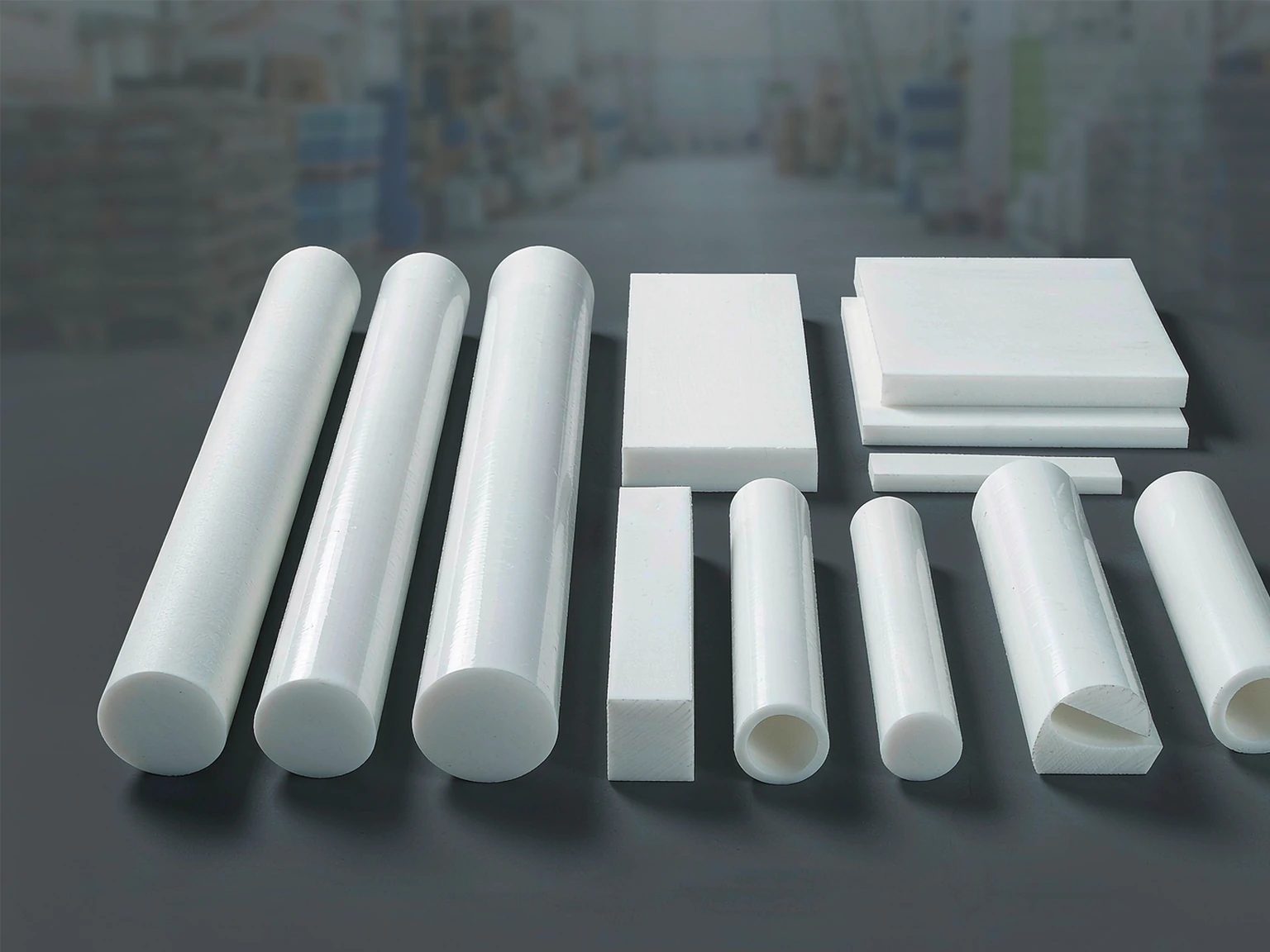
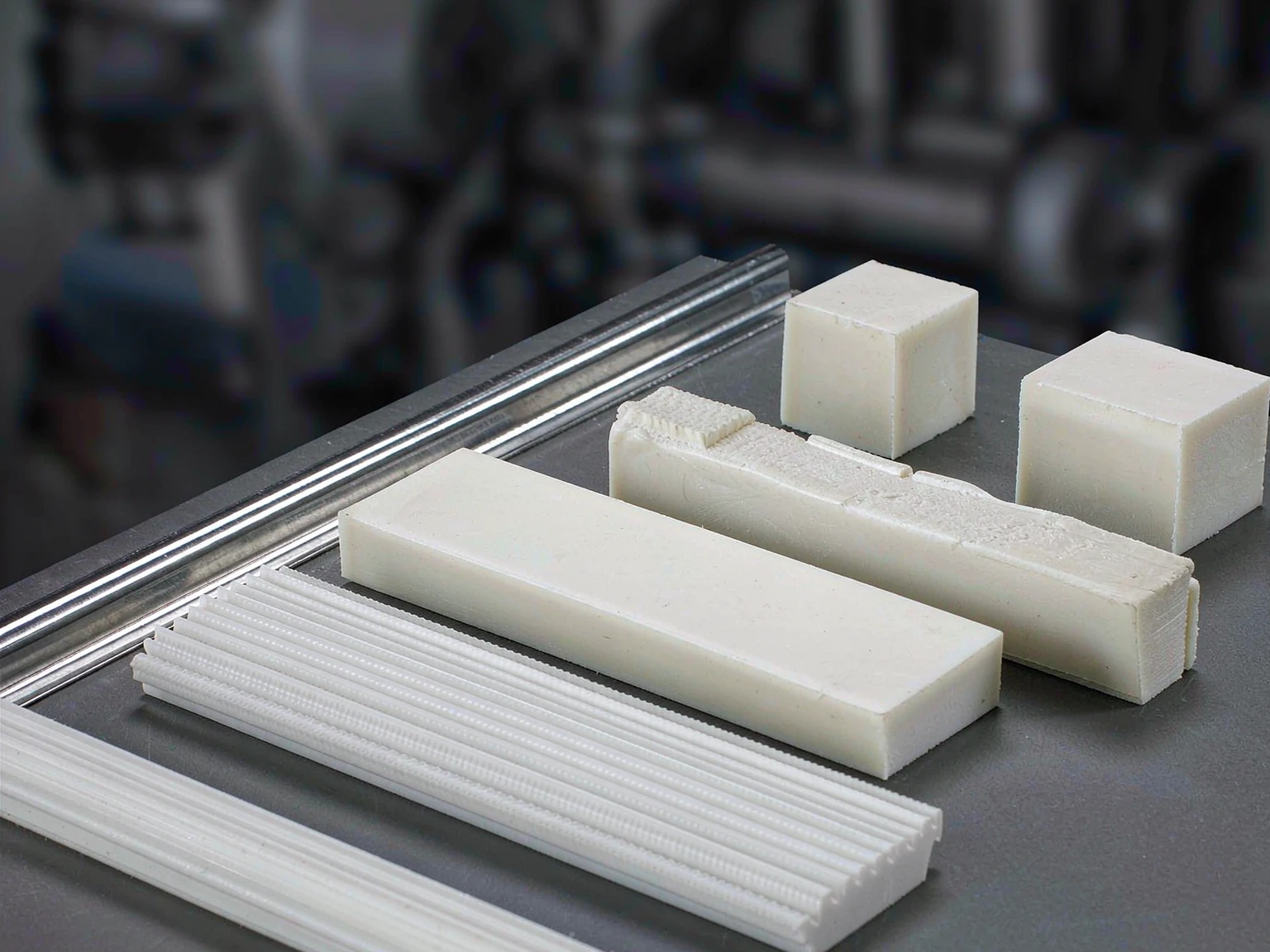
Short answer: Buy PTFE stock shapes (rod, sheet, tube) against a written spec with five elements: manufacturing route (molded/sintered or skived), grade (virgin/modified/filled with percentage), size with tolerance band, certificate scope (lot-specific test report vs generic datasheet), and packaging/marking. Price differences between suppliers usually reflect which of these five are quietly missing.
Stock shapes look like a commodity, and that’s exactly where buyers overpay or under-spec. Two rods with the same OD can differ in density uniformity, sintering quality, and resin origin — differences that surface as machining problems, not at goods-in.
The Five-Element Spec
- Route: Molded rod has better radial uniformity for precision machining; extruded rod is economical for long lengths. Skived sheet for thin stock, molded plate for thick.
- Grade: “PTFE” alone is not a spec. Virgin, modified (e.g., with PPVE), or filled (25% glass, 25% carbon, etc.) — with the filler named and quantified.
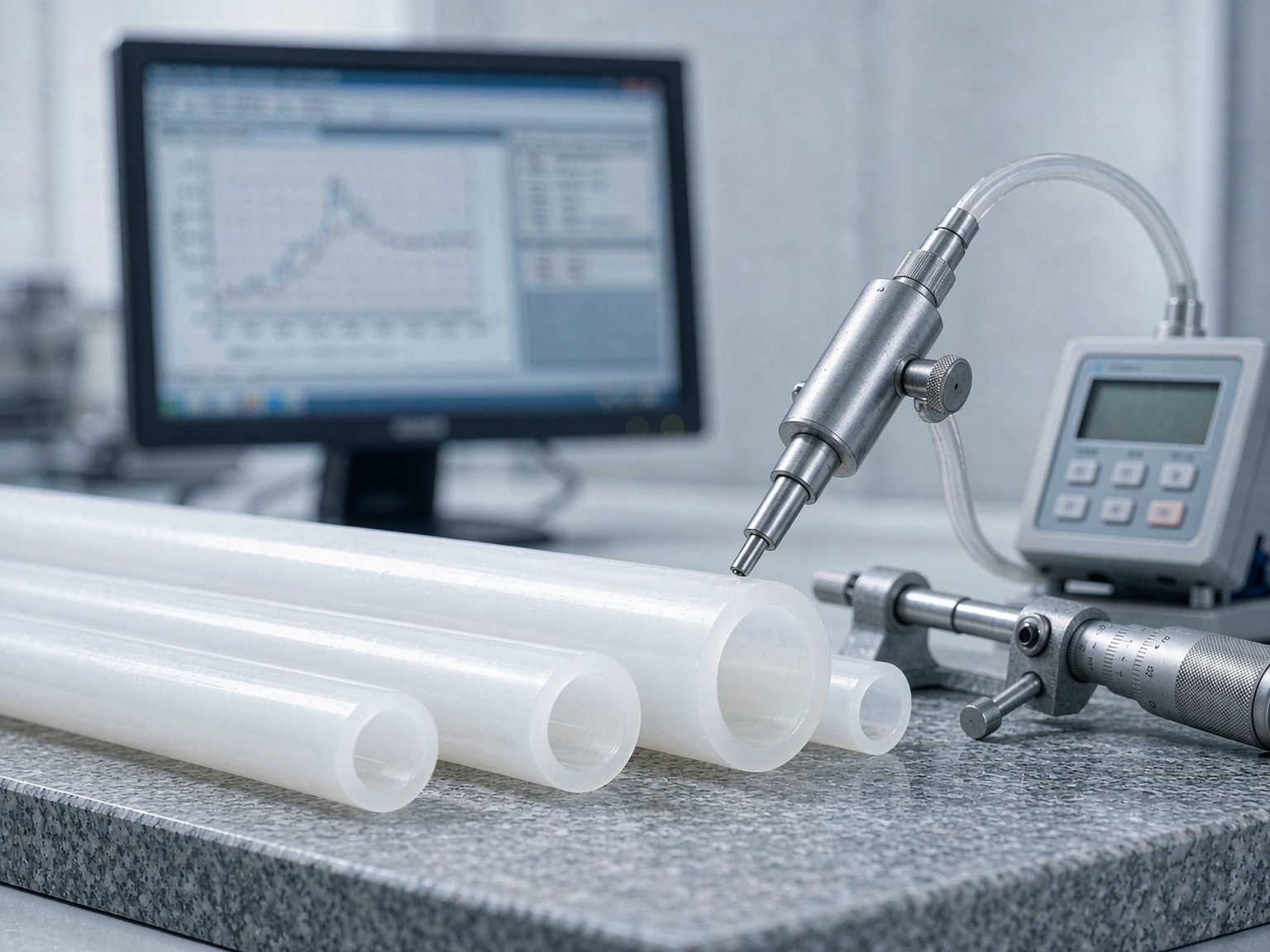
- Size and tolerance: State OD/ID/thickness plus the tolerance you’ll hold. Standard commercial tolerance is wider than most machinists assume.
- Certificado: Insist on a lot test report: density, dimensional check, and tensile/dielectric data if the application needs them.
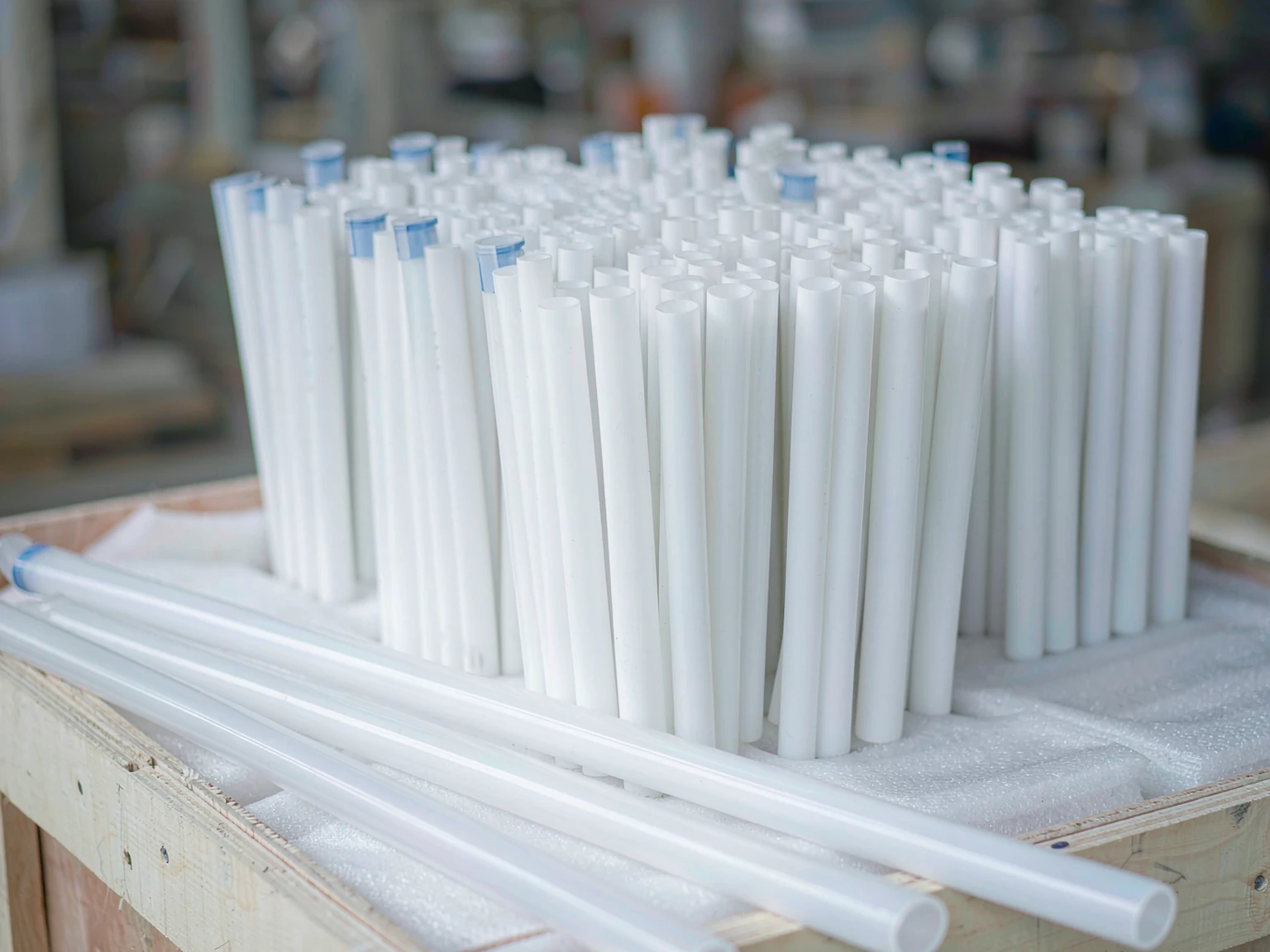
- Marking: Lot-marked packaging so machining shops can trace a scrapped batch back to material.
Price Signals Worth Reading
| Quote signal | What it may mean |
|---|---|
| Far below market, no certificate offered | Reground or off-spec resin content |
| “Same as last time” for repeat orders | Fine — but get the spec written once anyway |
| Only generic datasheet attached | Supplier may not test their own lots |
Volume Strategy
For machining shops with steady throughput, framework purchasing against a fixed spec with quarterly releases beats spot-buying on price — material consistency batch-to-batch matters more to your scrap rate than a 5% unit saving. Chunhuan molds and sinters its own billets across 10,000+ produced grades, supplying rod, sheet and tube with lot certificates and consistent sintering records since 1985.
Frequently Asked Questions
What should a PTFE stock shape specification include?
Five elements: manufacturing route, exact grade (with filler type/percentage if filled), dimensions with tolerance band, lot-specific certificate scope, and lot marking/packaging.
Molded vs extruded PTFE rod — which for machining?
Molded rod offers better radial density uniformity for precision parts; extruded rod is more economical for long lengths and less critical work.
Why do some PTFE stock shapes cost far less?
Often because they use reprocessed or off-spec resin and skip lot testing. Without a certificate you’re buying unknown material.
Should I buy PTFE stock by framework agreement?
For steady machining throughput, yes — material consistency between batches affects scrap rate more than small unit price differences.

 English
 Russian
 French
 Spanish
