
Navigating the intricate world of materials engineering often feels like a journey through uncharted territory, where each discovery further broadens the horizon. Among the most fascinating innovations in this field is carbon filled PTFE, a marvel of modern chemistry known for its impressive capabilities and resilience. But what truly sets this material apart? Delving into the carbon filled PTFE temperature range offers a glimpse into its unique qualities, revealing why it stands as a cornerstone in applications requiring exceptional thermal stability and performance.
Consider the demanding environments industries face today: from the arctic chill of the tundra to the blistering heat of manufacturing plants, materials must withstand extreme conditions without faltering. This is where carbon filled PTFE comes into play, providing a solution that promises not only durability but exceptional integrity under pressure. By understanding the nuances of its temperature range, engineers and designers can harness its full potential, paving the way for advancements that redefine what’s possible in material performance. Whether you’re designing aerospace components or crafting high-tech machinery, knowing how to optimize this material’s capabilities can be your key to success.

The Basics of Carbon Filled PTFE
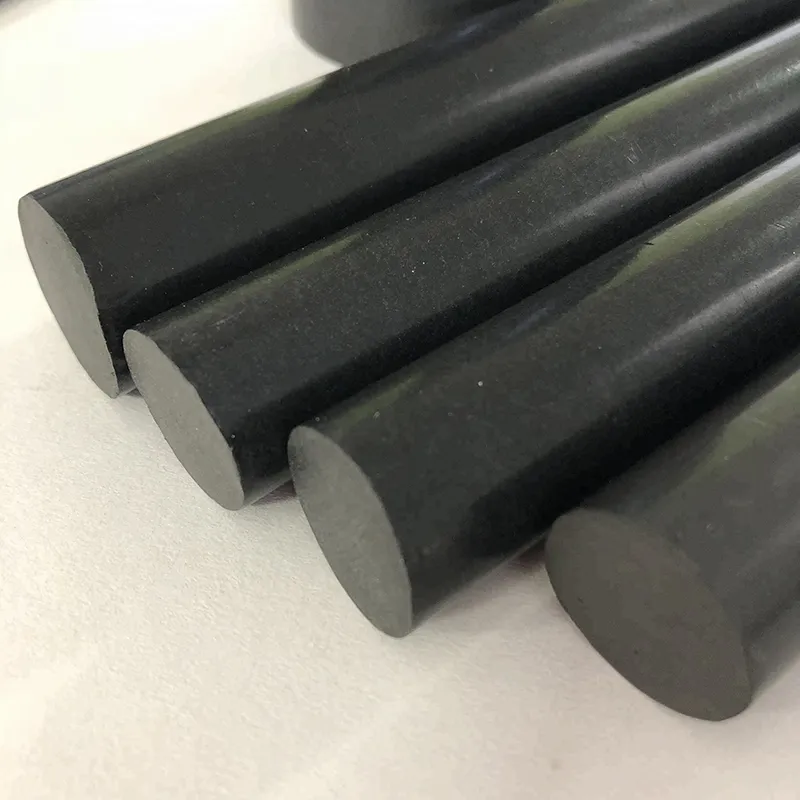
Carbon filled PTFE combines the extraordinary low-friction properties of polytetrafluoroethylene (PTFE) with conductive and reinforcing carbon particles to create a composite that excels where pure PTFE might fall short. By introducing finely milled carbon—typically between 5 % and 40 % by weight—manufacturers significantly enhance PTFE’s wear resistance, dimensional stability, and thermal conductivity. This synergy addresses PTFE’s inherent weakness: creep under load. As a result, carbon filled PTFE retains PTFE’s chemical inertness and wide operational window while delivering superior mechanical integrity.
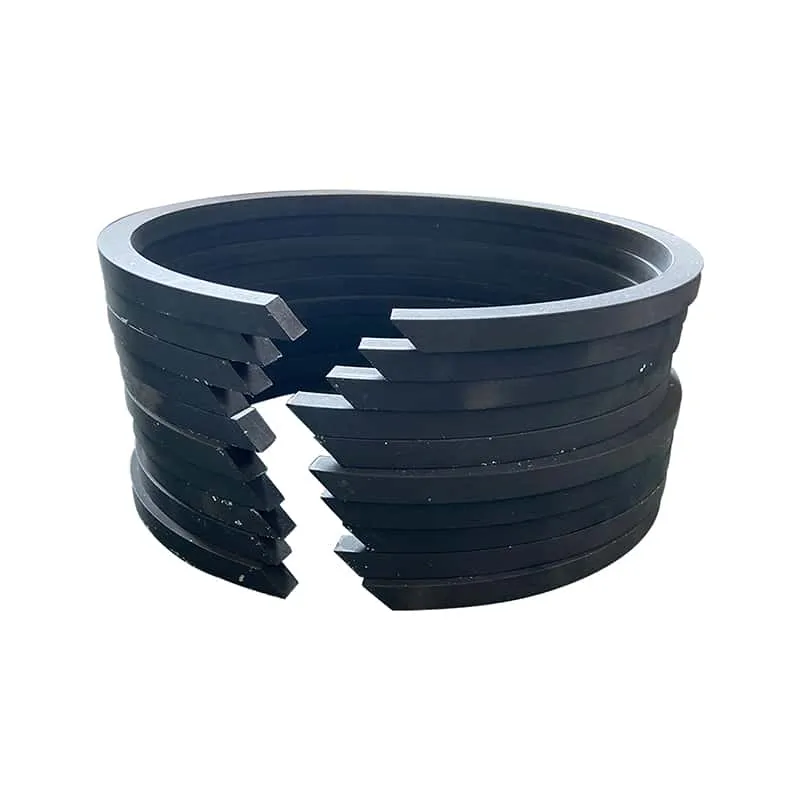
The uniform dispersion of carbon within the PTFE matrix is critical. Advanced mixing and extrusion processes ensure that carbon particles create a reinforcing network, reducing cold flow and improving load-bearing capacity. Additionally, carbon-filled variants conduct heat more effectively than pure PTFE, allowing for more efficient temperature dissipation under dynamic conditions. This balance of properties—low friction coefficient, high chemical resistance, and improved thermal management—makes carbon filled PTFE a versatile choice for seals, bearings, slide plates, and other components operating in rigorous environments.
Understanding the Temperature Range of Carbon Filled PTFE
Carbon filled PTFE features one of the broadest usable temperature windows among polymer composites. Typically, its operating range spans from –200 °C up to roughly +260 °C. At cryogenic temperatures, the filler network within the polymer helps maintain flexibility and minimizes micro-cracking. Conversely, at elevated temperatures, carbon’s thermal conductivity aids in heat dissipation, delaying softening and preserving mechanical strength.
Within this range, several phase and property transitions are noteworthy. Near –100 °C, the matrix becomes more glassy, slightly increasing stiffness but retaining resilience thanks to the carbon network. Above 200 °C, PTFE begins to approach its crystalline melting point (~327 °C), but the carbon structure impedes deformation until around 260 °C. Beyond this threshold, polymer degradation accelerates, and prolonged exposure can lead to oxidation and embrittlement. Understanding the carbon filled PTFE temperature range thus helps engineers set safe operating limits, select suitable fillers, and implement design margins that ensure long-term reliability.
Applications Requiring High Thermal Stability
Industries dealing with extreme heat or cold rely heavily on carbon filled PTFE for critical components. In aerospace, it’s used in cryogenic valves and seals where temperatures plunge below –150 °C, ensuring leak-free performance during fuel transfer and storage. The composite’s resistance to thermal shock makes it ideal for parts that cycle between ground and high-altitude conditions.
In procesamiento químico, reactors and heat exchangers operate at elevated temperatures and under corrosive media. Carbon filled PTFE gaskets, linings, and bearings maintain integrity up to 260 °C while resisting aggressive solvents and acids. Automotive turbochargers and exhaust systems also employ this material to withstand rapid heating to over 200 °C without creeping or deforming. Across these sectors, the reliable carbon filled PTFE temperature range underpins safety, efficiency, and maintenance savings.
Comparison with Other High-Performance Materials
Compared with unfilled PTFE, the carbon filled variant offers up to tenfold reductions in wear rates and a two- to threefold improvement in thermal conductivity, without sacrificing chemical inertness. Pure PTFE may creep under load and exhibit thermal distortions above 150 °C, whereas carbon filled PTFE remains dimensionally stable up to its upper limit.
When stacked against high-temperature polymers like PEEK or polyimides, carbon filled PTFE still shines in low-friction and chemical-resistance scenarios. PEEK works to 250 °C but is more rigid and less chemically inert. Polyimides endure beyond 300 °C but at a higher cost and reduced machinability. Metal alloys handle extreme temperatures yet require lubrication and often lack corrosion resistance. Graphite- or glass-filled PTFE also improve stiffness but does not match carbon’s balance of conductivity, friction reduction, and wear resistance. In sum, the carbon filled PTFE temperature range and unique composite structure place it in a distinct niche for demanding applications.
Strategies for Optimizing Performance in Extreme Conditions
Maximizing carbon filled PTFE’s benefits begins with specifying the right filler loading and particle morphology. Higher carbon content elevates thermal conductivity and stiffness but can increase abrasive wear on mating parts. Engineers often choose 15–25 % carbon by weight for a compromise between wear resistance and tribological performance.
Annealing and post-processing steps also play a key role. Controlled thermal treatments relieve internal stresses, enhance crystallinity, and stabilize dimensions—extending service life under cyclic thermal loads. Designers should integrate thermal expansion allowances, avoiding tight tolerances that could lead to seizure at high temperatures. In dynamic applications, pairing carbon filled PTFE with compatible metal or polymer counterfaces reduces friction further and prevents galling. Finally, periodic inspections and lubricant selection (where permitted) help sustain performance across the full carbon filled PTFE temperature range, ensuring safety and reliability in the toughest environments.
Conclusion: Unlocking the Full Potential of Carbon Filled PTFE
Understanding the unique carbon filled PTFE temperature range empowers engineers to design components that excel in both cryogenic and high-heat environments. Its blend of wear resistance, low friction, and thermal stability sets it apart from pure PTFE and alternative polymers.
By leveraging proper filler content, processing techniques, and design allowances, you can fully harness this material’s capabilities—driving innovations across aerospace, chemical processing, automotive, and beyond.


 English
 Russian
 French
 Spanish