
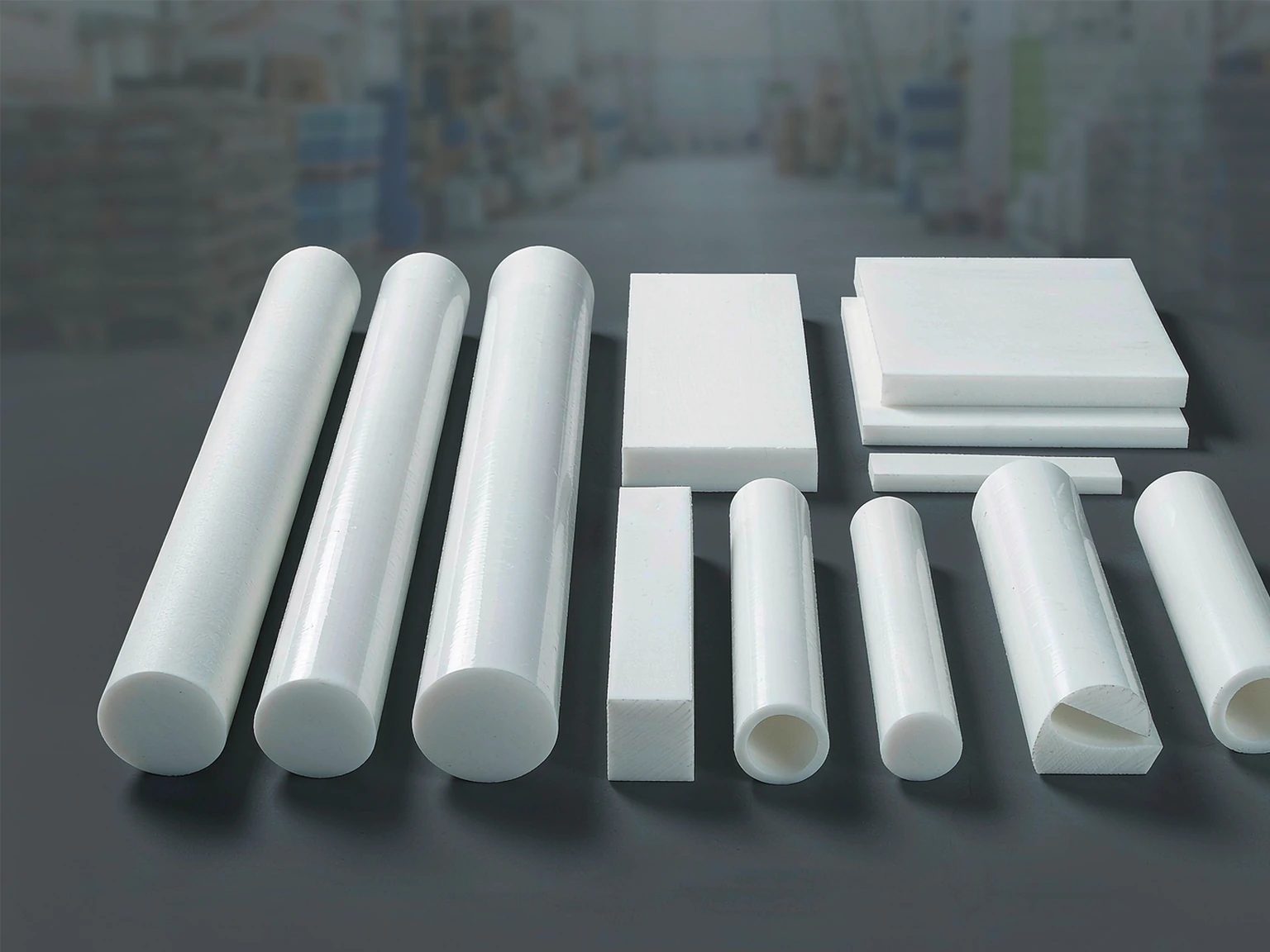
Short answer: “Sheet” and “plate” describe the same PTFE product category — flat stock produced by skiving or molding — but suppliers typically reserve sheet for thicknesses under about 5 mm and plate for 5 mm and above. There is no international standard that draws this line, so always confirm actual thickness and dimensions in writing rather than relying on the word in a product name.
If you source PTFE flat stock from more than one region, you have probably seen the same physical product listed as a sheet by one vendor and a plate by another. The inconsistency is cosmetic; what matters is how the stock was made, because that determines its machining behavior.
Two Manufacturing Routes, Two Different Stocks
PTFE flat stock is either skived (peeled from a large cylindrical billet) or compression-molded and sintered. The route leaves a fingerprint:
| Attribute | Skived sheet | Molded plate |
|---|---|---|
| Typical thickness | 0.1–5 mm (down to film) | 3–100+ mm |
| Surface | Very smooth, slightly directional from the skiving cut | Smoother on mold faces, cut edges on sides |
| Dimensional consistency through thickness | Excellent — uniform density | Can vary slightly between mold faces and core |
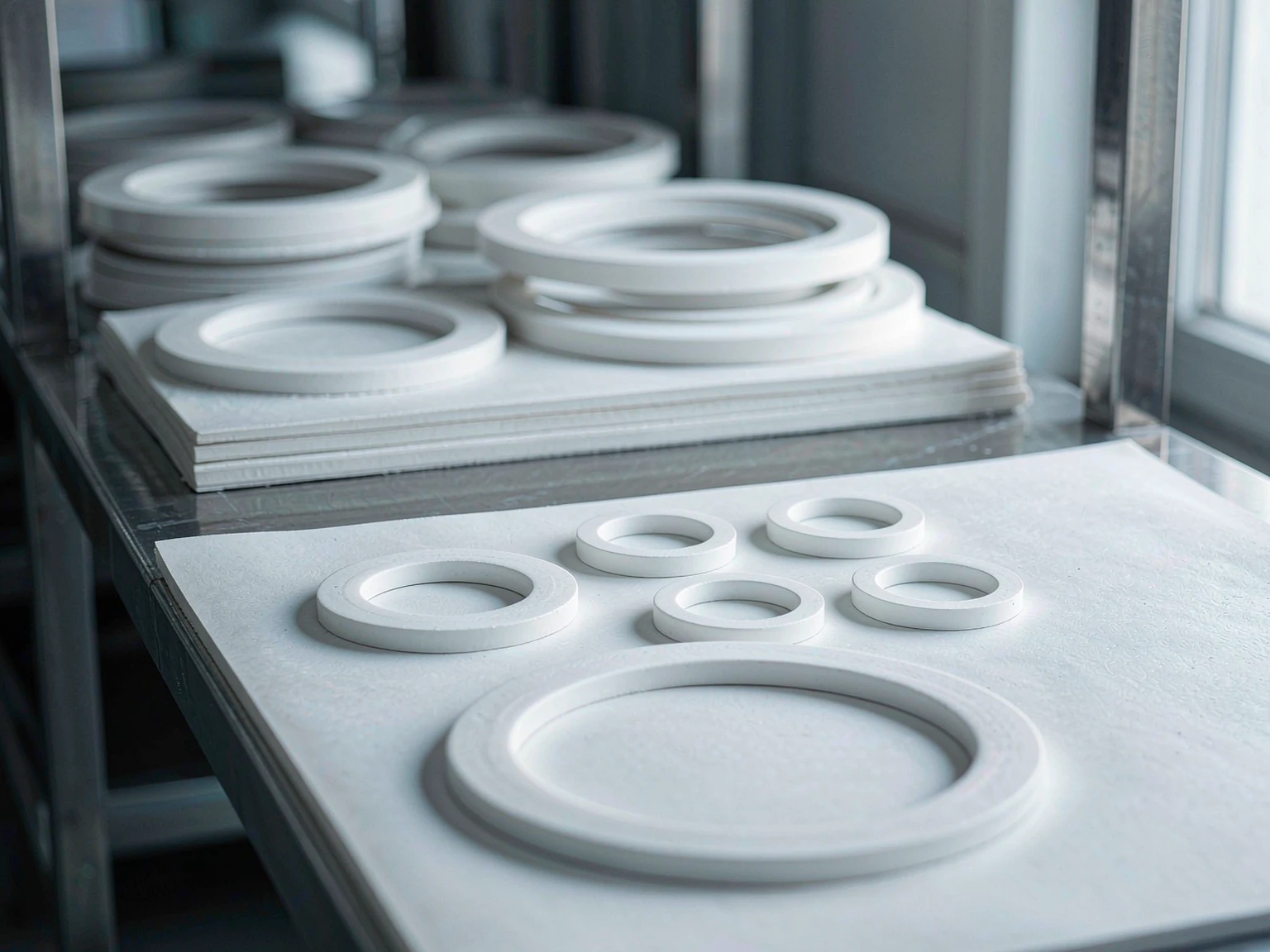
| Best for | Gaskets, lining films, thin machined parts | Machined blocks, thick wear parts, large components |
Because skived sheet is peeled continuously, it is the natural choice when you need long lengths or tight thickness tolerance. Molded plate is produced per billet, so large sections are possible but availability of odd sizes depends on tooling.
What to Verify Instead of the Name
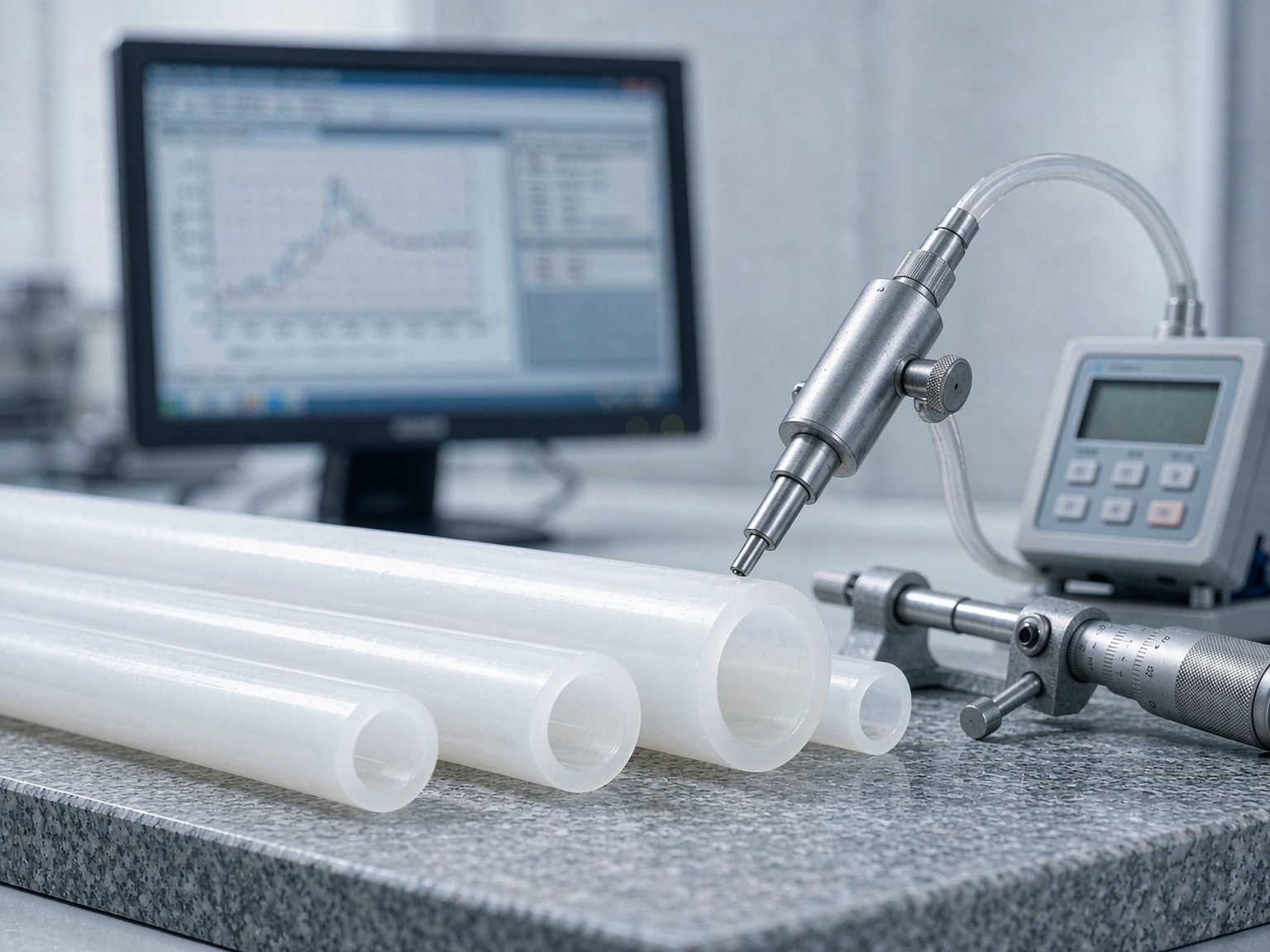
- Actual thickness and tolerance — ask for the tolerance band (e.g., ±5% or ±0.1 mm), not the nominal number.
- Manufacturing route — skived or molded; this matters more than sheet vs plate.
- Virgin vs modified/filled grade — request the resin designation and any filler percentage in writing.
- Dimensions and flatness — large plates can bow after sintering; ask how flatness is guaranteed for your sheet size.
- Certificate scope — whether the test report covers the lot you will receive or is a generic datasheet.
Talking to Suppliers Across Regions
When requesting quotes, state the requirement as: “PTFE flat stock, molded, 20 mm × 600 × 600 mm, virgin, thickness tolerance ±0.2 mm, lot certificate.” That sentence is unambiguous regardless of whether the supplier’s catalog calls it a plate. At Chunhuan Group we produce both skived sheet and molded plate and quote against actual thickness and route, so cross-regional comparison stays clean.
Frequently Asked Questions
Is PTFE plate different material from PTFE sheet?
No. Both are PTFE flat stock; the naming usually reflects thickness (sheet under ~5 mm, plate above), not composition. Confirm thickness, manufacturing route and grade in writing.
Which is better for machining, skived sheet or molded plate?
Molded plate is standard for thick machined parts; skived sheet suits thin parts, gaskets and lining where uniform density through thickness matters.
What tolerance should I expect on PTFE sheet thickness?
Typical commercial tolerance is ±5% of nominal or better; precision skived sheet can reach ±0.1 mm. Always ask for the band, not just the nominal size.
Why do suppliers in different countries use the terms differently?
There is no international standard defining sheet vs plate for PTFE, so usage follows local convention. State exact dimensions instead of relying on the term.


 English
 Russian
 French
 Spanish
