
Short answer: Cold flow (creep) is PTFE’s tendency to deform permanently under sustained mechanical stress — even at room temperature, even far below its melting point. It is not wear, not degradation, and not a defect: it is an intrinsic property of the polymer. Every PTFE gasket crush, spacer stack-height change, and liner relaxation traces back to it.
If you buy, machine, or maintain PTFE parts, cold flow is the single most important property to understand — more consequential than temperature ratings or chemical resistance tables, because it shapes how PTFE parts must be designed and installed.
What Actually Happens Inside the Material
PTFE molecules are long chains that slide past each other under sustained load rather than locking in place. Under a constant stress — a bolt squeezing a gasket, a spacer carrying weight — the material slowly flows away from the stressed zone. The deformation is plastic: remove the load and PTFE does not spring back like rubber. Temperature accelerates the process dramatically; above about 150 °C, creep rates that would take months at room temperature happen in days.
Where Cold Flow Shows Up in the Plant
| Symptom | Underlying cold flow event |
|---|---|
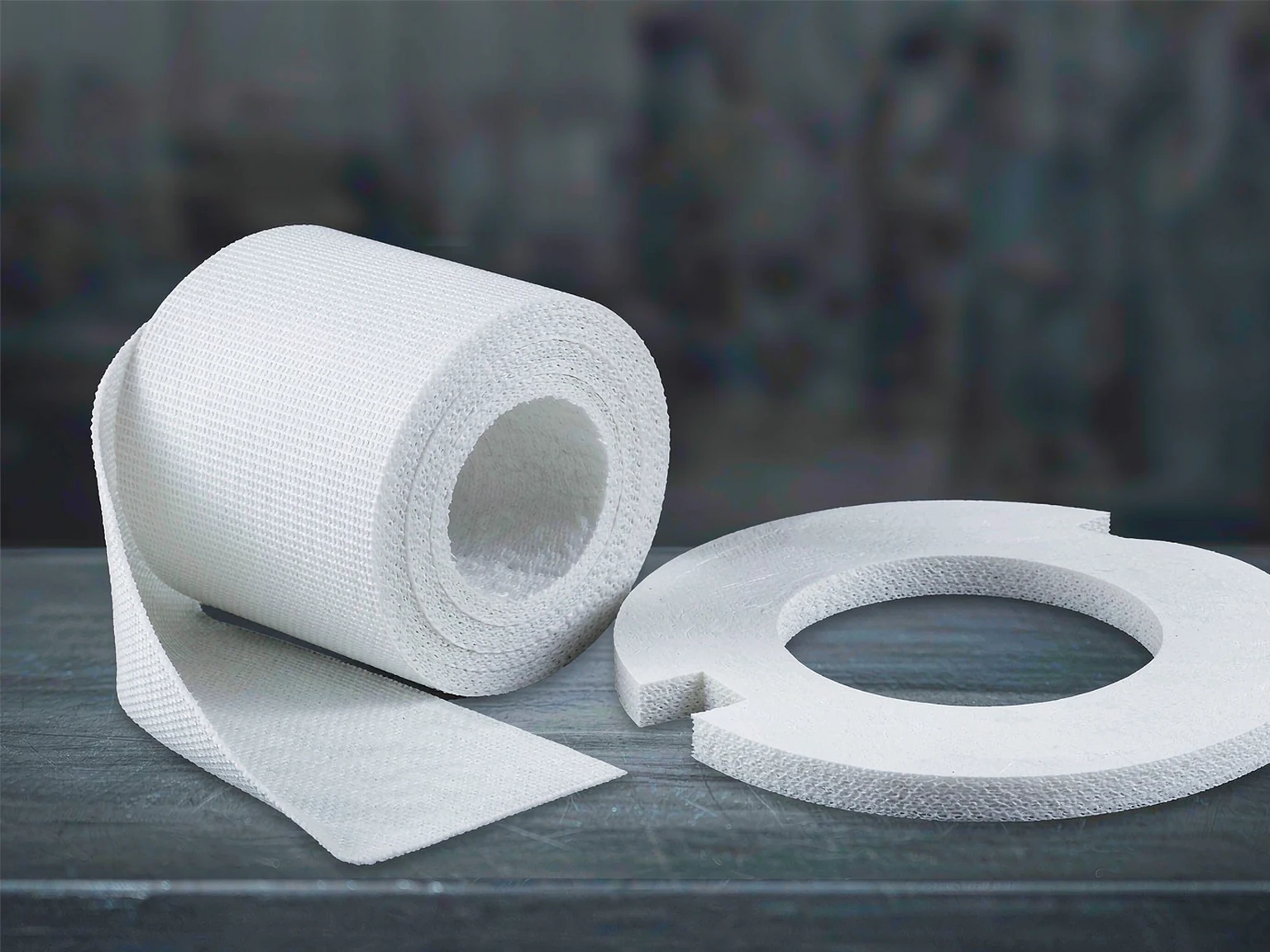
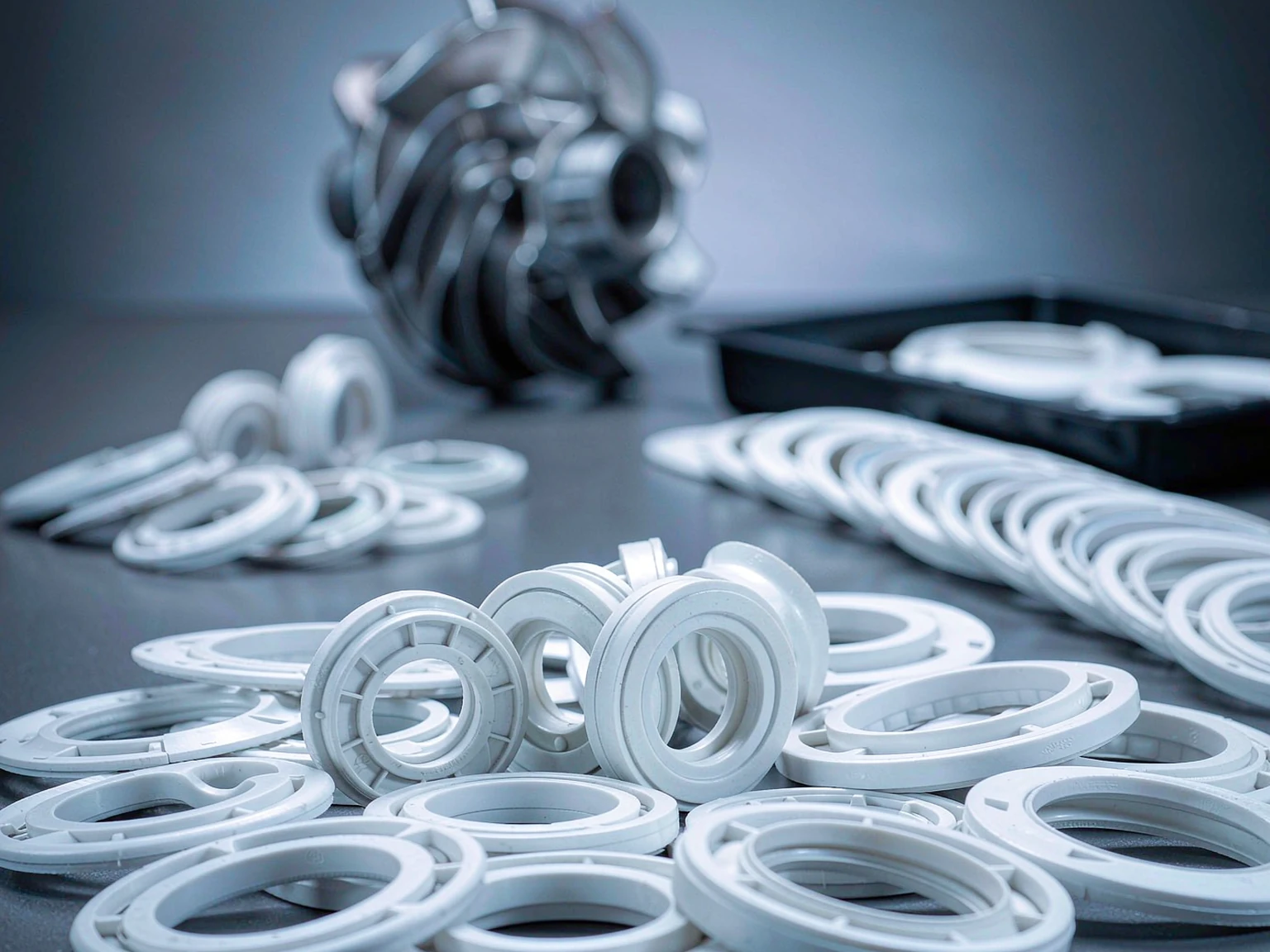
| Gasket flattened and thinner at teardown | Permanent compression set under bolt load |
| Joint weeps months after installation | Creep reduced bolt load below sealing threshold |
| Spacer stack height changed at inspection | Sustained compressive load deformed the spacer |
| Liner relaxed away from flange face | Long-term stress at the clamped edge |
| Valve seat seals better in winter than summer | Creep rate rising with temperature |
Engineering Around Cold Flow — Four Levers
- Thinner sections: creep deformation scales with stressed volume; thin gaskets lose far less load than thick ones.
- Fillers: glass, bronze, or carbon fillers act as an internal skeleton, cutting creep rates substantially — at the cost of chemical blind spots (glass vs alkali, bronze vs acid) and some dielectric performance.
- Modified PTFE: second-monomer modification reduces creep meaningfully while keeping near-virgin chemical resistance.
- Design for re-torque: joints are living systems; specify torque checks after the first thermal cycle and periodically after.
What Cold Flow Is Not
It is not melting, not chemical attack, and not fatigue — three misdiagnoses that send teams chasing the wrong fix. If a part is simply shorter, thinner, or flatter than it was, in the absence of heat extremes or aggressive media, cold flow is the first suspect. Chunhuan’s engineering team helps customers design around creep — grade selection, section thickness, and joint design — drawing on PTFE manufacturing data since 1985.
Frequently Asked Questions
What is PTFE cold flow in simple terms?
Cold flow (creep) is permanent deformation of PTFE under sustained mechanical stress, occurring even at room temperature — the material slowly flows away from where the load presses it.
Does cold flow get worse with temperature?
Yes, dramatically. Creep rates that take months at room temperature can occur in days above about 150 °C.
How do you prevent PTFE cold flow problems?
Use thinner sections, creep-resistant filled or modified grades, design joints for periodic re-torque, and avoid sustained point loads on stored parts.
Is cold flow a defect or a sign of poor quality PTFE?
Neither — it is an intrinsic polymer property. Quality affects how consistent the behavior is, not whether it happens.

 English
 Russian
 French
 Spanish
