
Short answer: for PTFE wear pads and slide bearings, the specification battle is between friction (PTFE’s superpower) and wear plus creep (its weakness) — so the design questions are: load and contact pressure, sliding speed, duty cycles versus travel, temperature, and edge-loading conditions. Virgin PTFE serves low-load slides; filled grades and reinforced designs carry real loads.
Slide bearings and wear pads are the application where PTFE’s lowest-known friction meets its worst property — abrasion resistance — in the same part. Success is a design question: manage contact pressure, manage creep, and the friction takes care of itself. These are the questions that design turns on.
Question 1: Contact pressure and PV
Static pressure above a few MPa on virgin PTFE creeps the pad thin over time; the fix ladder is thicker pad (temporary), larger face (real), filled grade (real), or a reinforced composite for bridge-type loads. Provide load, pad area and duty duration — “heavy equipment support pad” and “valve slide pad” are different products.
Question 2: Movement pattern
- Sslow seasonal travel (bridge/pipe supports): virgin or glass-filled PTFE against polished stainless — the classic bearing pairing.
- Continuous sliding: carbon/graphite-filled — self-lubricating wear performance.
- Oscillating small-angle motion (fretting risk): filled grades plus surface-finish discipline; small strokes are where lubricant films vanish.
Question 3: The counterface — half the system, usually unspecified
PTFE slides are a pair: surface finish (Ra ~0.4–0.8 μm polished), material (polished stainless is the reference), and hardness determine wear life as much as the pad itself. Specify the counterface or accept the vendor’s assumption of one.
Question 4: Environment and fixation
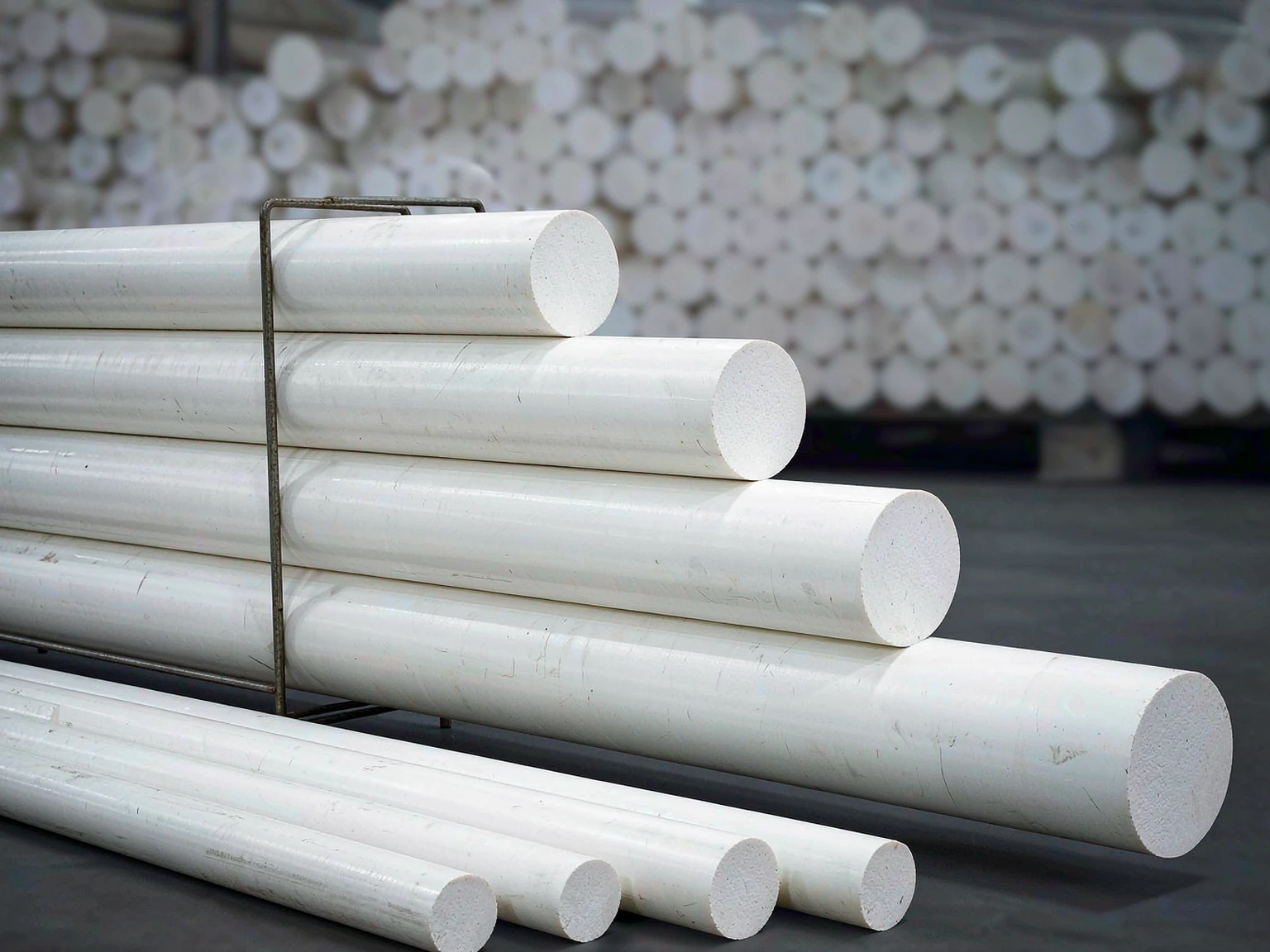
Temperature band (expansion and creep again), chemical splash (filler caveats), and how the pad is retained — bonded, captured or bolted. Bonding PTFE needs sodium-treated or etched surfaces; a manufacturer with in-house surface treatment saves a sourcing loop. Chunhuan machines pads and bearings from filled PTFE sheet and rod since 1985 and will state a contact-pressure limit per grade. Send load, movement pattern, counterface and environment; expect a design answer, not a size-for-size price.
Frequently Asked Questions
Can PTFE slide bearings carry heavy loads?
With design: filled grades (bronze, glass) and adequate face area carry real structural loads; virgin PTFE creeps under sustained pressure. State load and area for a grade recommendation.
What counterface works with PTFE wear pads?
Polished stainless steel around Ra 0.4-0.8 µm is the reference pairing. The counterface determines wear life as much as the pad material.
Why did my PTFE pad wear out quickly?
Commonly edge loading, rough counterface, or contact pressure above the grade’s limit. Fillers fix wear; geometry fixes edge loading.

 English
 Russian
 French
 Spanish
