
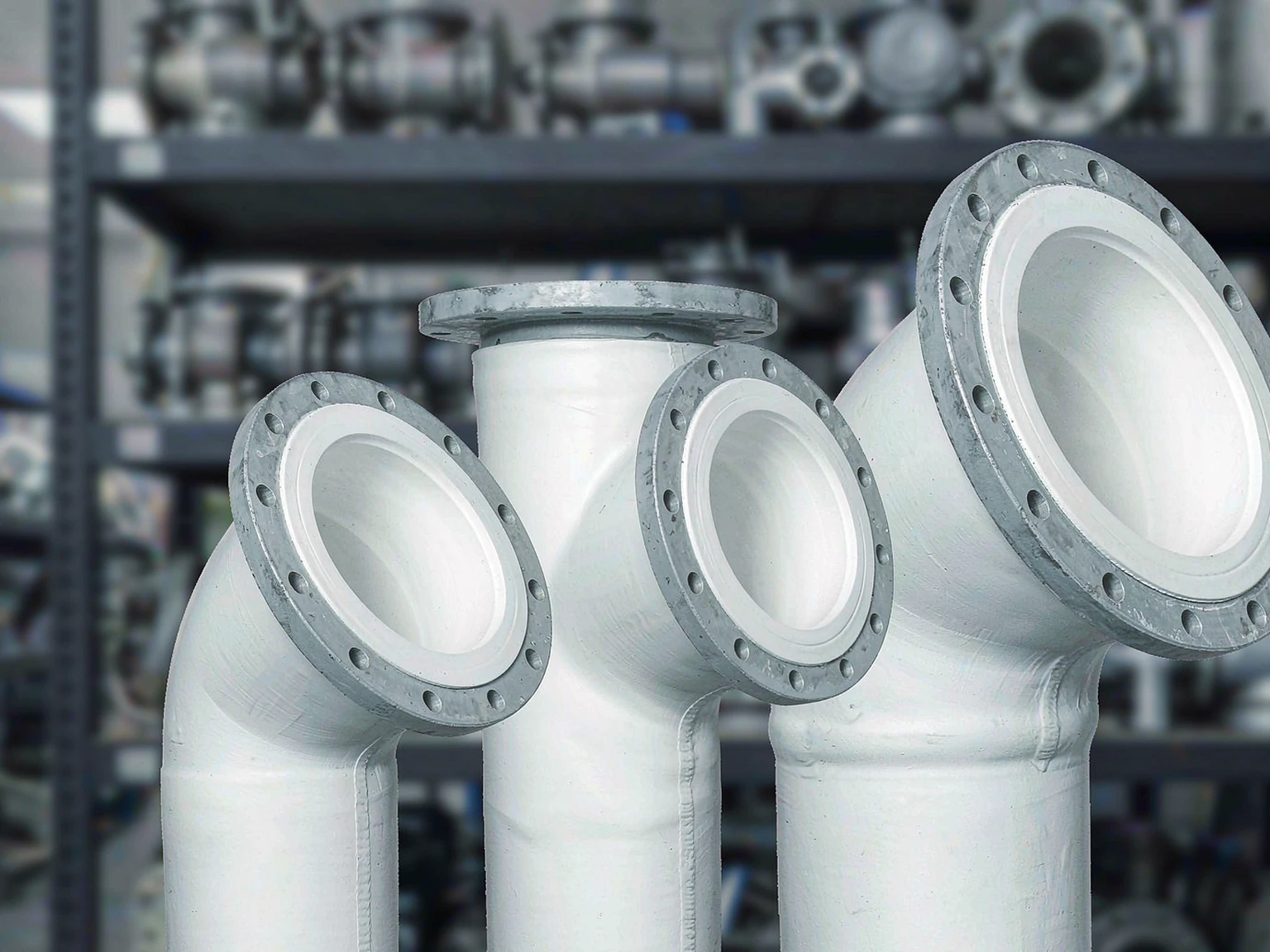
Short answer: PFA lined piping is the choice for high-purity chemical transfer — semiconductor chemicals, pharmaceutical actives, and small-molecule permeators like wet chlorine — because melt-processed PFA delivers fewer microvoids, better extractables and markedly lower diffusion than PTFE at the same wall. The premium is 1.5–2x on the liner; the justification must be written against the duty.
High-purity service changes the procurement logic: the liner is no longer selected for “will it corrode” (nothing fluorinated does) but for what it releases and transmits. Extractables, particle generation and permeation replace the compatibility chart as the decision drivers. This guide sets out the specification accordingly.
Why PFA for purity: the processing argument
PFA is melt-processable — it flows like a conventional plastic during molding and extrusion, so liners form without the void structure inherent to PTFE’s powder-metallurgy route. Fewer microvoids mean: less surface area to trap and leach ions, smoother bore (less particle shedding), and denser barrier against diffusion. For semiconductor-grade sulfuric, HF blends and slurry lines, this is why PFA dominates despite PTFE’s identical chemistry.
Specification fields beyond the material
- Extractables/TOC documentation: request method and limits; “high purity” without a number is decoration.
- Permeation justification: for wet chlorine, HCl, bromine — wall thickness and liner choice validated at your temperature.
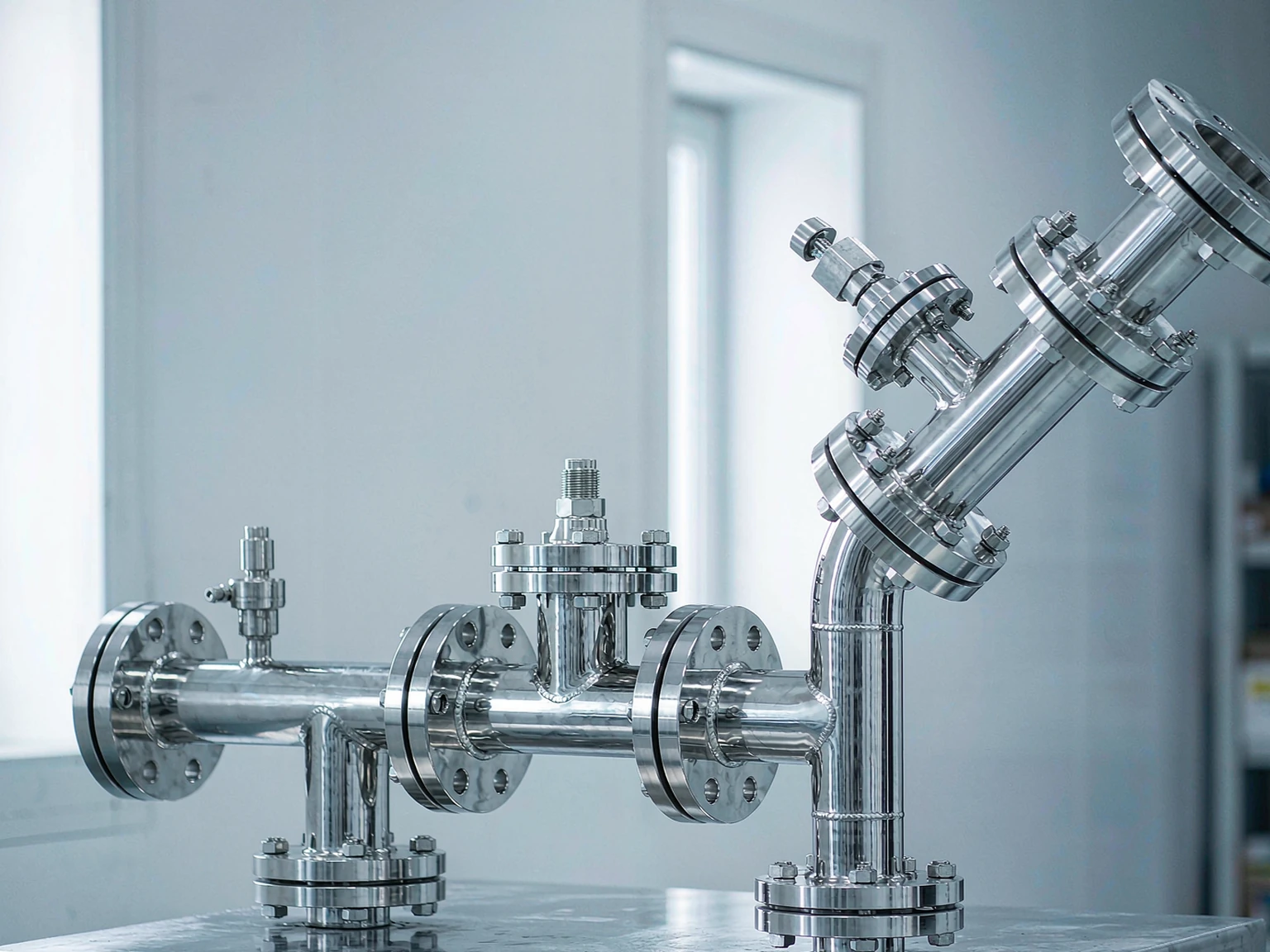
- Joint system: flanged with molded faces; confirm face geometry and torque practice — purity lines leak at joints, not walls.
- Cleaning and packaging: bagged ends, capped flanges, documented final rinse.
- Traceability: liner resin lot and spark-test record per spool.
When PTFE remains right — even in fine chemistry
Where purity limits are industrial-grade rather than semiconductor-grade, and the media is not a small-molecule permeator, PTFE lined piping delivers the same chemical service at lower cost with easier field repair (patchable, unlike PFA on complex fittings). The mistake to avoid is copying a semiconductor standard onto a general chemical plant. Chunhuan produces both liner families in-house since 1985 — PTFE and PFA lined equipment — and writes the liner justification per duty. Send the chemical list, purity class and temperature profile; expect a material recommendation with an extractables/permeation basis, not just a lining name.
Frequently Asked Questions
Why choose PFA lining for high-purity chemicals?
Melt-processed PFA has fewer microvoids: better extractables, less particle shedding and lower permeation than PTFE — decisive for semiconductor and pharma purity classes.
Is PFA lined piping worth 2x the liner cost?
When purity class or permeation duty demands it, yes. For industrial-grade chemical service, PTFE delivers the same chemical resistance at lower cost.
What documentation should high-purity lined piping include?
Extractables/TOC data with method and limits, liner resin lot traceability, per-spool spark test, and documented cleaning and packaging.

 English
 Russian
 French
 Spanish
