Application: Corrosive and high-purity fluid transfer
Lining Material: PTFE / PFA / FEP
Outer Material: Carbon steel or stainless steel
Working Temperature: -40°C to +200°C (PTFE short-term up to 250°C)
Design Pressure: ≤2.5 MPa
Vacuum Resistance: Up to -0.098 MPa
Inner Surface: Smooth, non-stick, anti-scaling
Connection Type: Flanged (ANSI / DIN / JIS available)
Manufacturing Process: Molding, isostatic pressing, rotational lining
Quality Control: 100% spark test, pressure and tightness testing
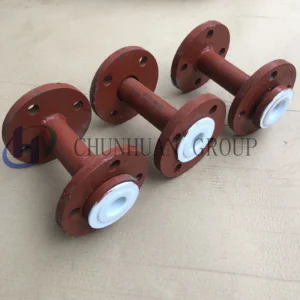
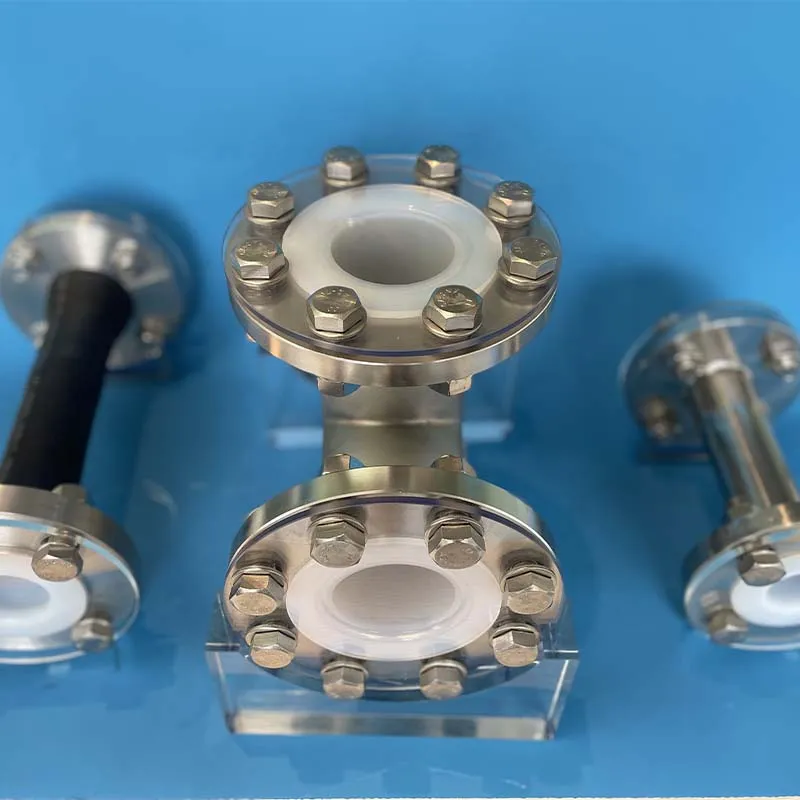
Fluorine lined piping, also known as steel lined fluoroplastic pipes, is designed for the safe and reliable transportation of highly corrosive and high-purity fluids. By combining the mechanical strength of carbon steel or stainless steel with the exceptional chemical resistance of fluoroplastics, these pipelines are widely used in chemical processing, pharmaceuticals, petrochemicals, electroplating, and semiconductor industries.
The inner lining, made from PTFE, PFA, or FEP, forms a continuous chemical barrier that completely isolates corrosive media from the metal shell, ensuring long service life, operational safety, and minimal maintenance costs.
The fluoroplastic lining provides near-universal chemical compatibility. PTFE, PFA, and FEP are resistant to almost all strong acids, strong alkalis, organic solvents, oxidizers, and mixed corrosive media, including aqua regia. This makes fluorine lined piping the preferred solution where conventional metal pipes fail due to corrosion, leakage, or contamination.
Although the initial investment may be higher than standard pipelines, fluorine lined pipes offer significantly lower lifecycle costs. Their excellent aging resistance, low friction coefficient, and anti-scaling properties drastically reduce maintenance, downtime, and replacement frequency, delivering a higher return on investment over time.
The steel outer pipe ensures high pressure resistance, impact strength, and structural stability, while the inner fluoroplastic lining delivers unmatched chemical inertness. This “rigid + flexible” composite structure allows stable operation across a wide range of industrial conditions, from low-temperature fluids to high-temperature cleaning processes.
The ultra-smooth inner surface prevents scaling, crystallization, and residue buildup. With no metal ion leaching and no material dissolution, fluorine lined piping guarantees fluid purity, making it ideal for pharmaceutical processes, food-grade applications, and ultra-pure chemical transfer systems. Cleaning is easy, reducing cross-contamination risks and operating costs.
Multiple lining technologies are available, including molding, isostatic pressing, rotational lining, and loose lining, allowing customization for different diameters, pressures, and complex pipe geometries. Standardized flange connections (ANSI, DIN, JIS, etc.) ensure easy installation and seamless integration into existing piping systems.
Química y petroquímica: Sulfuric acid, hydrochloric acid, hydrofluoric acid, chlor-alkali solutions, halogens
Pharmaceutical & Biotechnology: Process water, WFI systems, CIP/SIP pipelines
Semiconductor & Electronics: Ultra-pure water (UPW), etchants, chemical distribution systems
Galvanoplastia y tratamiento de superficies: Electrolytes, plating baths, concentrated acids
Metallurgy & Mining: Pickling lines, acidic exhaust gas scrubbing systems
Environmental & New Energy: Wastewater treatment, flue gas desulfurization (FGD), lithium battery chemical transfer
PTFE (Polytetrafluoroethylene): Widest chemical resistance, highest temperature tolerance, excellent cost-performance
PFA (Perfluoroalkoxy): Similar corrosion resistance to PTFE, better thermoplastic properties, seamless lining ideal for high-purity applications
FEP (Fluorinated Ethylene Propylene): Semi-transparent, better vacuum resistance, suitable for visual flow monitoring
Advanced processes such as isostatic forming and full-face flange lining ensure uniform thickness, zero porosity, and superior resistance to thermal cycling and vacuum conditions. Each pipe undergoes 100% spark testing, pressure testing, and leak inspection before delivery.
 English English
 Russian
 French
 Spanish English English Russian French Spanish