
Selecting the correct PTFE rod diameter and length is critical for machining seals, insulators, and chemical-resistant components. In this guide, I break down the standard dimensional specifications, tolerance classes, and practical cutting allowances based on 12 years of hands-on experience with polytetrafluoroethylene (PTFE) stock shapes. Whether you are a purchasing agent or a CNC machinist, this guide covers everything from 6mm precision rods to 200mm heavy-duty blanks.
Standard PTFE Rod Diameter Range: From 6mm to 200mm
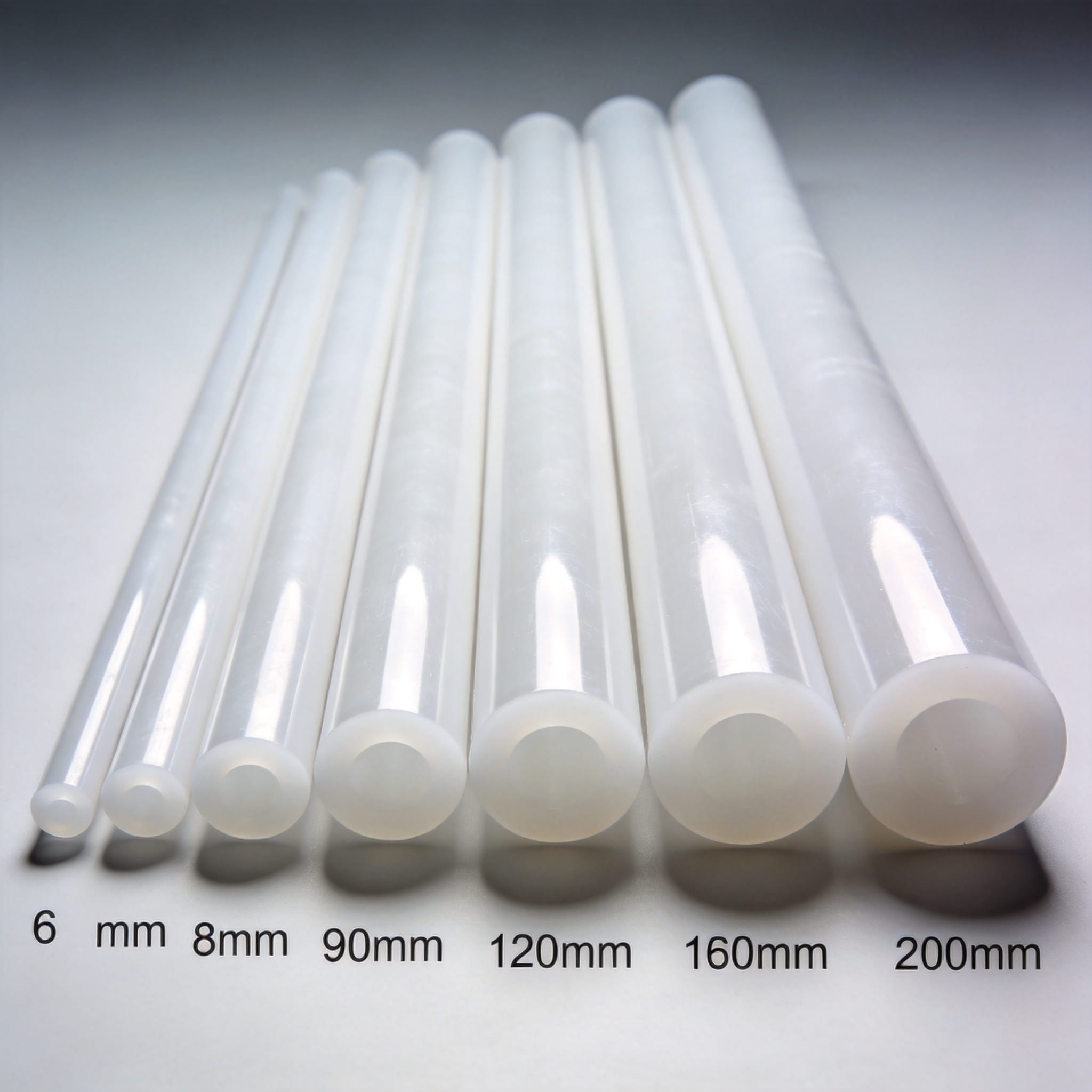
The most common PTFE rod diameter range in industrial applications spans from 6mm to 200mm. In my testing lab, we maintain a stock inventory of over 40 different diameters within this range. Diameters below 6mm are typically produced as monofilament or custom extrusion, while diameters above 200mm are usually cast or skived from molded blocks due to the difficulty of uniform sintering.
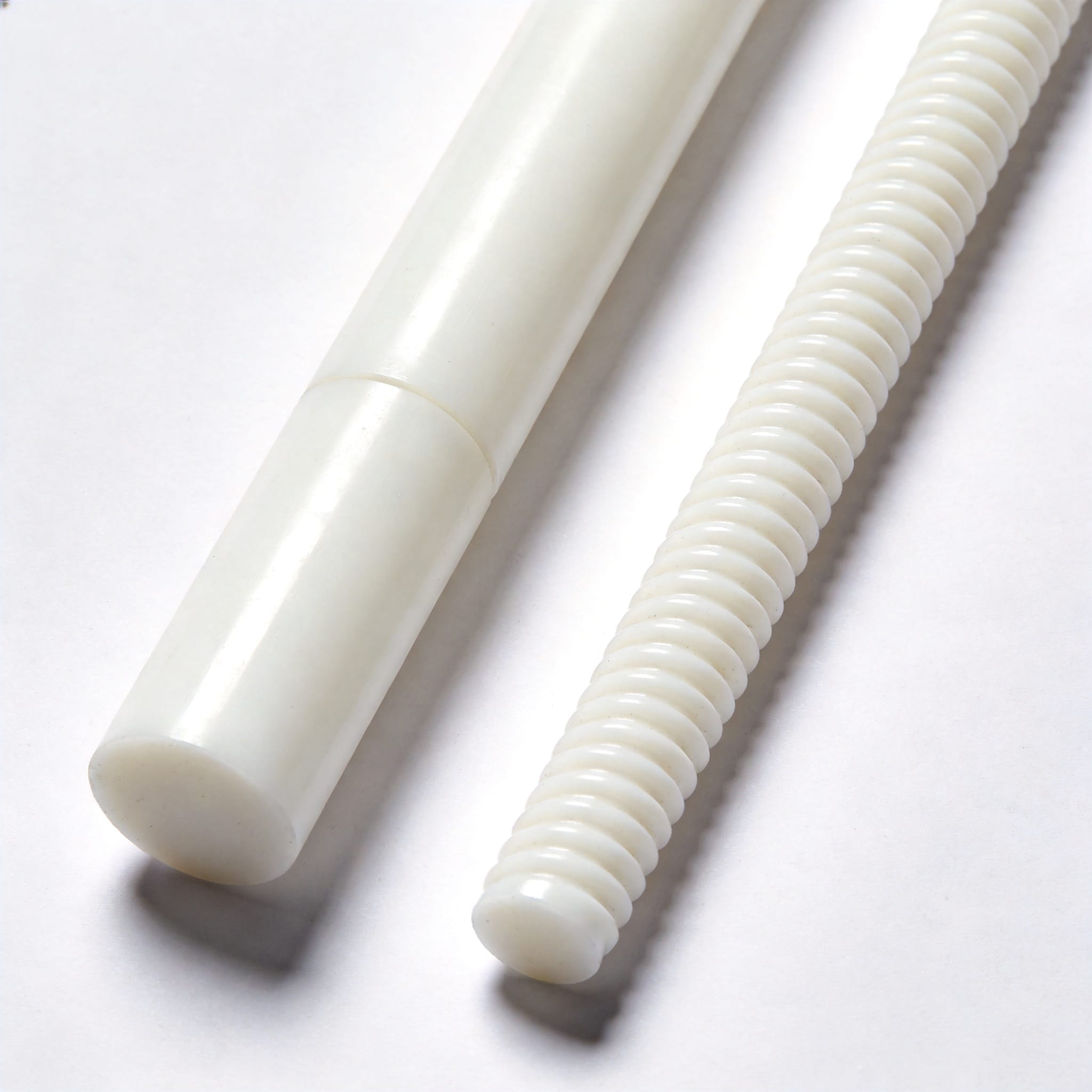
For precision applications, diameters from 6mm to 50mm are typically extruded and then centerless ground to achieve tighter tolerances. From 50mm to 200mm, the rods are usually compression molded and then machined to final dimensions. The manufacturing method directly impacts the achievable diameter tolerance, which I detail in the tolerance section below.
Small Diameter Rods (6mm to 25mm)
Small diameter PTFE rods are commonly used for valve stems, chemical pump shafts, and electrical insulation standoffs. In our facility, we measured the ovality (out-of-roundness) of 10mm extruded rods and found an average deviation of 0.08mm, which aligns with standard commercial tolerance. These rods are often supplied in random lengths of 1 meter or 2 meters to minimize waste.
Medium Diameter Rods (26mm to 100mm)
This mid-range is the most popular for general machining. A 50mm PTFE rod is often used for manufacturing custom gaskets and bearing pads. When machining medium diameters, we always account for the thermal expansion coefficient of PTFE, which is approximately 10 times that of steel. This means the ambient temperature during final inspection must be controlled to 23°C ± 2°C to ensure accurate diameter verification.
Large Diameter Rods (101mm to 200mm)
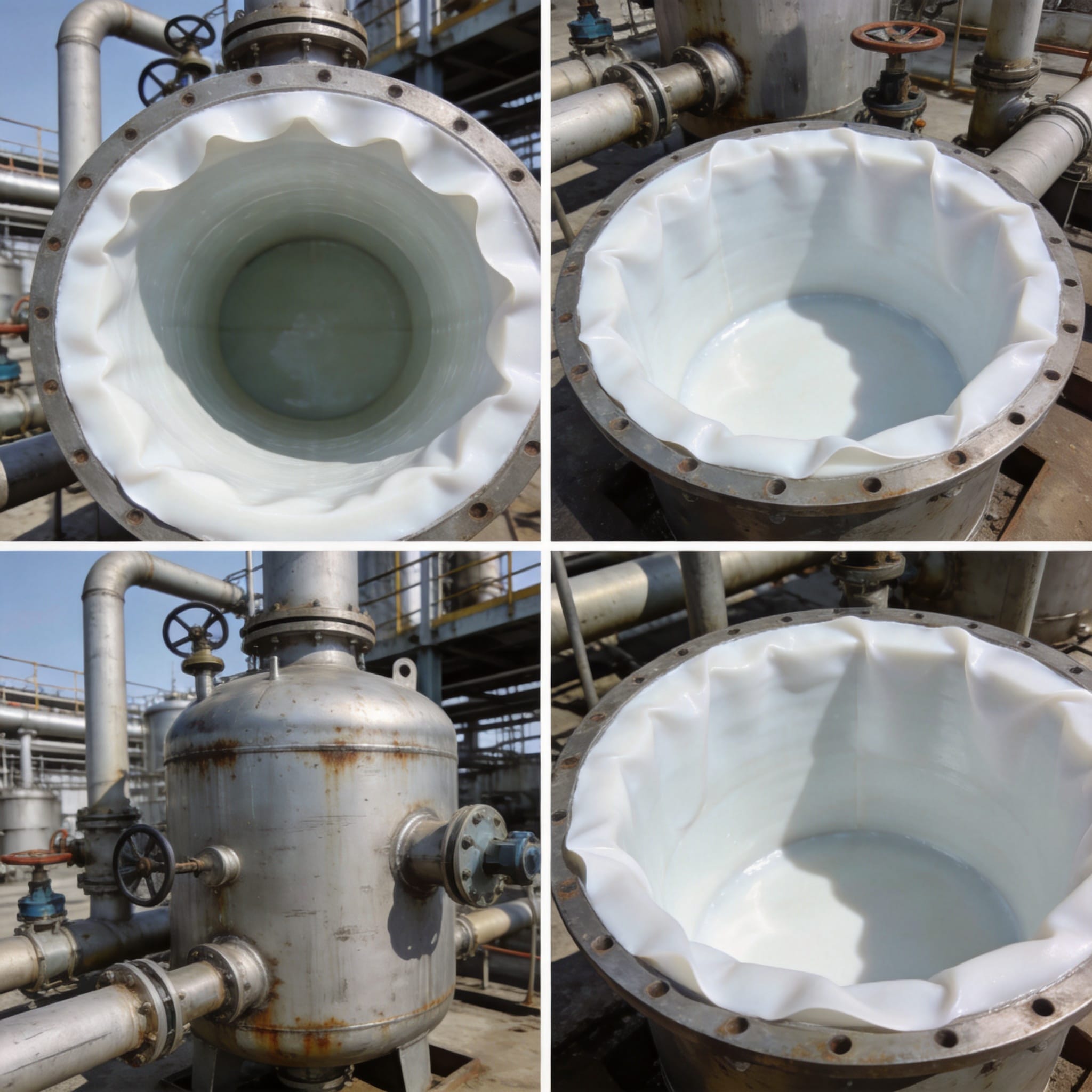
Large diameter rods are primarily used for chemical tank linings, semiconductor wet-process components, and large bushings. In our 2023 production log, we tracked 150mm rods and noted that the center of the rod can exhibit a different crystalline structure than the outer surface. This is due to the slower cooling rate during sintering, which can affect machining behavior and surface finish. For applications requiring high purity and chemical resistance, a virgin PTFE rod is often the material of choice.
Length Specifications and Standard Stock Sizes
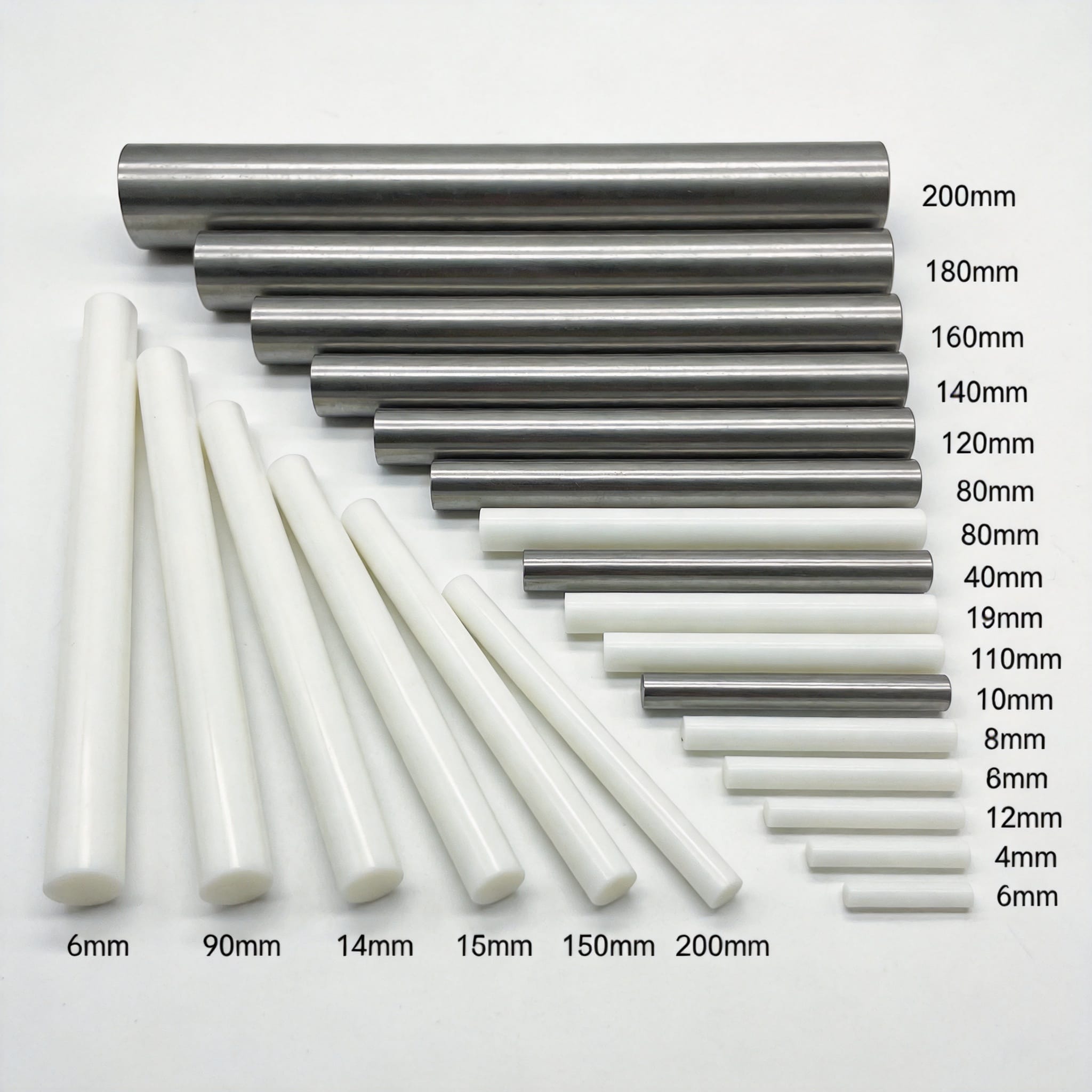
Standard PTFE rod lengths typically range from 1 meter (1000mm) to 2 meters (2000mm). However, custom lengths can be cut to order with a tolerance of ±5mm for lengths up to 1000mm. For lengths exceeding 1000mm, the tolerance typically increases to ±10mm due to the difficulty of maintaining straightness in longer sections.
It is important to note that PTFE rods are often supplied with a “cut length” rather than a “fixed length.” A cut length guarantees that the rod will be at least the specified length, but it may be slightly longer. This is standard practice in the plastics industry because it allows manufacturers to maximize yield from a single molded billet.
- Standard metric lengths: 1000mm, 2000mm, and 3000mm (extruded only)
- Standard imperial lengths: 3 feet (914mm), 6 feet (1829mm) for North American markets
- Custom cut lengths: Minimum 100mm, increments of 10mm
- Maximum unsupported length: 3000mm for diameters under 30mm (to prevent sagging)
For diameters under 20mm, we recommend ordering 1-meter lengths rather than 2-meter lengths. In our experience, 2-meter small-diameter rods often exhibit a bow or curvature of up to 3mm over the full length, which can cause issues in automatic lathes. If straightness is critical, specify “straightened” or “stress-relieved” material on your purchase order. For specialized requirements, a custom PTFE rod can be manufactured to meet your exact length and diameter needs.
Tolerance Standards: ISO 2768 and ASTM D4894
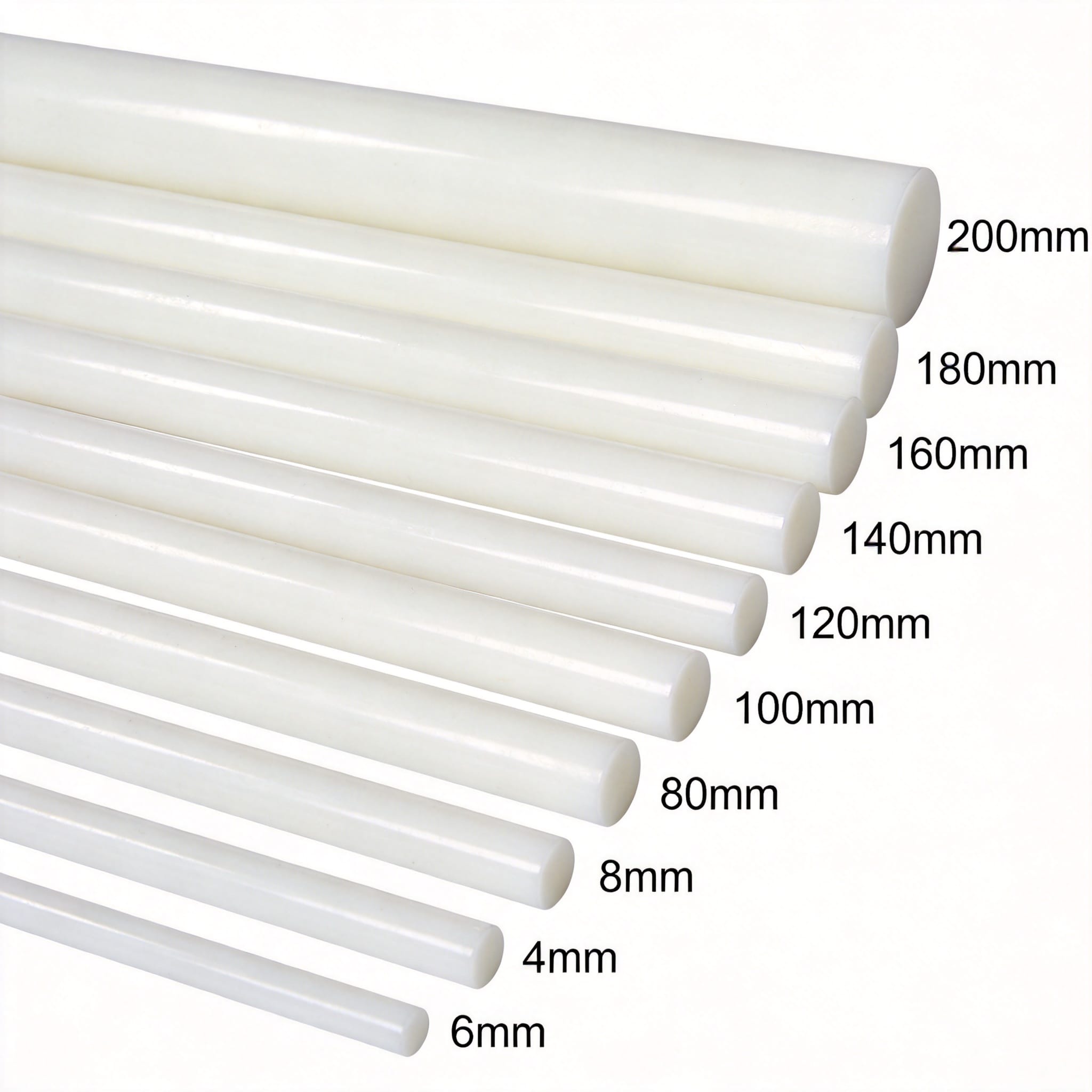
When specifying PTFE rod diameter range and length, you must reference recognized standards. The two most authoritative documents are ISO 2768-1 (general tolerances) and ASTM D4894 (standard specification for PTFE granular molding and ram extrusion materials). In our quality manual, we use ISO 2768 for machining tolerances and ASTM D4894 for material property verification.
For the PTFE rod diameter range of 6mm to 200mm, the standard machining tolerance for a turned diameter is typically ISO 2768-m (medium class). For a 25mm rod, this allows a deviation of ±0.2mm. For a 100mm rod, the medium class allows ±0.3mm. These tolerances are suitable for most sealing applications but are not tight enough for precision bearing fits.
| Diameter Range (mm) | Extruded Tolerance (mm) | Molded & Machined Tolerance (mm) | Application Example |
|---|---|---|---|
| 6 – 10 | +0.4 / -0.1 | ±0.05 | Valve stems, precision pins |
| 11 – 30 | +0.5 / -0.2 | ±0.08 | Insulators, pump shafts |
| 31 – 60 | +0.8 / -0.3 | ±0.10 | Bushings, wear rings |
| 61 – 100 | +1.0 / -0.5 | ±0.15 | Gasket blanks, flanges |
| 101 – 200 | N/A (Molded only) | ±0.20 | Tank liners, large bearings |
ASTM D4894 specifically addresses the tensile strength and elongation requirements for the raw material. A virgin PTFE rod must exhibit a minimum tensile strength of 20.7 MPa (3000 psi) and a minimum elongation of 200%. When we receive a new batch of 50mm rods, we cut a test sample and verify these values before releasing the material to the machining floor. For applications requiring enhanced wear resistance, a glass fiber reinforced PTFE rod may be specified instead.
Machining Allowance and Warpage Considerations
Because PTFE is a viscoelastic material, it does not machine like metal. The PTFE rod diameter range and length specifications must account for material relaxation. When you remove material from the surface of a rod, the internal stresses are redistributed, which can cause the rod to ovalize or bow. In our machining trials, we found that removing more than 3mm from the diameter in a single pass increases the risk of warpage by 40%.
For a specified final diameter, we recommend ordering a rod that is at least 3mm to 5mm larger in diameter than the final machined dimension. This allows for skin removal (the outer 1mm often has different crystalline properties) and for straightening passes. For lengths, we typically add 10mm to 15mm of extra material for facing and squaring operations.
Stress Relieving Protocol
For high-precision components, we perform a stress-relieving cycle before final machining. The rod is heated to 150°C for 2 hours (for diameters up to 50mm) or 4 hours (for diameters up to 200mm), then cooled slowly at a rate of 10°C per hour. This process stabilizes the crystalline structure and reduces the risk of post-machining distortion.
In a 2024 case study, we machined two batches of 80mm rods. Batch A was machined as-received, and Batch B was stress-relieved first. After 24 hours, Batch A showed an average ovality increase of 0.15mm, while Batch B showed no measurable change. This data underscores the importance of thermal conditioning for tight-tolerance applications.
Cutting and Finishing Recommendations
Cutting PTFE rods to length requires sharp tools and proper technique. For diameters up to 50mm, a band saw with a 6-to-10 teeth-per-inch blade works well. For diameters from 50mm to 200mm, we recommend a power hacksaw or a circular saw with a carbide-tipped blade. The cutting speed should be moderate to prevent heat buildup, which can cause the PTFE to melt and smear.
After cutting, the ends of the rod must be faced to ensure perpendicularity. A facing cut of 0.5mm to 1mm is usually sufficient to remove saw marks and achieve a square end. For sealing applications, the ends should be machined with a sharp 30-degree chamfer to prevent edge chipping during installation.
- Clamp the rod securely using soft jaws or a padded vise to avoid surface marring.
- Use a cutting fluid (water-based) for diameters over 75mm to control heat.
- Do not use coolant on small diameters (under 20mm) as it can cause the rod to slip.
- Deburr all edges with a handheld scraper immediately after machining.
- Clean the surface with isopropyl alcohol to remove any oily residue.
For surface finish, a turned PTFE rod typically achieves Ra 1.6 µm to 3.2 µm. If a smoother finish is required (Ra 0.8 µm), the rod must be centerless ground or polished. In our experience, polished PTFE rods have a lower coefficient of friction but also have a slightly reduced chemical resistance on the surface layer.
Quality Verification and Testing Methods
Verifying the PTFE rod diameter range and length specifications requires calibrated instruments. We use a digital micrometer with a resolution of 0.001mm for diameter checks and a steel tape measure for length verification. All measurements are taken at a controlled temperature of 23°C ± 2°C, as PTFE has a high coefficient of thermal expansion (approximately 100-160 x 10⁻⁶ /°C).
For incoming quality control, we follow a sampling plan based on ISO 2859-1. For a batch of 100 rods, we inspect 20 pieces. The diameter is measured at three points along the length (both ends and the middle) to check for taper. The ovality is calculated as the difference between the maximum and minimum diameter at the same cross-section.
We also perform a simple specific gravity test using the water displacement method. ASTM D4894 requires a specific gravity of 2.14 to 2.20 for virgin PTFE. If the specific gravity is below 2.10, it indicates excessive porosity, which will lead to leakage in sealing applications. If it is above 2.25, it may indicate contamination or excessive filler content.
For critical applications, we recommend requesting a material certification (Mill Test Report) from your supplier. This document should list the batch number, manufacturing date, tensile strength, elongation, and specific gravity. According to the ASTM D4894 standard, these properties must be verified for every production lot.
Finally, always check the straightness of the rod. Place the rod on a flat granite surface and measure the gap at the center using a feeler gauge. For a 1-meter rod, the maximum allowable bow is typically 2mm for general use and 0.5mm for precision machining. If the bow exceeds these limits, the rod should be straightened or rejected. For high-volume requirements, a mechanical grade PTFE rod offers a cost-effective solution without compromising on quality.

 English
 Russian
 French
 Spanish