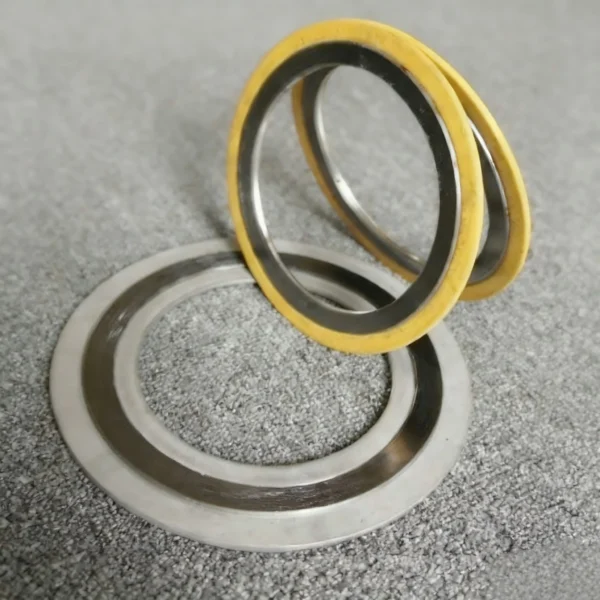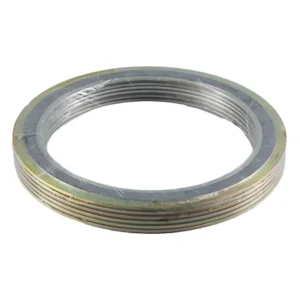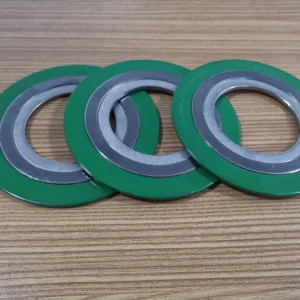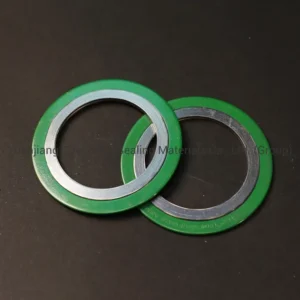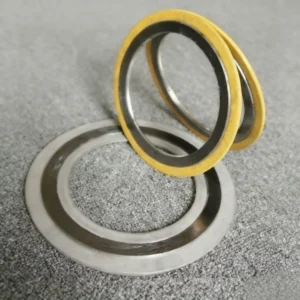
Spiral wound gaskets are engineered for high-temperature, high-pressure sealing in oil, chemical, power, and metallurgical industries. They are widely used in flanged connections of pipelines, valves, pumps, pressure vessels, and heat exchangers. The combination of metal winding and flexible filler provides excellent elasticity, mechanical strength, and chemical compatibility, ensuring reliable sealing even in extreme conditions.
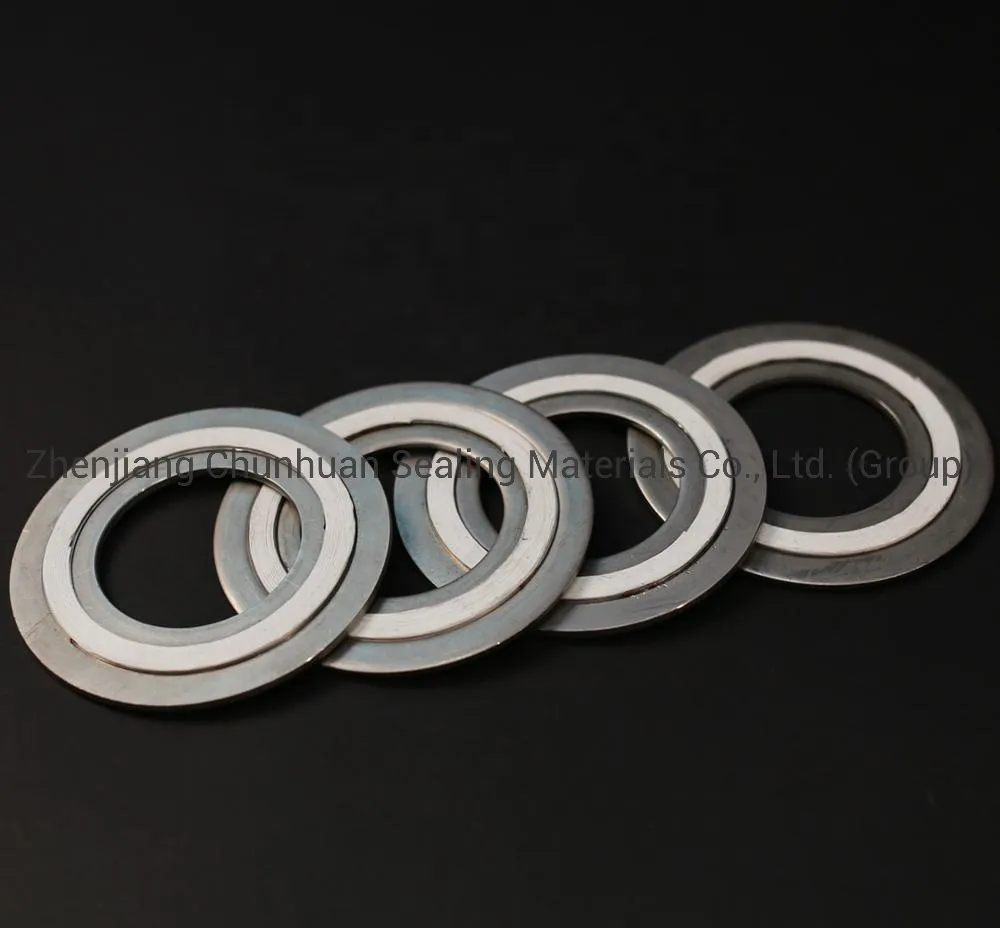
Interleaved “V”-shaped metal strips with flexible filler provide outstanding elastic recovery.
Compensates for flange irregularities, maintaining zero leakage under pressure fluctuations and thermal cycles.
Metal Strip: 201/304/316 stainless steel, specialty alloys, or carbon steel for corrosion resistance.
Filler Layer: Flexible graphite (high-temperature conductivity), PTFE (chemical resistance), or non-asbestos soft materials (safe, medium-temperature applications).
Type A (Basic): Cost-effective standard for most flanges.
Type B (Inner Ring): Prevents over-compression, protects the inner edge from turbulence or corrosion.
Type C (Outer Ring): Simplifies centering, adds mechanical protection, and prevents gasket scattering.
Type D (Inner & Outer Ring): Combines the advantages of B and C, providing ultimate protection, centering, and blow-out resistance for extreme conditions.
Optimized structure resists stress relaxation and creep.
Filler materials like graphite and PTFE are self-lubricating, easing installation and reducing flange damage risk.
Oil & Gas
Refineries, oil/gas pipelines, offshore platforms, and LNG facilities for flange sealing.
Chemical & Petrochemical
Reactors, heat exchangers, towers, pumps, valves, and pipelines handling corrosive chemicals.
Power & Energy
High-temperature, high-pressure steam systems in thermal and nuclear power plants.
Heavy Industry & Manufacturing
Metallurgy, paper, pharmaceuticals, and food processing require certified material options.
Maintenance & Upgrades
Upgrades over traditional gaskets to solve persistent leakage issues and extend maintenance intervals.
Four-in-One Standard Models
A, B, C, and D types cover diverse flange standards and operating conditions.
Highly Customizable Material Matrix
Metal strips and filler materials can be combined in dozens of ways to tailor gaskets for specific media, temperatures, and pressures.
Installation-Friendly and Long-Lasting
Optimized elasticity and structure ensure easy installation and maintain sealing integrity over long-term operation, reducing downtime and maintenance costs.




 English English
 Russian
 French
 Spanish