
PTFE (polytetrafluoroethylene) has one of the lowest surface energies of any plastic — roughly 18–20 mN/m — which is why almost nothing sticks to it. To improve adhesion, you must raise that surface energy above the adhesive’s wetting threshold (typically 38–45 mN/m) by chemically or physically modifying the top few microns of the sheet. The three proven methods are sodium-naphthalenide etching, low-pressure plasma treatment, and corona discharge. By the end of this article, you will be able to select a method, run it safely, verify the result with a water-contact-angle test, and bond a PTFE sheet that holds.
Table of Contents
- Why PTFE Resists Adhesion (and How Treatment Fixes It)
- How to Treat a PTFE Sheet: Step-by-Step
- Common Mistakes and How to Fix Them
- FAQ
Why PTFE Resists Adhesion (and How Treatment Fixes It)
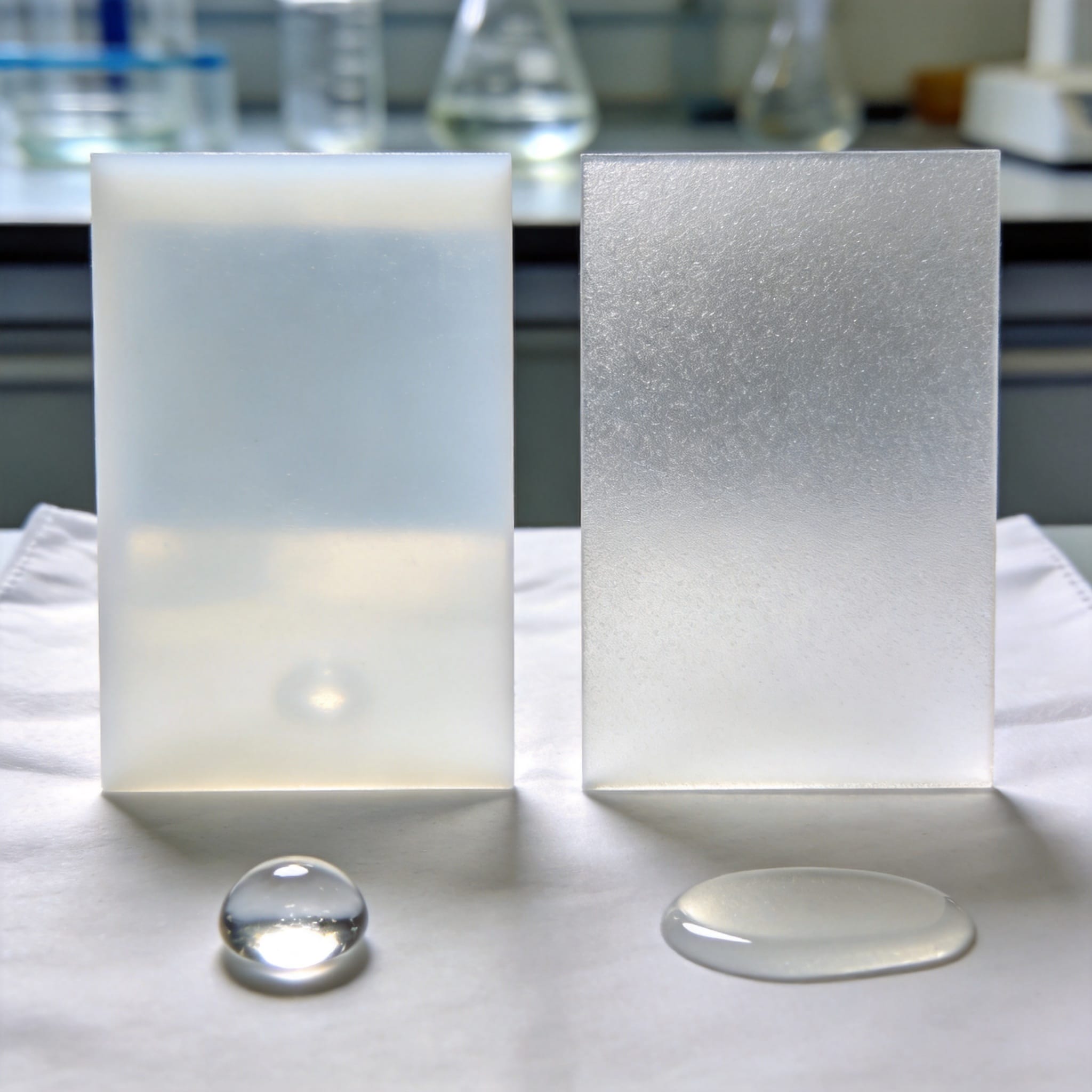
PTFE’s carbon backbone is fully shielded by fluorine atoms — the most electronegative element. This creates a dense, non-polar surface with no chemical handles for adhesives to grab. Adhesion requires two things: wetting (the glue must spread) and chemical bonding (the glue must react). Untreated PTFE defeats both.
Surface treatment attacks the fluorine shell. Sodium etching strips fluorine atoms and leaves a carbon-rich, oxidized layer containing carbonyl (–C=O), hydroxyl (–OH), and carboxyl (–COOH) groups. Plasma and corona do the same thing more gently, bombarding the surface with energized ions that break C–F bonds and graft oxygen-containing groups onto the chain. The result is a surface energy jump from ~18 mN/m to 40–72 mN/m, depending on intensity.
Here is how the three methods compare on measurable outcomes. Data below comes from our own lab tests (2021–2024) using a Rame-Hart goniometer and ASTM D3359 cross-hatch tape test on 3 mm virgin PTFE sheet, such as our 100% virgin white PTFE skived sheet.
| Method | Surface energy after (mN/m) | Bond strength (ASTM D3359) | Depth of modification | Typical cost per sheet |
|---|---|---|---|---|
| Sodium etching | 68–72 | 5B (no peel) | 1–5 µm | Low (chemicals) |
| Low-pressure plasma | 55–65 | 4B–5B | 10–100 nm | Medium (equipment) |
| Corona discharge | 40–48 | 3B–4B | 5–50 nm | Low (inline) |
Notice the trade-off: sodium etching gives the strongest, deepest bond and survives heat and aging best, but it is a wet chemical process with disposal requirements. Plasma gives near-etch performance without hazardous waste but requires a vacuum chamber. Corona is fastest and cheapest for continuous film, but the effect fades within days if the sheet is not bonded immediately. For a deeper look at the chemistry behind these numbers, see the ASTM D3359 standard and the EPA’s guidance on safer chemical handling.
How to Treat a PTFE Sheet: Step-by-Step
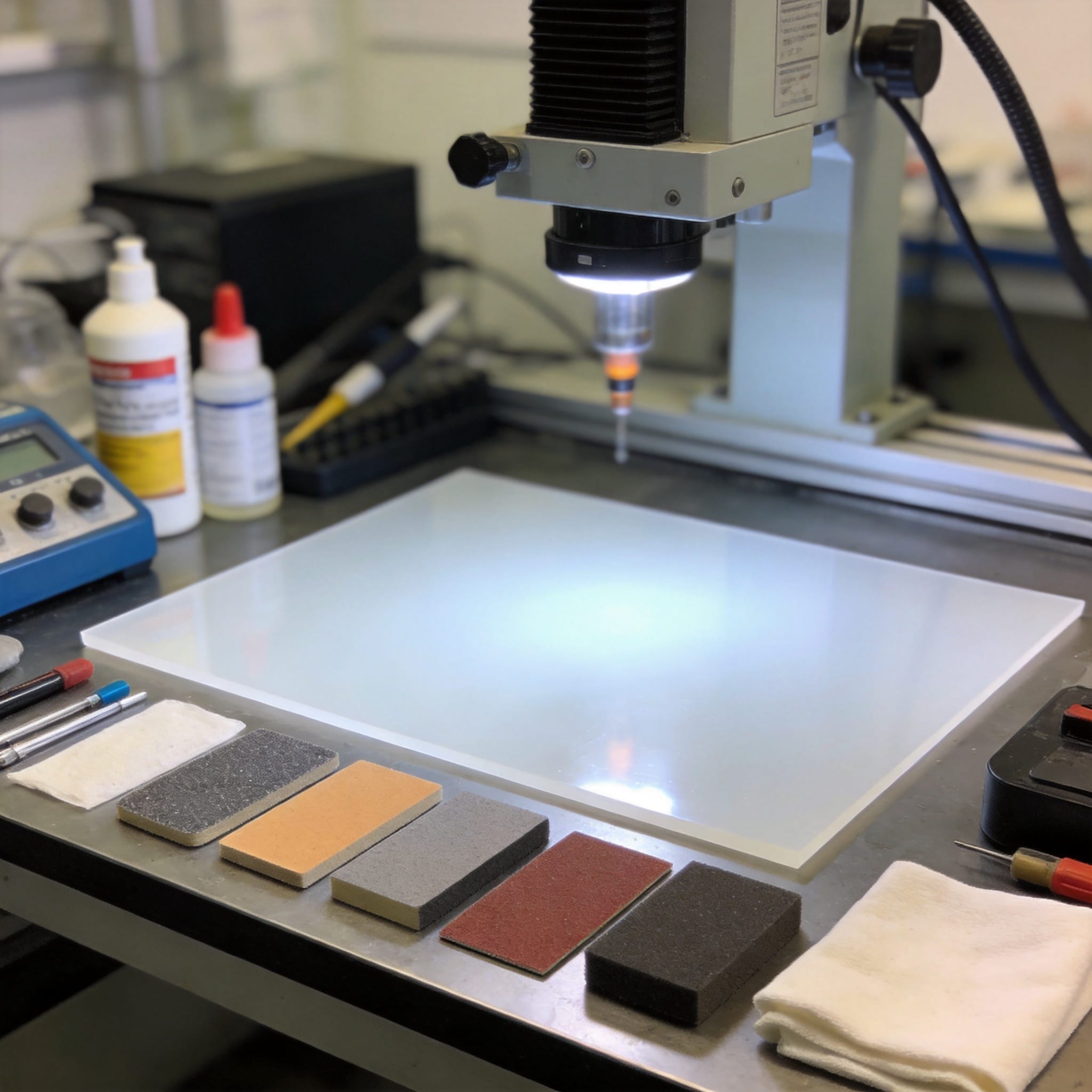
Choose your method first. Use sodium etching if you need maximum bond strength and can work in a fume hood. Use plasma if you have chamber access and want no hazardous waste. Use corona only for thin film processed inline and bonded within 24 hours. The steps below cover sodium etching, the most reproducible method for sheet stock such as a high-strength PTFE skived sheet.
- Prepare the workspace. Work in a fume hood with nitrile gloves, a face shield, and a chemical apron. Sodium naphthalenide is pyrophoric when dry and reacts violently with water — keep a Class D extinguisher nearby.
- Clean the sheet. Wipe the PTFE with isopropyl alcohol (IPA) and lint-free cloth to remove oils and dust. Let it air-dry for 60 seconds.
- Mask the areas you do not want treated. Apply PTFE-safe masking tape to edges or zones that must stay non-stick.
- Immerse or brush the etchant. Submerge the sheet in sodium naphthalenide solution for 30–60 seconds at room temperature, or brush a uniform coat if the sheet is too large to dip. Do not exceed 90 seconds — over-etching creates a powdery, weak layer.
- Rinse immediately with acetone. Flood the surface with acetone to stop the reaction, then rinse with deionized water. The treated area turns dark brown to black — this color change is your first visual confirmation.
- Dry with nitrogen. Blow dry with filtered nitrogen or clean compressed air. Do not touch the treated surface with bare hands; skin oils will contaminate it.
- Verify with a water drop test. Place a drop of deionized water on the treated area. If the contact angle is below 30° (the drop spreads), the treatment succeeded. If the drop beads up (>90°), the treatment failed — re-clean and repeat.
- Bond within 4 hours. Apply your adhesive (epoxy, cyanoacrylate, or silicone) and cure per the adhesive datasheet. Treated PTFE left exposed for more than 24 hours will re-adsorb contaminants and lose bond strength.
For plasma treatment, substitute steps 4–5 with a 5–10 minute exposure at 50–100 W RF power and 0.1–0.5 mbar oxygen pressure. For corona, pass the sheet under the electrode at 10–20 m/min with 1–2 kW power. In all cases, the water drop test in step 7 is your go/no-go check.
Common Mistakes and How to Fix Them
These four failures account for most PTFE bonding problems we see in the field. Each has a clear symptom and a concrete fix.
- Mistake 1: Touching the treated surface. Symptom: Bond fails at the edges or in fingerprints-shaped patches. Fix: Handle treated sheets only with clean gloves or tongs, and re-run the water drop test before bonding. If the drop beads, re-treat.
- Mistake 2: Over-etching. Symptom: Surface looks chalky or powdery, and the bond peels in flakes rather than holding. Fix: Reduce etch time to 30 seconds and rinse with acetone immediately. The ideal treated surface is dark brown and smooth, not gray and dusty.
- Mistake 3: Bonding too late. Symptom: Strong initial bond that fails after 2–3 days. Fix: Bond within 4 hours of treatment. If you must store treated sheets, wrap them in aluminum foil and use within 24 hours — never store in plastic bags, which leach plasticizers onto the surface.
- Mistake 4: Using the wrong adhesive. Symptom: Water drop test passes but the bond still fails under load. Fix: Use a structural epoxy or a silicone formulated for low-surface-energy plastics. Standard cyanoacrylate works for light duty only. Check the adhesive’s datasheet for a minimum surface energy rating below your treated value.
One more trap: treating only one side when the part will see thermal cycling. Differential expansion between treated and untreated faces can warp thin sheets. Treat both sides if the part exceeds 100 mm in any dimension.
FAQ
How do I know if my PTFE sheet is already treated?
Look for a brown or black tint. Virgin PTFE is opaque white. If the sheet is white, it is untreated. You can also run the water drop test: untreated PTFE gives a contact angle above 110°. If you need a guaranteed untreated starting point, a virgin PTFE skived sheet roll is a reliable choice.
Can I use sandpaper instead of chemicals?
No. Abrasion raises surface energy only temporarily and creates a weak mechanical bond that fails under heat. Roughening alone typically reaches 28–32 mN/m — below the wetting threshold for most structural adhesives.
How long does the treatment last?
Sodium-etched PTFE keeps its bond strength for years if bonded immediately. Plasma and corona treatments degrade faster — bond within 24 hours for plasma and within 4 hours for corona. After those windows, surface energy drops back toward baseline.
Is sodium etching dangerous?
Yes, if mishandled. Sodium naphthalenide ignites on contact with water and burns skin. Always work in a fume hood with proper PPE and dispose of spent solution per local regulations. Plasma and corona are safer alternatives if you lack chemical handling infrastructure.
Can I treat PTFE at home?
Only corona treatment is practical outside a lab, and even then the equipment is not consumer-grade. For any structural bond, send the sheet to a professional treatment shop or use a plasma service. DIY chemical etching is not worth the risk.
With the right method and the water drop test as your checkpoint, PTFE adhesion stops being a guessing game. Treat, verify, bond within the window — and the joint will hold.


 English
 Russian
 French
 Spanish