
Short answer: For PTFE machined parts in food equipment, your documentation checklist has five items: food-contact compliance for the material (FDA 177.1550 / EU 10/2011), a lot certificate tying delivered parts to compliant resin, dimensional inspection report for the first article, written confirmation of no surface treatments or additives, and cleaning/packaging records. Machining precision matters, but in this sector documentation is the product.
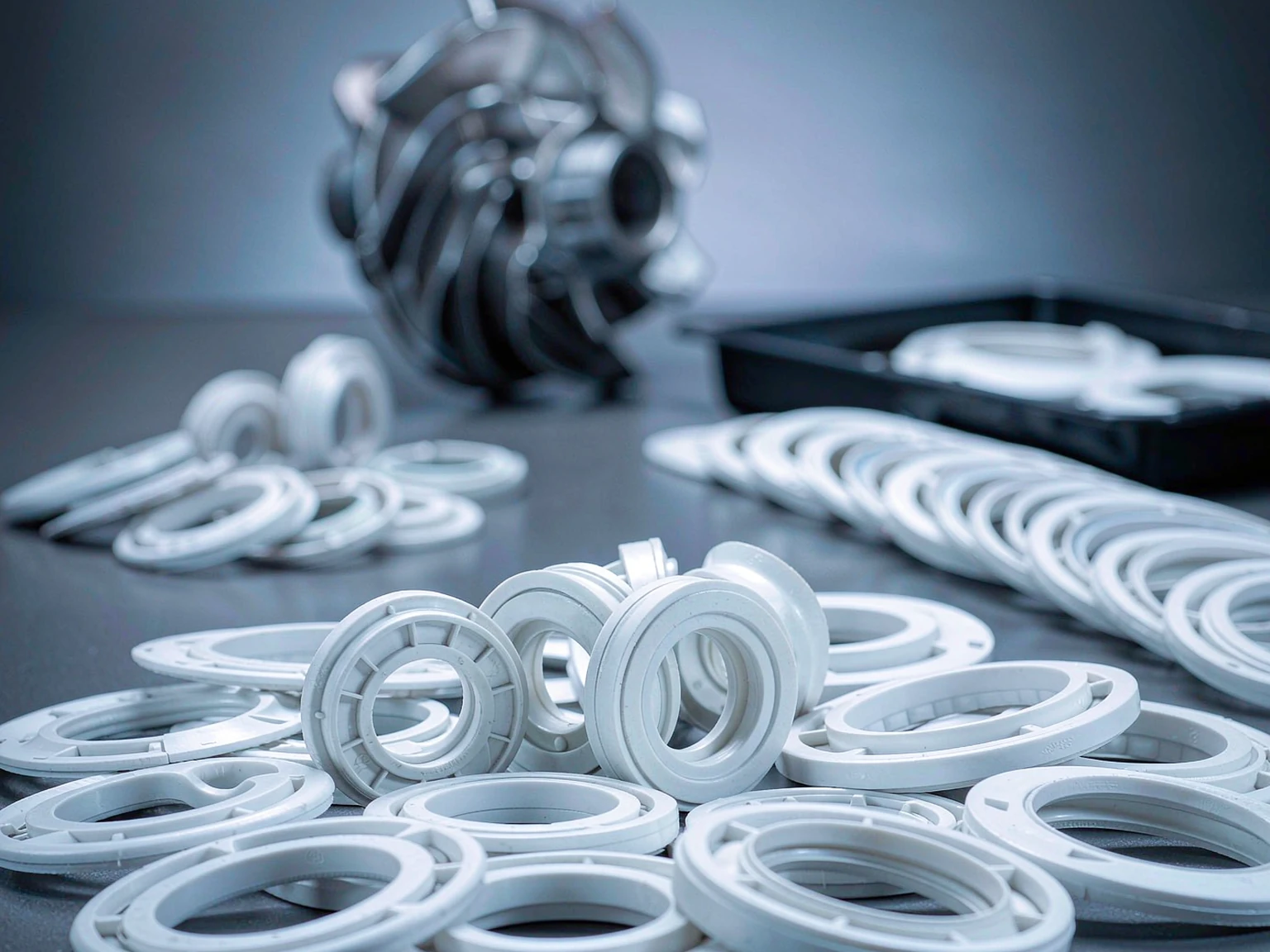
Machined PTFE parts in food equipment — scrapers, guides, wear pads, custom seals — face the same audit logic as gaskets, with the extra wrinkle that machining operations themselves must not introduce non-compliant contact.
The Five-Item Checklist
- Material compliance: Declaration of Compliance naming resin producer and grade, covering FDA 21 CFR 177.1550 and EU 10/2011 as relevant to your markets.
- Lot linkage: each delivery’s certificate references the resin lot — auditors ask about the part in the machine, not the datasheet in the binder.
- First-article inspection: dimensioned report against your drawing, including measurement temperature (PTFE moves with temperature).
- No-added-substance statement: confirmation that no coatings, release agents, or post-treatments touch the part after molding.
- Cutting fluid and packaging note: machining coolants and packaging materials need their own food-contact reasoning — ask the supplier to state theirs.
Design Notes for Food Equipment Parts
| Design choice | Why |
|---|---|
| Radiused internal corners | No cleaning dead zones for CIP |
| Smooth finished surfaces on product-contact faces | Prevents residue buildup |
| Virgin PTFE only | Most filled grades lack food-contact clearance |
| Lot-marked packaging | Shelf-level traceability during audits |
Chunhuan machines food-contact PTFE components from own-molded virgin stock with the complete documentation chain — compliance, lot linkage, FAI and handling records — from one controlled facility.
Frequently Asked Questions
What documents are needed for food-contact PTFE machined parts?
Material DoC (FDA 177.1550 / EU 10/2011), lot certificate linking delivery to compliant resin, first-article dimensional report, and statements confirming no surface treatments or added substances.
Are coolant residues a compliance issue for machined PTFE parts?
Yes — machining coolants and packaging need food-contact justification too. Ask suppliers to state what touches the part during production.
Why do first-article reports mention measurement temperature?
PTFE expands and contracts with temperature; a dimensional claim without the measurement temperature isn’t verifiable.
Should food equipment PTFE parts be machined from virgin or filled grade?
Virgin, for direct contact — most fillers lack food-contact clearance. Filled grades only for non-contact positions with documented justification.


 English
 Russian
 French
 Spanish
