
Short answer: For laboratory PTFE tubing, specify six things: ID and OD with tolerances, wall thickness (minimum for pressure work), purity/leachables expectation (virgin PTFE, no fillers, clean packaging), flexibility/working radius for your manifold layout, temperature range of your processes, and whether ends are cut to length with squareness requirements. Lab tubing fails on purity and handling far more often than on chemistry.
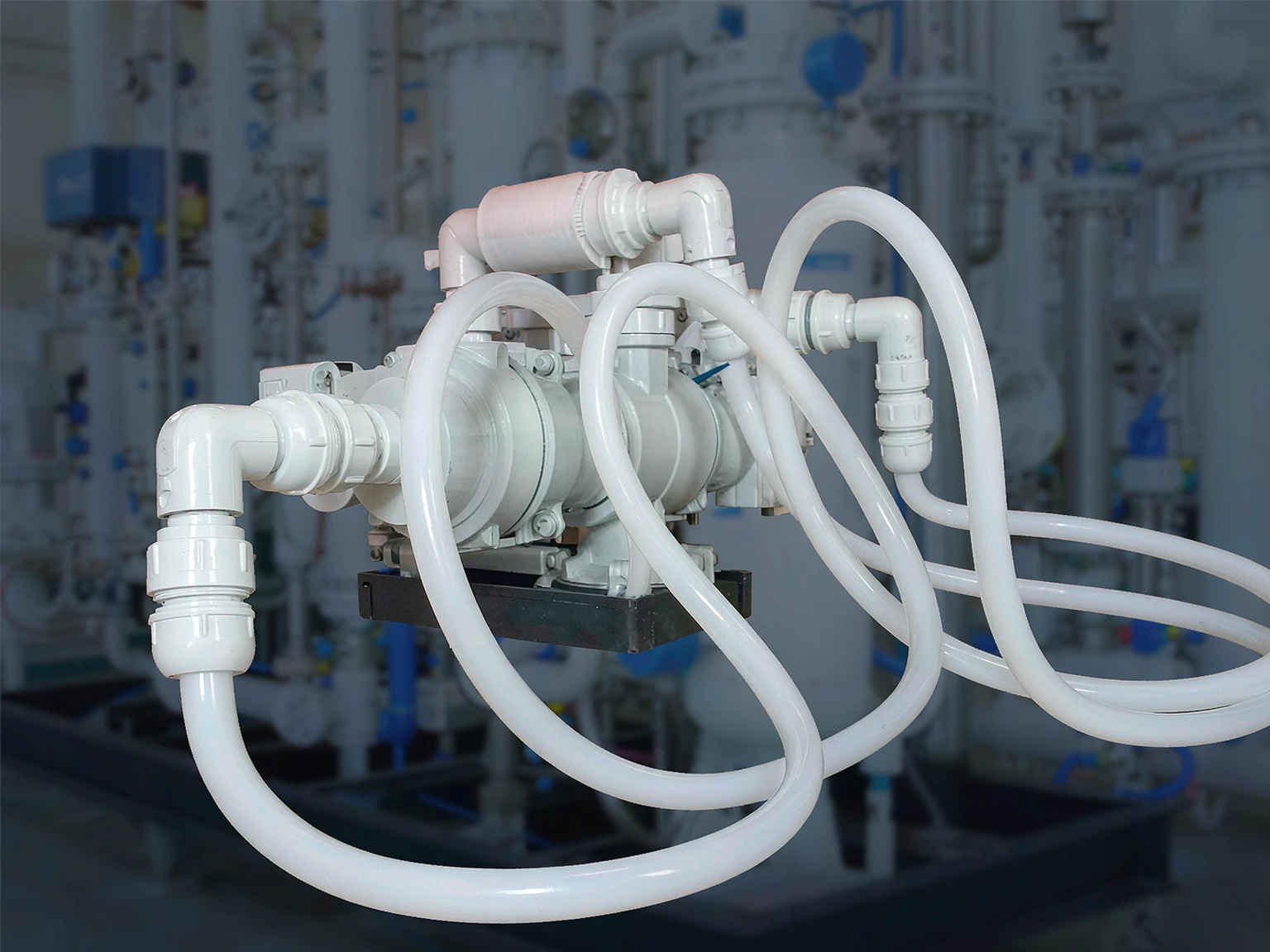
PTFE tubing in laboratories serves as transfer line, pump tubing, and protective sleeve — duties where chemical inertness is assumed and everything else is the differentiator.
Specification Checklist
- Dimensions: ID governs flow; OD governs fitting compatibility. State both with tolerances (±0.05 mm achievable on precision grades). For fitting-sealing positions, add ovality control.
- Wall (minimum, not nominal): for pressurized lines, minimum wall determines burst margin. Off-center walls fail from the thin side.
- Purity: virgin PTFE only; ask about resin source cleanliness, packaging (sealed, particulate-controlled), and whether tubing is rinsed/handled with gloves. For analytical work, ask for leachables information.
- Working radius: PTFE tube is stiff relative to its feel; tight manifold bends need smaller-ID tube or coiled forming. Don’t fight it — specify what your layout needs.
- Temperature: lab duties rarely stress PTFE, but autoclave cycles and hot blocks do — PTFE handles both, yet cut ends soften enough to deform near ~260 °C.
- Cut ends: square, burr-free ends seal properly in fittings; specify cut-to-length with squareness if your manifold is assembled by non-specialists.
Common Lab Tubing Mistakes
| Mistake | Consequence |
|---|---|
| Buying by OD only | Fittings leak — ID/wall determine the seal |
| Reusing tube past fitting cycles | Compression sets in PTFE; ferrules stop sealing |
| Ignoring storage kinks | Coiled tube takes a set; flow geometry changes |
Chunhuan supplies precision PTFE laboratory tubing with dimension certificates, clean packaging and cut-to-length service — including tight-ID grades for analytical flow paths.
Frequently Asked Questions
What should a lab PTFE tubing spec include?
ID/OD with tolerances, minimum wall for pressure work, purity/packaging requirements, working radius for your layout, temperature exposure, and cut-end squareness.
Why specify minimum wall instead of nominal for lab tubing?
An off-center wall fails from its thin side; minimum wall guarantees the burst margin that a nominal figure conceals.
Is PTFE tubing pure enough for analytical work?
Virgin PTFE is essentially inert and low-leaching; ask suppliers for resin source, sealed packaging, and leachables information for sensitive applications.
Can PTFE lab tubing be autoclaved?
Yes — PTFE tolerates autoclave temperatures easily. Note cut ends can deform near 260 °C, so protect ends during steam cycles.

 English
 Russian
 French
 Spanish
