
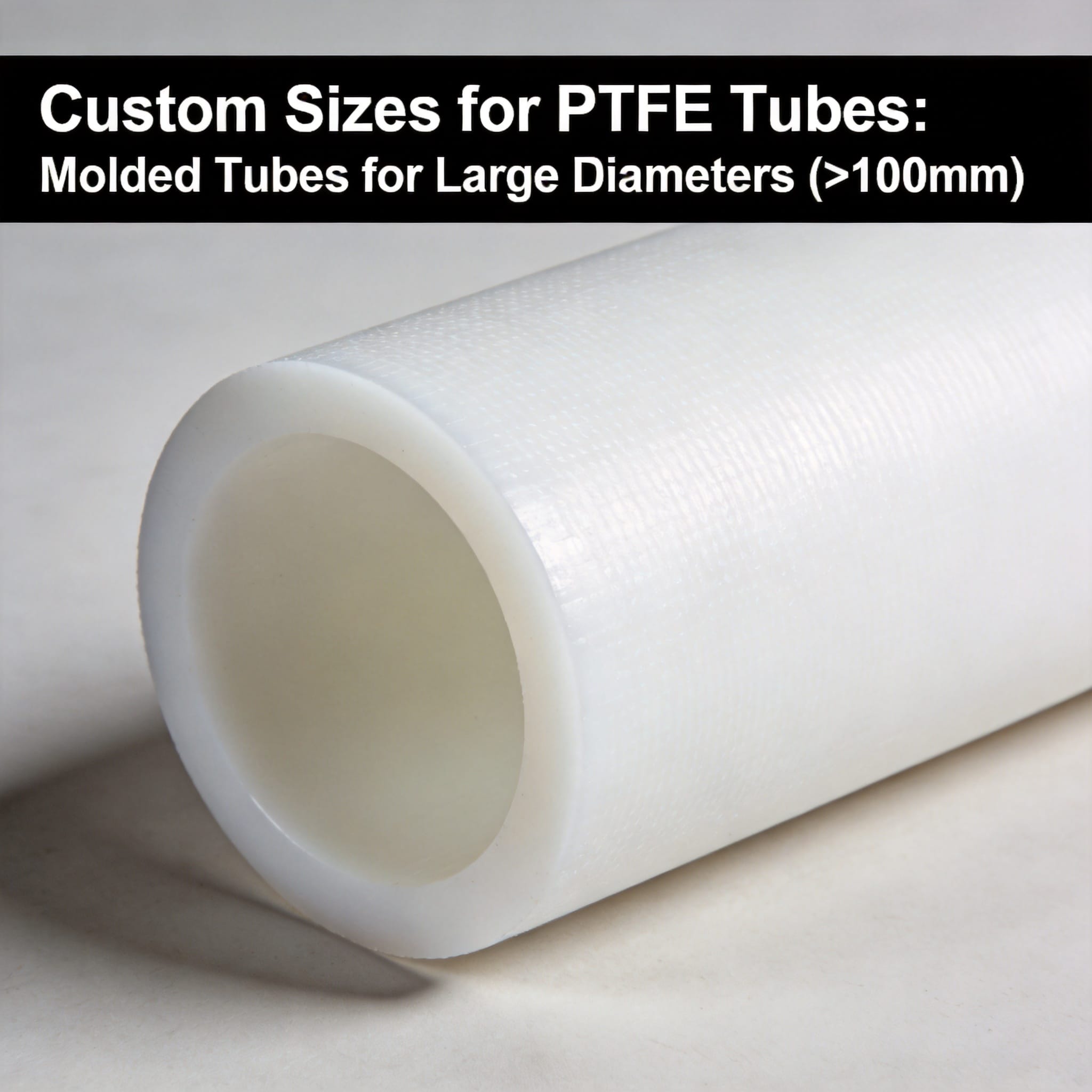
Custom sizes for PTFE tubes are non-standard diameters, wall thicknesses, or lengths produced to a buyer’s drawing rather than taken from a catalog. For large diameters above 100 mm, the tube is almost always compression molded or isostatically molded instead of extruded, because extrusion struggles to hold roundness and wall uniformity at that scale. After reading this guide, you will be able to specify a molded PTFE tube correctly, choose between molding methods, set realistic tolerances, and inspect the finished part.
Table of Contents
Why Molding Works for Large Diameters
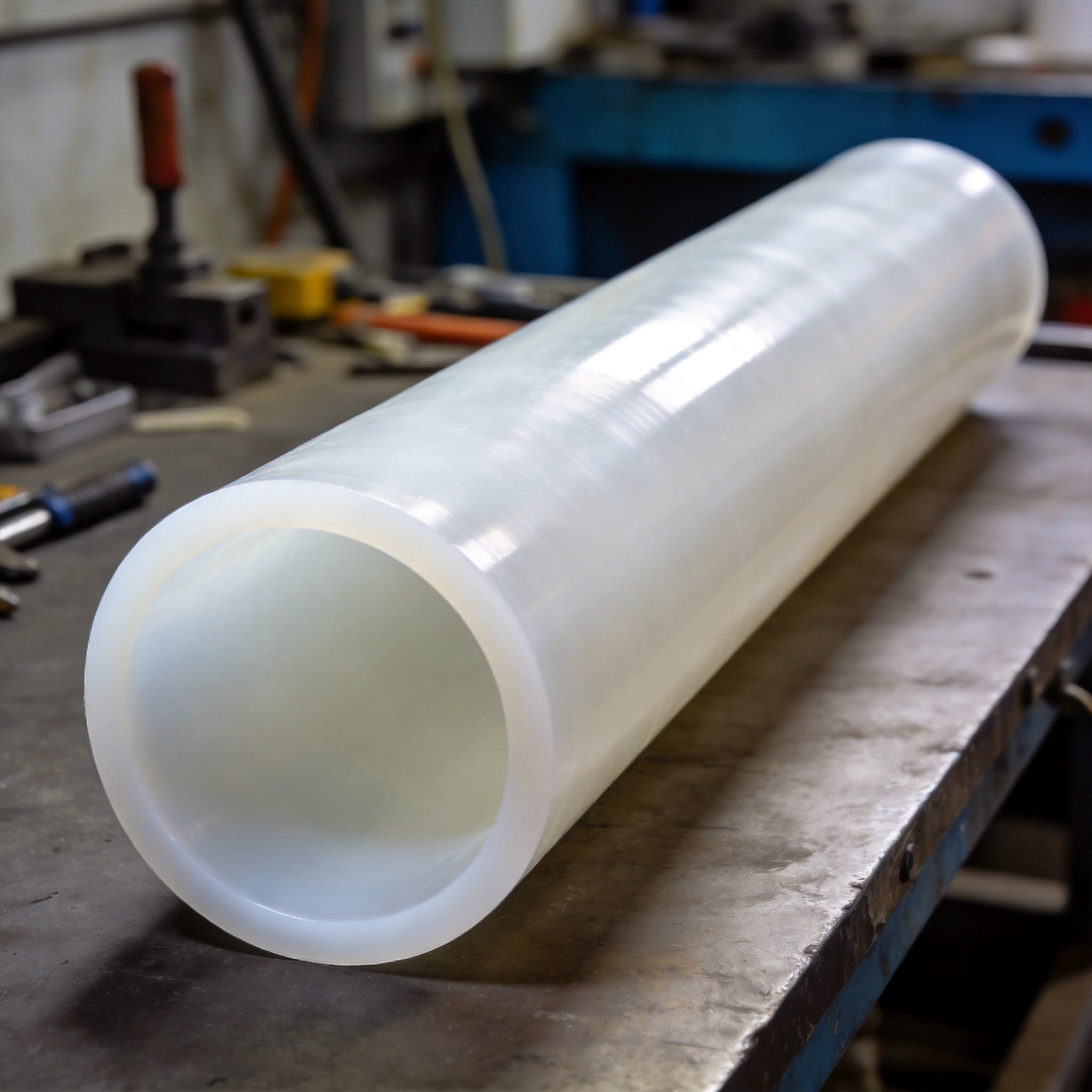
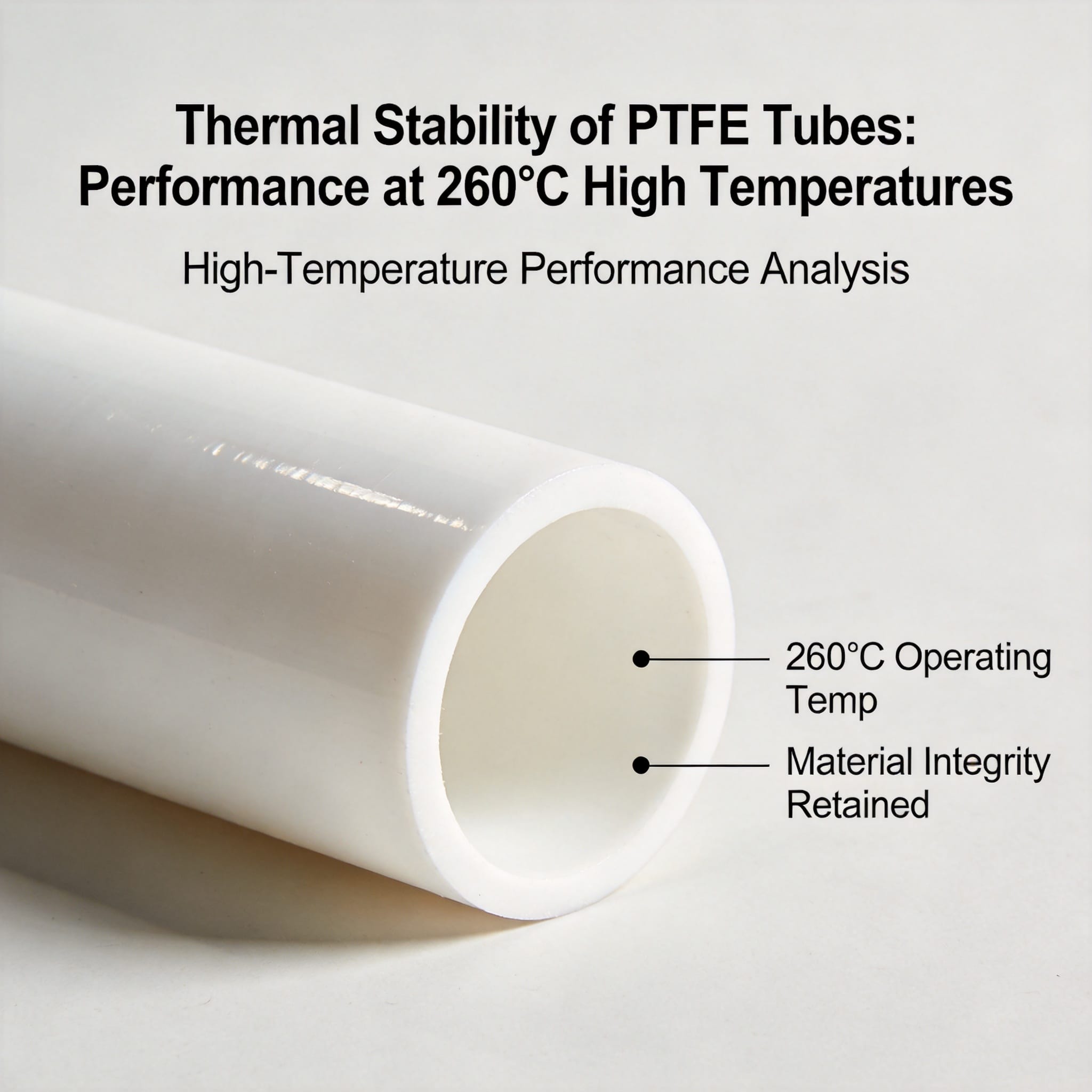
PTFE has a melt viscosity around 1010 Pa·s at 380 °C, which means it does not flow like nylon or polyethylene. You cannot injection mold it in the conventional sense. Instead, manufacturers press PTFE powder into a preform and then sinter it above 360 °C. This is why large-diameter tubes are “molded” rather than “extruded” — the process is closer to powder metallurgy than to plastic extrusion.
Extrusion can technically reach 100–150 mm outer diameter, but the paste-extrusion route is normally reserved for small tubes (under 25 mm) and ram extrusion covers the middle range. Once you pass roughly 100 mm OD, gravity and uneven powder fill start to distort the wall. Molded processes solve this by filling a closed cavity, so the powder density stays uniform around the full circumference.
The three molding routes you will encounter are:
- Compression molding — powder is pressed in a steel mold at 20–40 MPa, then free-sintered. Best for wall thickness above 6 mm and OD up to about 300 mm.
- Isostatic molding — powder is packed around a mandrel inside a flexible bag and pressed uniformly by fluid pressure. Best for very long tubes and thin walls (2–5 mm) with tight concentricity.
- Ram extrusion + sintering — a continuous piston pushes pre-sintered powder through a heated die. Best for OD 25–100 mm in long random lengths.
According to Chemours, the primary manufacturer of Teflon PTFE resin, the resin’s high melt viscosity is the defining property that forces processors into these non-melt techniques. The ASTM F1835 standard covers the molded basic shapes that result.
| Outer diameter | Wall thickness | Recommended process | Typical length limit |
|---|---|---|---|
| Under 25 mm | 0.5–3 mm | Paste extrusion | Coiled, hundreds of meters |
| 25–100 mm | 3–10 mm | Ram extrusion | 1–2 m per piece |
| 100–300 mm | 6–40 mm | Compression molding | 300–1000 mm per piece |
| 100–600 mm | 2–8 mm | Isostatic molding | Up to 2000 mm per piece |
How to Specify and Order a Custom Molded PTFE Tube
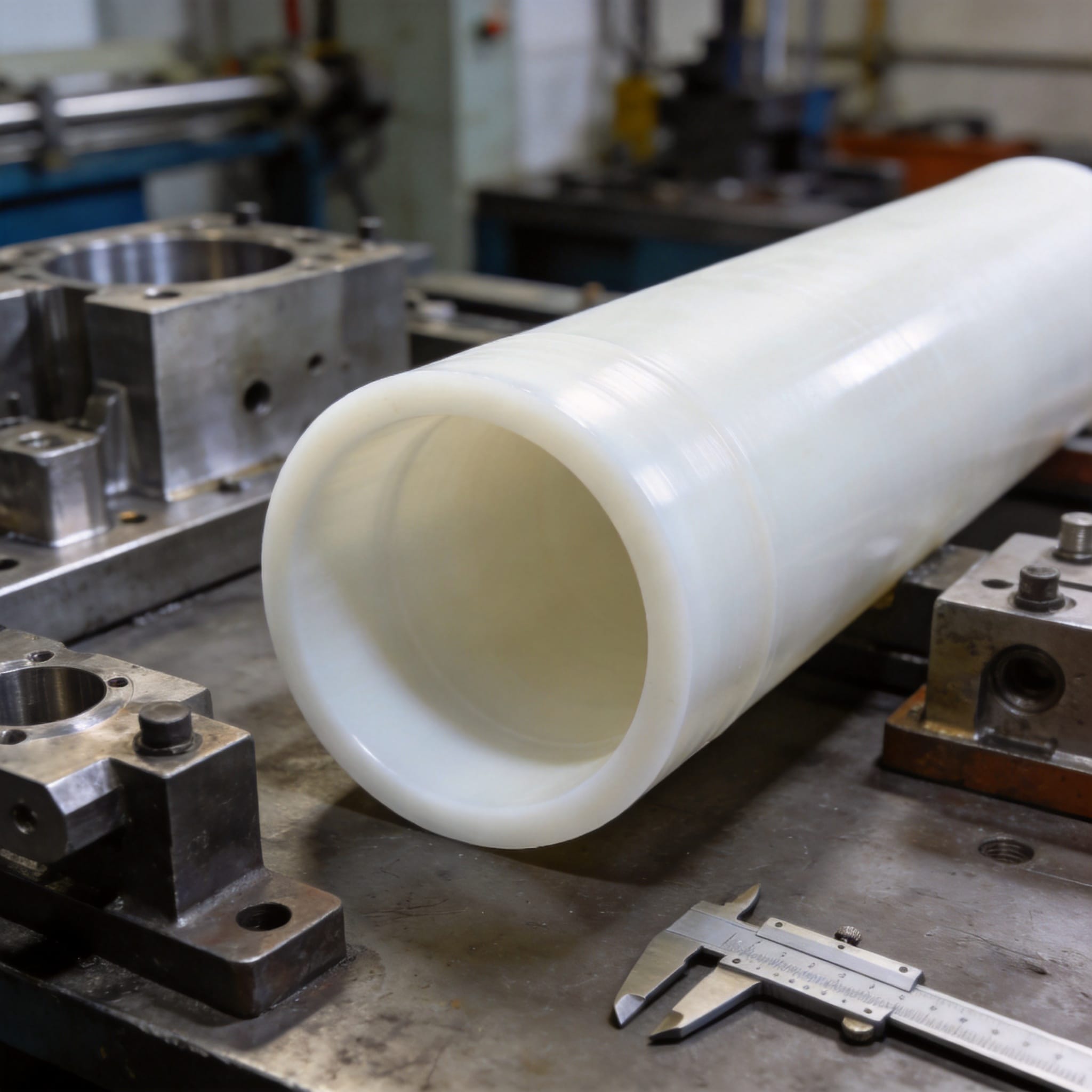
Follow these steps in order. Each one produces a number you will hand to the supplier, and skipping any step usually results in a rejected part.
- Measure the actual installation space, not the old part. Record the bore it must slide into, the shaft it must cover, and the temperature range at each point. Write down the minimum and maximum, then subtract your clearance.
- Define the outer diameter (OD) and inner diameter (ID) separately. Do not give a nominal size plus wall thickness — give OD and ID as absolute values, because PTFE’s 10:1 shrinkage during sintering makes wall thickness the hardest dimension to control.
- Choose the wall thickness from the pressure or stiffness requirement. For a static sleeve, 3 mm is usually enough. For a part that must resist vacuum collapse, use at least 8 mm or add a metal backing ring.
- Set tolerances using the standard, not your guess. ASTM D3295 or your supplier’s published table gives achievable tolerances. A typical molded 150 mm OD tube holds ±0.5 mm on OD and ±10% on wall thickness.
- State the length and end finish. Molded tubes are supplied as cylinders, then cut. Specify whether ends must be square within 0.5 mm, chamfered, or faced on a lathe.
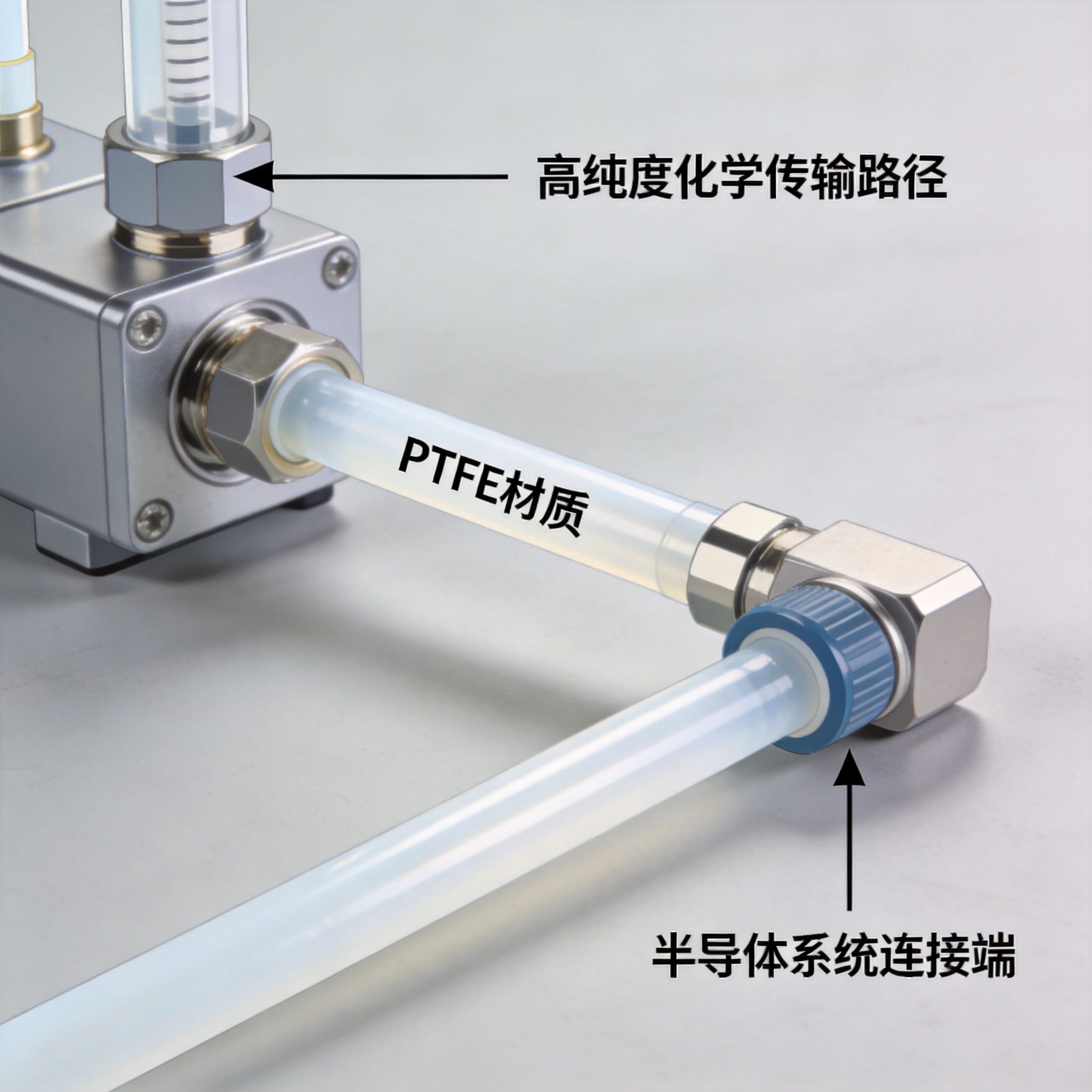
- Specify the resin grade. Virgin PTFE is the default. If you need wear resistance, ask for 15–25% glass fiber or carbon/graphite filled compound — but note that fillers reduce chemical resistance. For high-purity fluid paths, a virgin PTFE tube keeps contamination risk to a minimum.
- Request a first-article inspection report. Ask for OD, ID, wall thickness, concentricity, and density measured on the actual part, not on a sample from a different batch.
- Confirm sintering and cooling cycle in writing. A slow controlled cool (under 40 °C per hour) prevents internal stress that later causes cracking during machining.
A worked example: a semiconductor wet-bench needs a 160 mm OD, 140 mm ID, 400 mm long sleeve to shield a heater. OD minus ID gives a 10 mm wall, which compression molding handles comfortably. The 20 mm difference also means concentricity can be held to 0.3 mm. The supplier quotes a 3-week lead time because a new steel mold must be machined first.
Common Mistakes and How to Fix Them
Mistake 1: Specifying only a nominal diameter. Symptom: the delivered tube fits one assembly but not the next. Fix: always give OD and ID as separate absolute numbers with a tolerance band, and state the measurement temperature (PTFE expands about 12 × 10-5 per °C, so a 160 mm tube grows 0.19 mm over a 10 °C swing).
Mistake 2: Demanding extruded-style tolerances on a molded part. Symptom: every quote comes back “out of tolerance” or the price triples. Fix: accept the molded tolerance table. If you truly need ±0.05 mm on a 150 mm OD, plan a secondary machining step after sintering and budget for the material waste.
Mistake 3: Machining the tube immediately after delivery. Symptom: the part warps or cracks days later. Fix: let the tube relax at room temperature for 24–48 hours after sintering before any cutting, and use sharp tooling with a positive rake at low speed. Stress-relieved stock machines cleanly.
Mistake 4: Using filled PTFE where virgin is required. Symptom: contamination in a high-purity fluid path. Fix: specify virgin, unfilled PTFE with a written declaration, and verify with a density check (virgin PTFE is 2.14–2.20 g/cm³; glass-filled runs 2.20–2.30 g/cm³).
Mistake 5: Ignoring the mold cost in the timeline. Symptom: a project slips by a month. Fix: ask whether the supplier has an existing mold within 5 mm of your OD. Reusing an existing mold and machining to final size is often faster than cutting a new one.
FAQ
What is the largest PTFE tube that can be molded? Isostatic molding has produced tubes over 600 mm OD and 2 m long, but most suppliers cap practical compression molding around 300 mm OD because the pressing force and mold weight become uneconomical. Above 300 mm, expect a custom quote and a longer lead time.
How tight can the tolerances be on a molded 100 mm+ tube? As-sintered, plan on ±0.5 mm on OD and ±10% on wall thickness. If you machine the surfaces afterward, you can reach ±0.05 mm on OD and ±0.1 mm on wall, at the cost of extra material and labor. For demanding sealing interfaces, a virgin thick wall PTFE tube gives you the extra wall stock needed for finish machining.
Can I get a custom color or a filled compound in a large diameter? Yes. Pigments and fillers are blended into the powder before pressing, so color and filler are set at the powder stage. Minimum order quantities are usually higher because the blended powder cannot be reused for another customer. Suppliers who already run PTFE tubes with customized sizes, colors, and fillings can often accommodate these requests with shorter setup times.
Why is my molded tube more expensive than an extruded one? The mold itself is a one-time cost, and the pressing-and-sintering cycle takes hours per batch rather than running continuously. For a single 150 mm tube, most of the price is the mold, not the material.
How do I inspect a large molded PTFE tube on arrival? Measure OD at three points along the length and at 0°, 90°, and 180° around the circumference. Check wall thickness with an ultrasonic gauge at the same points. Verify density by the water-displacement method described in ASTM D792. Any reading outside your stated band is grounds for rejection.
Disclosure: this guide reflects hands-on specification experience with molded PTFE components; no supplier paid for or influenced its content.

 English
 Russian
 French
 Spanish