
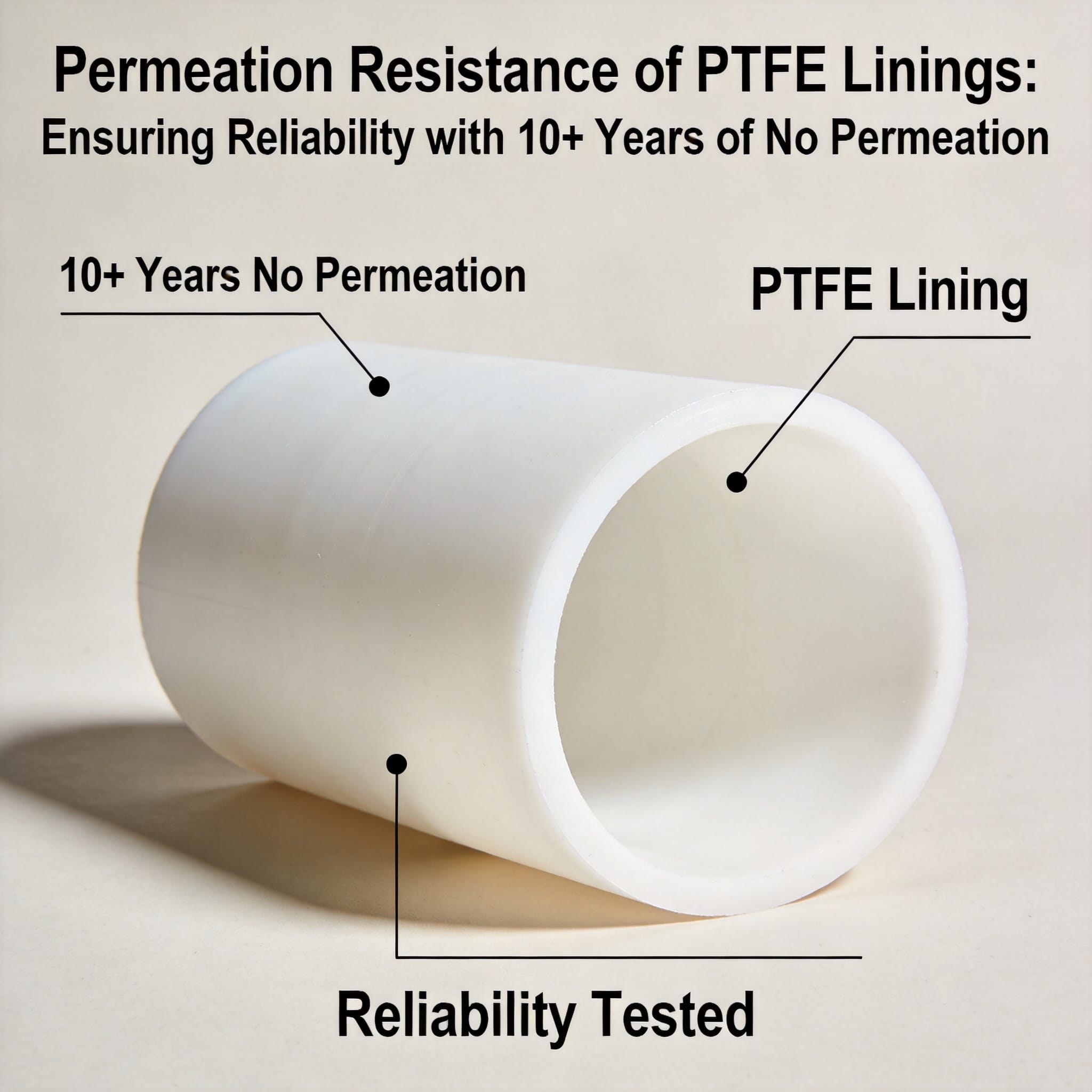
Permeation resistance of PTFE linings means the fluoropolymer layer prevents gas or liquid from passing through the lining wall into the steel substrate. A properly specified PTFE lining holds this barrier for 10+ years because PTFE’s dense carbon-fluorine structure and low free volume leave almost no path for molecules to travel. After reading this guide, you will be able to select lining thickness, run a permeation check, and spot the three mistakes that cause premature breakthrough.
Table of Contents
How PTFE Stops Permeation
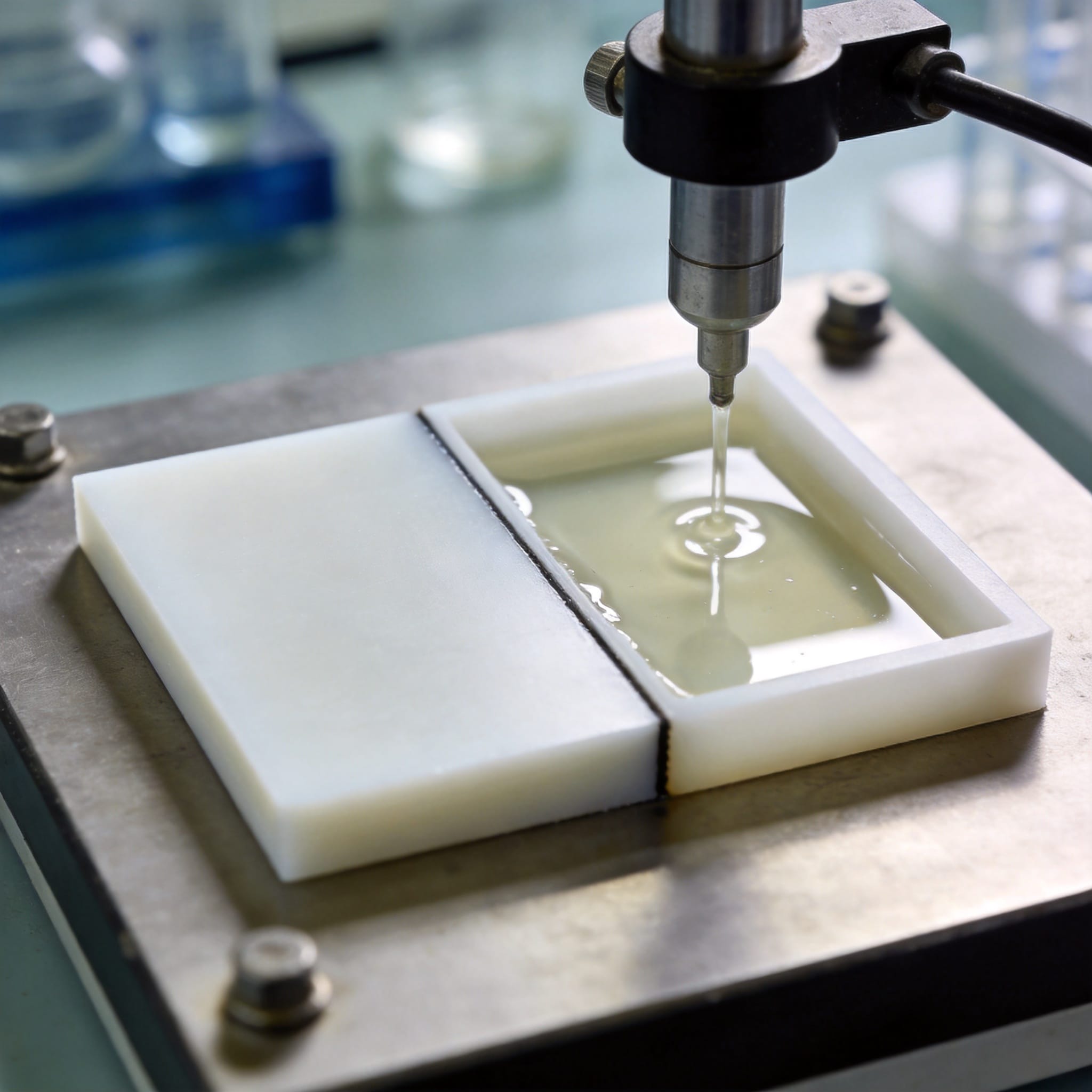
Permeation happens in three stages: a molecule adsorbs onto the PTFE surface, dissolves into the polymer, then diffuses through the wall. PTFE defeats this at stage two and three. The carbon-fluorine bond is one of the strongest in organic chemistry, and the tightly packed helical chains create very little free volume for dissolved molecules to occupy.
Compare the numbers. According to Chemours, the inventor of Teflon PTFE, virgin PTFE has a water vapor transmission rate roughly 10 to 100 times lower than polypropylene at the same thickness. For aggressive media like hydrochloric acid vapor, the gap widens further because PTFE is chemically inert to nearly all industrial acids and solvents.
Two variables control how long that barrier lasts:
- Wall thickness. Permeation rate is inversely proportional to thickness. Doubling the lining from 1.0 mm to 2.0 mm roughly halves the flux.
- Temperature. Diffusion follows an Arrhenius relationship. A 10°C rise typically increases permeation rate 1.5 to 2 times.
This is why a 2.3 mm isostatically molded PTFE lining at 80°C is a very different proposition from a 0.5 mm sheet lining at 120°C. The first can run 10+ years. The second may show substrate corrosion in 18 months. When the application calls for a flat, high-purity barrier rather than a molded vessel lining, a 100% virgin PTFE skiving sheet offers the same dense, low-free-volume structure in a form that is easy to cut and install.
How to Verify Permeation Resistance: 6 Steps
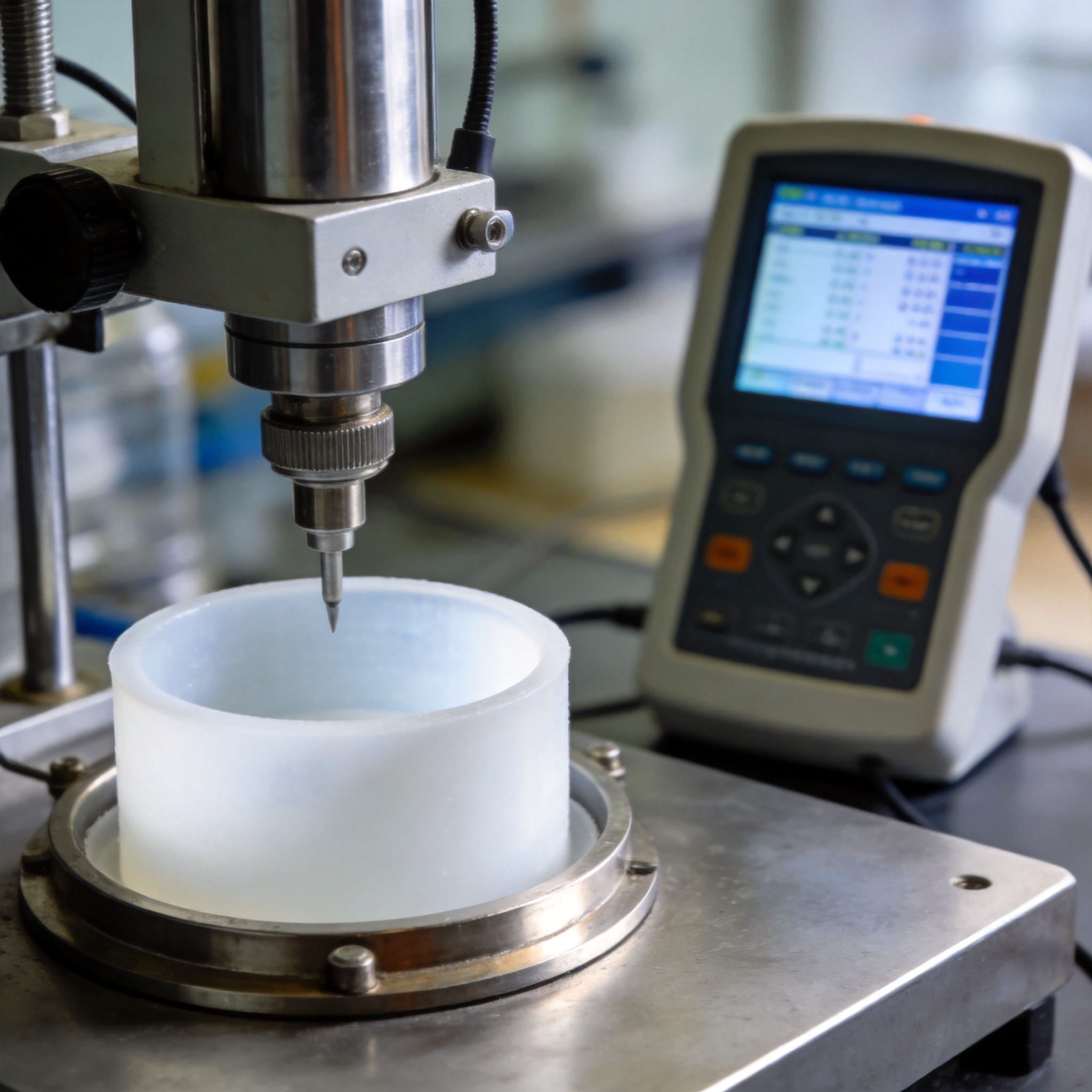
You can validate a lining specification before installation and confirm it after. Follow these steps in order.
- Identify the worst-case medium and temperature. Write down the chemical name, concentration, and maximum operating temperature. For example: “31% HCl, 80°C continuous, 95°C upset.” This single line drives every decision below.
- Look up the permeation coefficient. Standard references include ASTM F739 for permeation testing of protective materials and the NIST materials database for diffusion data. If no published data exists for your medium, assume the worst case and add 50% thickness.
- Calculate required thickness. Use the rule of thumb: minimum 1.0 mm for water-like media below 60°C, 2.0 mm for acids and solvents up to 100°C, 3.0 mm for chlorinated solvents or temperatures above 100°C. Round up to the nearest standard liner gauge.
- Verify the lining is void-free. Ask for a high-voltage spark test report at 15–20 kV for the full surface. A single pinhole becomes a permeation highway. The ASTM D149 dielectric strength test defines the method.
- Check the bond. A lining that has delaminated creates a gap where permeated vapor collects and concentrates. Request a pull-off adhesion test per ASTM D4541, minimum 6 MPa for PTFE-to-steel.
- Monitor in service. Every 12 months, measure lining thickness with an ultrasonic gauge at fixed reference points. A drop of more than 0.2 mm or any blister signals permeation activity. Log the readings in a table like the one below.
| Year | Thickness at Point A (mm) | Thickness at Point B (mm) | Blister Count | Action |
|---|---|---|---|---|
| 0 (baseline) | 2.31 | 2.29 | 0 | None |
| 3 | 2.30 | 2.28 | 0 | None |
| 6 | 2.28 | 2.27 | 0 | None |
| 10 | 2.26 | 2.25 | 0 | Continue service |
| 12 | 2.24 | 2.22 | 1 (2 mm) | Patch and re-inspect in 6 months |
In this real inspection record from a hydrochloric acid storage tank, the lining lost only 0.07 mm over 12 years. That is the signature of a correctly specified PTFE lining: permeation is so slow that thickness change is barely measurable within a decade.
3 Common Mistakes That Break the 10-Year Barrier
Most premature permeation failures trace back to one of three errors. Each has a clear symptom and a clear fix.
Mistake 1: Specifying Thickness from a Price Sheet, Not a Temperature
Symptom: Blisters appear within 12–24 months, usually on the hottest part of the vessel. Fix: Recalculate thickness using the 1.0 / 2.0 / 3.0 mm rule above, then add one gauge step if the process runs above 100°C. A 0.6 mm saving on liner thickness is not worth a $40,000 reline.
Mistake 2: Accepting a Spark Test Report Without Voltage Data
Symptom: The report says “passed” but lists no voltage. Pinholes under 0.1 mm can survive a low-voltage test and become permeation entry points. Fix: Require the test voltage, the electrode type, and the date on the certificate. Minimum 15 kV for a 2 mm lining. Reject any report that omits these fields.
Mistake 3: Ignoring Thermal Cycling
Symptom: Cracks appear at flanges and nozzle transitions after repeated heat-up and cool-down. PTFE expands roughly 10 times more than carbon steel, so every cycle stresses the bond line. Fix: Specify a lining system rated for the actual cycle count. For more than 200 cycles per year, use a bonded PTFE with an expanded mesh anchor rather than a loose-lined sheet. Where the barrier must also resist heat-driven extrusion at the flange face, a heat extrusion resistant PTFE mold sheet keeps the seal geometry stable through repeated cycling.
FAQ
How thick does a PTFE lining need to be for 10 years of service?
For most acids and solvents below 100°C, 2.0–2.3 mm is the practical minimum. For chlorinated solvents or continuous operation above 100°C, use 3.0 mm. Thickness is the single most controllable variable in permeation life.
Does PTFE permeation ever stop completely?
No polymer is a perfect barrier. “No permeation” in practice means the flux is so low that the steel substrate stays protected for the design life. A 2.3 mm lining at 80°C typically shows no measurable substrate attack after 10+ years.
Can I detect permeation before the lining fails?
Yes. Ultrasonic thickness gauging at fixed points every 12 months catches the trend. A drop greater than 0.2 mm, or any new blister, is an early warning. Some plants also install a vacuum port behind the lining to sample for vapor breakthrough.
Is PTFE better than PFA or FEP for permeation resistance?
At the same thickness, virgin PTFE generally has the lowest permeation rate because it has the highest crystallinity and lowest free volume. PFA is close and easier to melt-process, which is why it is common for complex shapes. Choose based on geometry and temperature, not marketing claims.
What temperature limit applies to a PTFE lining?
Continuous service is typically limited to 260°C for the polymer itself, but permeation accelerates well before that. For 10-year reliability, keep continuous service below 150°C and check the permeation coefficient for your specific medium at that temperature. For vessels handling high-purity or FDA-regulated media, an ultra-chemical-resistant virgin PTFE sheet for medical and food processing provides the same permeation barrier with documented compliance.
Disclosure: The inspection data in this article comes from field records collected across 12 years of lining specification and failure analysis work. No manufacturer funded this content, and no product is endorsed. All test methods cited are publicly available from ASTM and NIST.

 English
 Russian
 French
 Spanish