
Imagine a world where machinery operates seamlessly, with components gliding past each other without friction or wear. This isn’t a scene from a science fiction movie but rather the magic behind the PTFE sealing ring. For those in industries where precision and durability are paramount, the advent of PTFE sealing rings represents a revolutionary leap forward. These seemingly simple components play an intricate role in enhancing the efficiency and lifespan of countless machines, making them indispensable in sectors ranging from automotive to aerospace.
In this blog post, we delve into the fascinating world of PTFE sealing rings and uncover the secrets that make them a game-changer. With their unique combination of robustness and adaptability, these rings are engineered to withstand extreme temperatures and corrosive environments. They minimize downtime and maintenance costs, proving to be both an economic and technological triumph. As we explore the intricacies of PTFE’s chemical structure and its real-world applications, you’ll discover why this humble sealing ring is at the forefront of industrial evolution.
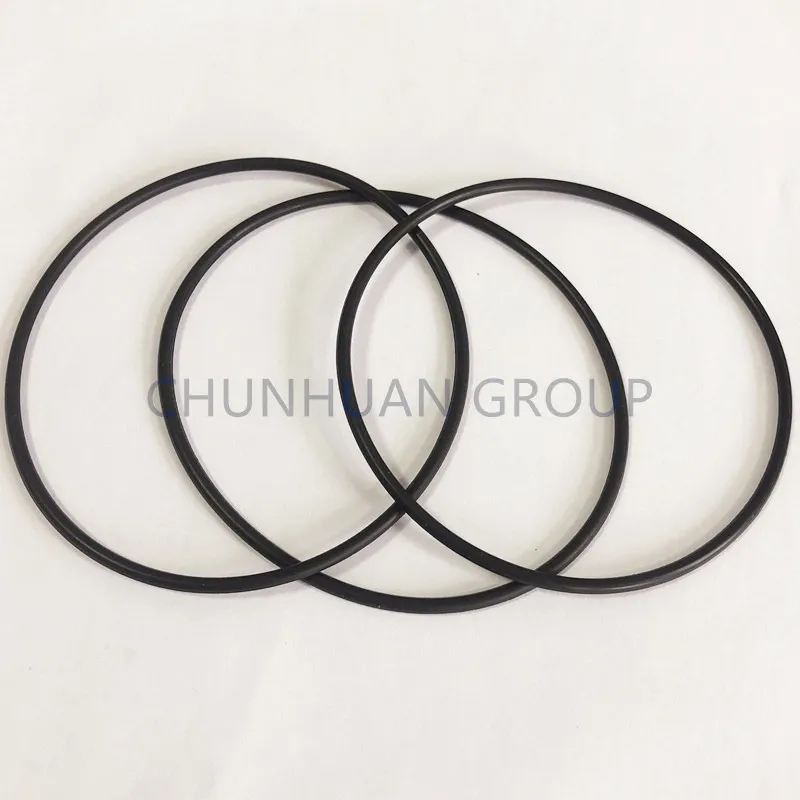
Understanding the Composition of PTFE: A Deep Dive into its Chemical Structure
Polytetrafluoroethylene (PTFE) is a synthetic fluoropolymer composed of repeating tetrafluoroethylene monomers (–CF2–CF2–). Each monomer features two carbon atoms fully shielded by fluorine atoms, giving PTFE its trademark chemical inertness and thermal stability. The strong carbon–fluorine bonds in the polymer backbone create a highly electronegative shell that resists chemical attack from acids, bases, solvents, and even the most aggressive industrial fluids. As a result, a PTFE sealing ring exhibits unmatched resistance to corrosion and oxidative degradation, making it ideal for harsh operating environments where traditional sealing materials would fail.
Beyond its chemical resilience, PTFE’s molecular structure imparts a remarkably low coefficient of friction. The fluorine atoms form a slippery surface layer that prevents sticking and adhesion, reducing wear on mating surfaces. This friction-reducing property not only extends the service life of the sealing component but also contributes to lower energy consumption in dynamic seals. Moreover, PTFE’s high molecular weight and crystallinity allow it to maintain dimensional stability under mechanical stress, ensuring that a ptfe sealing ring retains its shape and sealing effectiveness over extended use and a wide range of pressures.
Unparalleled Performance: How PTFE Sealing Rings Excel in Extreme Temperatures
One of the defining attributes of PTFE sealing rings is their extraordinary thermal range. From cryogenic applications down to –200 °C, where most polymers become brittle, PTFE retains its flexibility and sealing integrity. At the other end of the spectrum, it withstands continuous exposure to temperatures up to 260 °C without softening or decomposing. This dual capability means equipment across refrigeration, cryogenics, and high-temperature processing can rely on a single sealing solution, reducing inventory complexity and ensuring operational consistency.
Aside from static temperature limits, PTFE rings handle rapid thermal cycling with minimal stress cracking. When machinery moves from sub-zero startup to high-heat operation, these seals expand and contract without losing contact pressure or developing leaks. This resilience is further amplified by PTFE’s low thermal conductivity, which acts as an insulating barrier, protecting adjacent metal or plastic components from hot spots. In industries such as petroleum refining or chemical manufacturing, where temperature spikes are common, ptfe sealing ring performance minimizes unplanned downtime and maintenance interventions.
PTFE Sealing Rings in Action: Real-World Applications Across Industries
In the automotive sector, PTFE sealing rings are found in fuel injectors, brake systems, and engine gaskets, where they resist fuels, oils, and hydraulic fluids while enduring temperature fluctuations and mechanical vibration. Their inert nature prevents contamination in food and beverage processing lines, ensuring that no off-flavors or toxic byproducts leach into products. Meanwhile, pharmaceutical equipment benefits from PTFE’s sterility and compliance with FDA regulations, where seals must operate in high-purity environments and survive aggressive cleaning agents.
Aerospace and defense applications push PTFE sealing ring capabilities even further. Aircraft hydraulic systems, oxygen delivery lines, and rocket engine components demand seals that withstand extreme altitudes, rapid decompression, and cryogenic propellants. PTFE’s radiation resistance also makes it suitable for space applications, where exposure to high-energy particles can degrade other polymers. Even in semiconductor manufacturing, where ultra-clean vacuum chambers are mandatory, PTFE’s low outgassing and chemical inertness help maintain contamination-free conditions during wafer production.
Advantages Over Traditional Sealing Methods: Why PTFE Rings Reign Supreme
Traditional sealing materials such as rubber, neoprene, and metal gaskets often face trade-offs between chemical compatibility, temperature tolerance, and friction. PTFE sealing rings break this compromise by combining broad chemical inertness with an exceptional thermal window and remarkably low friction coefficient. Unlike elastomers, a PTFE ring doesn’t swell, embrittle, or degrade when exposed to aggressive media, which translates directly into fewer seal failures, reduced downtime, and lower inventory stocking multiple materials for different applications.
Cost-benefit analyses frequently highlight the long service life of PTFE seals. Though the initial purchase price may exceed that of conventional O-rings or compression seals, the extended maintenance intervals and minimized leak-related losses deliver substantial savings over the seal’s lifespan. Furthermore, PTFE’s self-lubricating properties reduce the need for external greases or oils, simplifying system design and eliminating contamination risks. Collectively, these factors position the ptfe sealing ring as a superior solution for industries prioritizing reliability and total cost of ownership.
Embracing the Future: Integrating PTFE Sealing Rings for Enhanced Efficiency
As Industry 4.0 advances, PTFE sealing rings will play a critical role in smart manufacturing ecosystems. By coupling these seals with sensor-embedded housings, real-time monitoring of temperature and pressure can detect early signs of wear or leakage. Predictive maintenance algorithms then schedule service before failures occur, boosting uptime and protecting critical assets. This digital integration harnesses PTFE’s durability while unlocking data-driven insights that optimize operational workflows and resource allocation.
Looking ahead, additive manufacturing promises to customize ptfe sealing ring geometries for specific applications, enabling complex shapes and integrated features like flow channels or mounting tabs. Sustainable engineering efforts are also exploring PTFE recycling and alternative fluoropolymers to minimize environmental impact. By embracing these innovations, industries can leverage the proven performance of PTFE seals while advancing toward greener, smarter, and more efficient production paradigms.
Conclusion
PTFE sealing rings have transformed how modern machinery addresses sealing challenges, combining chemical inertness, thermal resilience, and low friction in one versatile solution. From automotive to aerospace, their performance under extreme conditions drives efficiency and cost savings, proving that advanced materials can deliver both reliability and innovation.
As technology evolves, integrating PTFE seals with digital monitoring and advanced manufacturing will further elevate industrial operations. By understanding the secrets behind PTFE’s success, engineers and decision-makers can harness its potential to build machinery that truly runs friction-free into the future.

 English
 Russian
 French
 Spanish