
Welding and connection technologies for PTFE tubes are the methods used to join polytetrafluoroethylene tubing into leak-tight, mechanically strong assemblies. PTFE cannot be melt-welded like PVC or polyethylene because its melt viscosity is roughly 1010 Pa·s — it does not flow. Instead, you join PTFE with thermal welding (heat plus pressure), hot-air tack welding with a compatible fluoropolymer rod, flaring and flanged connections, or compression fittings. After reading this guide, you will be able to select the right method for your tube size and pressure, execute each procedure step by step, and inspect the joint before putting it into service.
Table of Contents
Why PTFE Joining Works the Way It Does
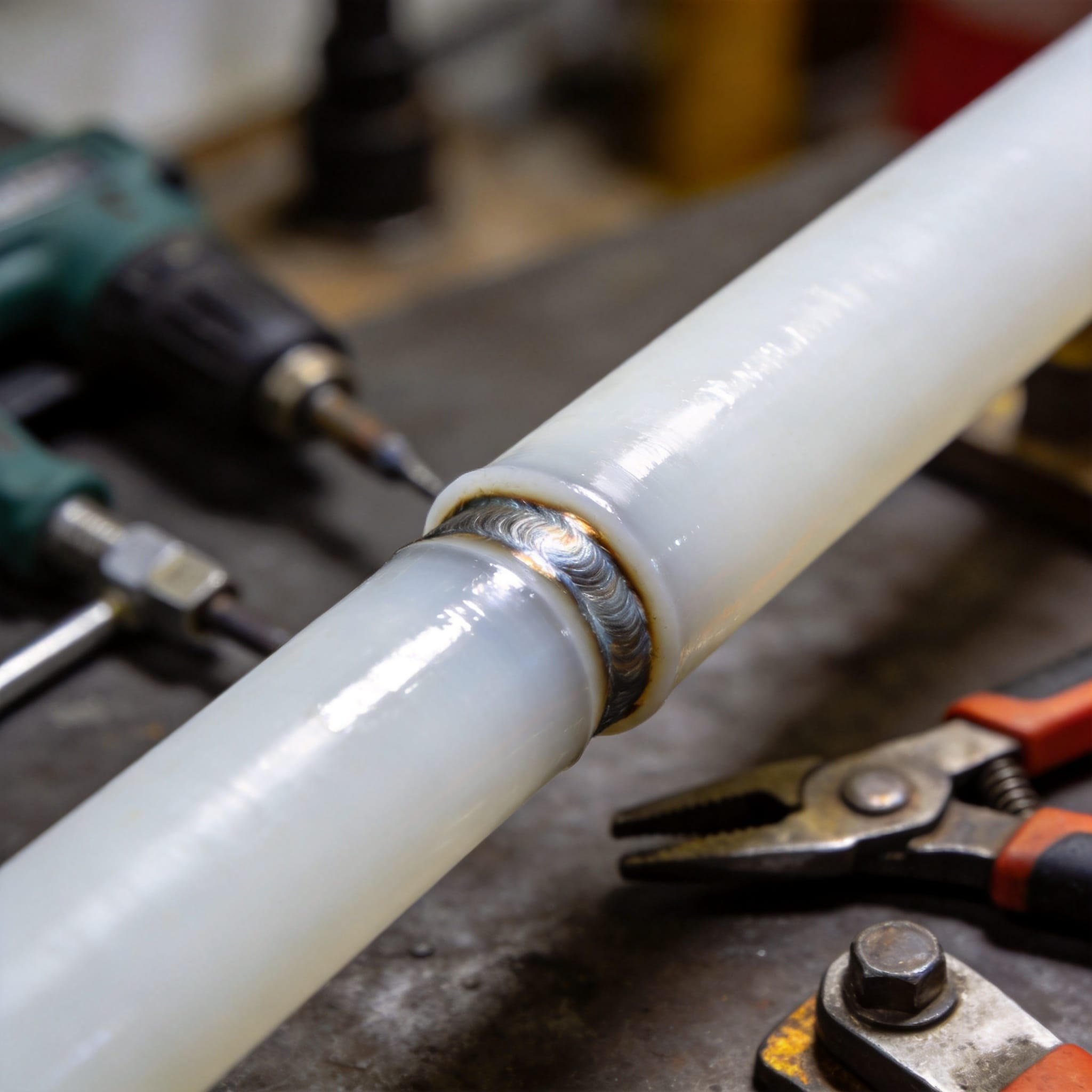
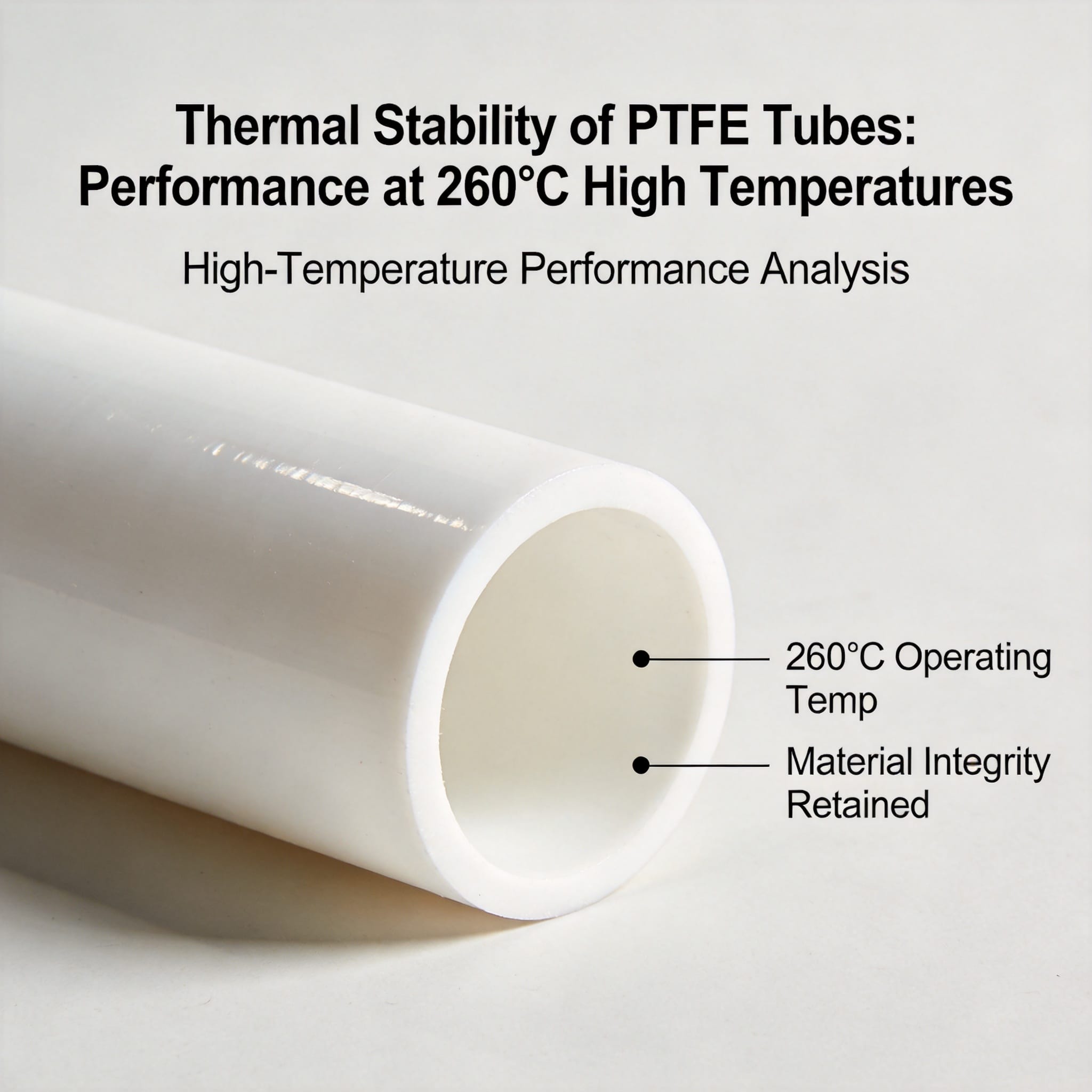
PTFE is a linear polymer of repeating –CF2– units. The carbon–fluorine bond is one of the strongest in organic chemistry, which is exactly why the material resists heat, chemicals, and adhesion. That same stability is the problem when you want to join two pieces. Standard thermoplastics soften into a flowable melt at their processing temperature; PTFE only softens to a gel-like state above its crystalline melting point of approximately 327 °C (620 °F).
Because the material will not flow, three physical mechanisms do the actual work of joining:
- Chain interdiffusion — at 360–400 °C, polymer chains at the interface gain enough mobility to cross the boundary and entangle. This is the basis of thermal welding.
- Mechanical interlock — flaring, beading, or compressing the tube traps it against a harder surface. This is the basis of flanged and compression connections.
- Adhesive bonding — only possible after chemically etching the surface with sodium naphthalenide, which strips fluorine atoms and leaves a bondable carbon layer.
Temperature control is the whole game. Below roughly 340 °C, chain interdiffusion is too slow and the weld is weak. Above roughly 400 °C, PTFE begins to degrade and releases toxic hydrogen fluoride and perfluoroisobutylene fumes. The practical welding window is narrow, which is why process control matters more here than with almost any other plastic. The OSHA chemical database entry for hydrogen fluoride documents the exposure limits that apply if you overheat the material.
The Four Practical Connection Methods
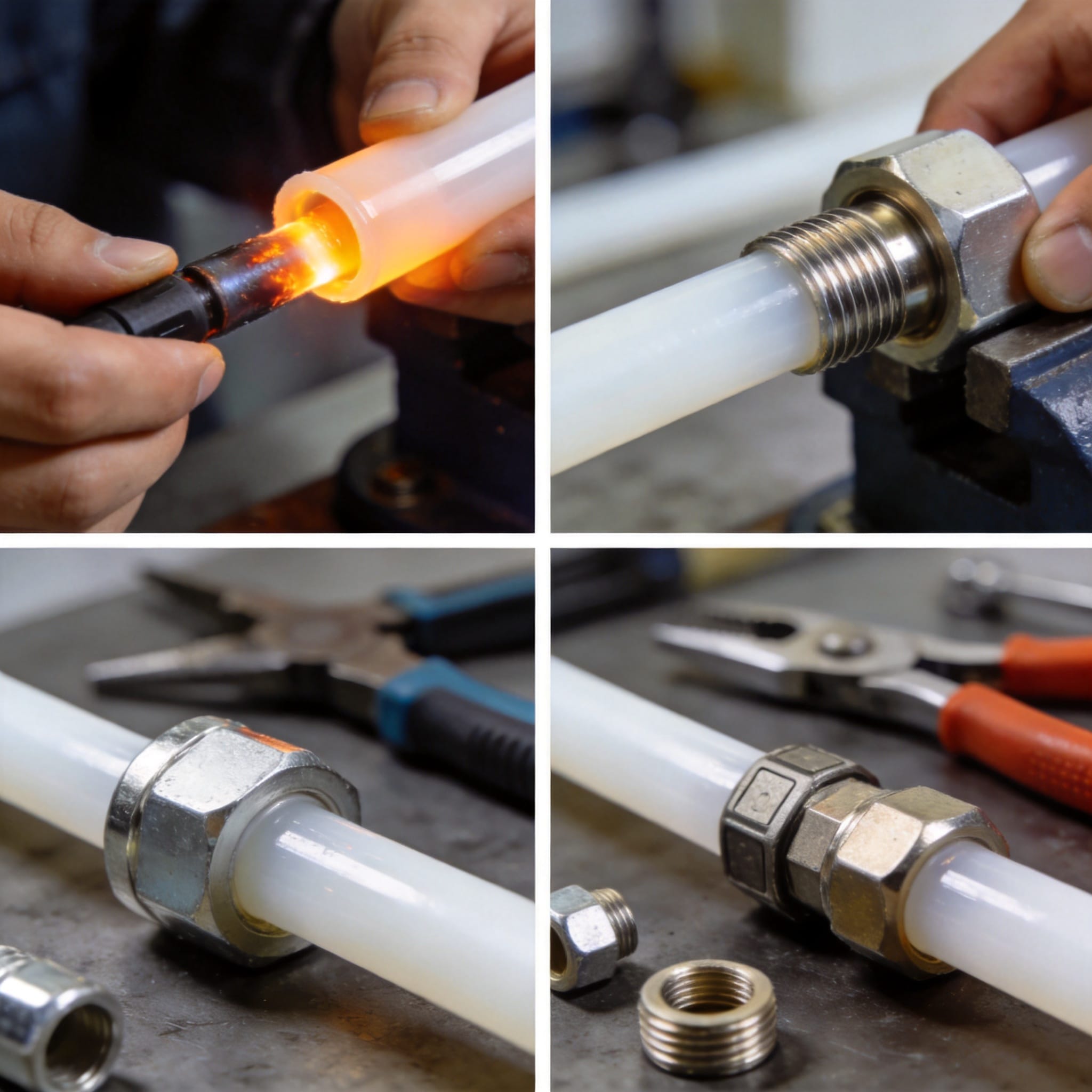
Match the method to your tube diameter and pressure requirement before you buy anything. The table below gives the decision rule directly.
| Method | Typical Tube OD | Pression nominale | Reusable? | Best For |
|---|---|---|---|---|
| Thermal butt welding | 6–200 mm | Up to full tube rating | No | Permanent fluid and gas lines |
| Hot-air tack welding | Any, with rod | Moderate | No | Sealing seams, repair patches |
| Flared flange connection | 12–300 mm | Up to 10 bar | Yes | Lines needing periodic disassembly |
| Compression fitting | 3–25 mm | Up to 15 bar | Yes | Laboratory and instrument tubing |
Thermal Butt Welding
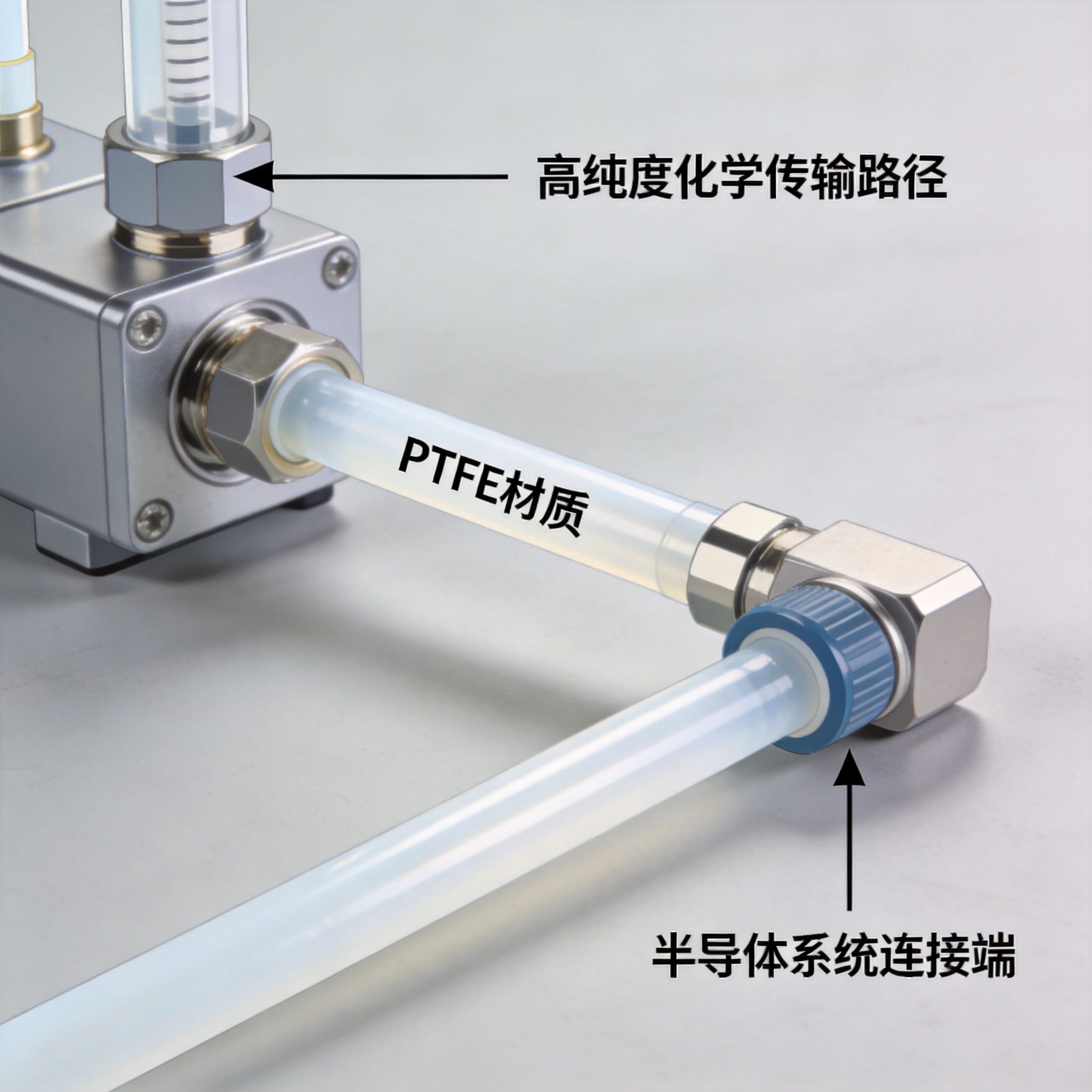
You clamp both tube ends in a fixture, press them against a heated plate until a uniform melt bead forms, retract the plate, and push the ends together under controlled pressure. The result is a joint with essentially the same chemical resistance as the parent tube. This is the method used for high-purity semiconductor and pharmaceutical lines.
Hot-Air Tack Welding
You feed a rod of PFA or modified PTFE into a stream of hot air (typically 380–420 °C at the nozzle) while pressing it into the joint. The rod melts and fuses to the base material. Use this for sealing a seam or repairing a crack — not for joining two pressure-bearing tube ends.
Flared Flange Connection
You heat the tube end until it becomes translucent, then press it over a flaring tool to form a raised cone. A backing flange and a mating flange clamp the cone against a gasket. This is the standard connection on lined pipe systems because it can be opened and re-tightened.
Compression Fitting
A ferrule or gripper ring bites into the tube OD as you tighten the nut. No heat is involved. This is the fastest option for small-diameter tubing and the only one a beginner should attempt without training. For small-diameter work where flexibility matters, a PTFE tube with customized sizes, colors, and filling can be supplied ready to fit your compression hardware.
Step-by-Step: Making a Thermal Butt Weld
This procedure assumes 25 mm OD, 2 mm wall PTFE tube and a hot-plate welding machine with a 340–380 °C plate. Set aside about 20 minutes for the first attempt.
- Verify the material. Confirm both pieces are unfilled virgin PTFE and not PTFE compound. Filler particles (glass, carbon) interrupt chain interdiffusion and produce a weak joint.
- Cut both ends square. Use a rotary tube cutter or a lathe. The cut face must be perpendicular to the axis within 0.5 mm; a slanted face produces a weld with a thin side that fails first.
- Clean the faces. Wipe with isopropyl alcohol and let it flash off for 60 seconds. Any oil or dust becomes a void in the weld line.
- Clamp both ends in the fixture. Leave a 3–5 mm gap between the faces and the heating plate on each side. Confirm the tubes are axially aligned — misalignment above 0.2 mm causes an offset bead.
- Set the plate temperature to 370 °C. Let the plate stabilize for at least 10 minutes. An unstable plate gives an inconsistent melt depth.
- Insert the plate and press both ends against it. Hold at low pressure (about 0.1 MPa) until a uniform melt bead of 1.5–2 mm forms around each face. This usually takes 30–60 seconds for a 2 mm wall.
- Retract the tube ends and remove the plate. Work quickly — you have roughly 3–5 seconds before the melt surface skins over.
- Bring the ends together and apply weld pressure. Increase to about 0.3 MPa and hold for 60–90 seconds without releasing.
- Cool under pressure. Keep the clamps closed for at least 10 minutes. Releasing early causes the joint to shrink away from the weld line and crack.
- Inspect the bead. A correct weld has a smooth, symmetrical double bead with no dark discoloration. Brown or black spots mean the plate was too hot.
For a full description of the underlying heat-fusion process parameters, the ASTM F2620 standard on heat fusion of polyethylene pipe is the closest published analogue and is widely used as a training reference for fluoropolymer welding programs.
Four Mistakes Beginners Make (and Their Fixes)
Mistake 1: Overheating the plate to speed up the cycle.
Symptom: the bead turns light brown, and the joint smells acrid. The degraded layer has no chain mobility and acts as a release film.
Fix: cap the plate at 380 °C and extend the dwell time instead. If you need faster cycles, use a larger plate rather than a hotter one.
Mistake 2: Releasing the clamps before the joint cools.
Symptom: a hairline crack appears at the weld line 10–30 minutes after welding, or the joint fails a leak test at 2 bar.
Fix: hold pressure for a full 10 minutes minimum on a 2 mm wall, longer on thicker walls. Cool in still air — do not quench with water, which causes differential shrinkage.
Mistake 3: Using a compression fitting on a tube that has been cold-flared.
Symptom: the fitting leaks at low torque, and tightening further crushes the tube.
Fix: PTFE cold-flows under sustained load. Heat the tube to 150–200 °C before flaring so the flare holds its shape. Retighten fittings 24 hours after installation to compensate for creep.
Mistake 4: Welding filled or recycled PTFE.
Symptom: the weld looks fine but fails at 30–50 percent of the expected burst pressure.
Fix: request a material certificate with the batch. Virgin PTFE has a specific gravity of 2.14–2.16; filled grades run higher and recycled stock is inconsistent. If you need a guaranteed virgin grade for critical lines, specify a virgin thick wall PTFE tube with documented resin origin.
FAQ for First-Time PTFE Welders
Can I weld PTFE with a standard plastic welding gun?
Not for a structural joint. A standard gun tops out around 300 °C at the nozzle, which is below the interdiffusion threshold. You need a hot-air tool rated to at least 450 °C, and you must use PFA or modified PTFE rod, not PTFE rod.
What temperature should I actually use?
370 °C for the heating plate on virgin PTFE. For hot-air tack welding, set the nozzle to 400 °C and measure the air temperature at the tip with a contact thermocouple, not the dial on the unit.
How do I leak-test the finished joint?
Cap one end, pressurize the assembly to 1.5 times the working pressure with dry air or nitrogen, and submerge it in water for 60 seconds. Any continuous bubble stream indicates a failure. For vacuum service, use a helium leak detector instead.
How strong is a good thermal butt weld?
A correctly executed weld reaches 80–95 percent of the parent tube’s tensile strength. A weld that reaches only 50 percent almost always traces back to a contaminated or slanted face.
Do I need ventilation?
Yes, always. PTFE begins releasing hydrogen fluoride above roughly 400 °C. Weld in a hooded area or with local exhaust ventilation at the weld point, and keep a copy of the material safety data sheet on hand.
Once you can produce a clean, symmetrical bead at 370 °C and hold pressure through a full cool-down, you have the core skill. Every other PTFE connection method — flaring, hot-air tacking, or compression — builds on the same principle: control the temperature, control the pressure, and let the material cool before you let go. For assemblies that combine welded tubing with machined end connections, a precision CNC machined PTFE fitting gives you a repeatable mating surface to weld or thread onto.

 English
 Russian
 French
 Spanish