
PTFE gasket specifications typically cover temperature ranges from -200°C to +260°C (-328°F to 500°F), working pressure up to 10 MPa, and standard thicknesses of 0.5mm to 6mm. Common standards include ASME B16.21, DIN 2690, and ASTM F104.
In the world of industrial sealing solutions, joints en PTFE stand out for their exceptional properties and versatile applications. Whether you’re dealing with high temperatures, aggressive chemicals, or requiring a reliable sealing solution, understanding PTFE gasket specifications is crucial. This guide will walk you through everything you need to know about joints en PTFE, from their specifications to their practical applications.
Polytetrafluoroethylene, commonly known as PTFE, is a synthetic fluoropolymer of tetrafluoroethylene. It’s renowned for its non-stick properties, high melting point, and chemical resistance. Due to these characteristics, PTFE is widely used in gaskets, providing reliable sealing solutions in various industries.

joints en PTFE are well-known for their ability to withstand extreme temperatures. Typically, PTFE can endure temperatures ranging from -328°F to 500°F (-200°C to 260°C). This range makes PTFE gaskets suitable for applications involving both cryogenic and high-temperature environments. When selecting a PTFE gasket for high-temperature applications, ensure it meets the necessary temperature specifications to prevent material failure.
Spécifications du joint d'enveloppe en PTFE
Joints d'enveloppe en PTFE combine the benefits of PTFE’s chemical resistance with the structural integrity of other materials. These gaskets feature a PTFE cover that shields the inner core from chemical exposure. The core can be made from materials like rubber or asbestos, providing flexibility and strength. PTFE envelope gaskets are idéal pour les applications nécessitant une résistance chimique est crucial, mais un soutien supplémentaire est nécessaire.
| PTFE Gasket Type | Temp. Range (°C) | Max Pressure | Résistance à la traction | Applications courantes |
| PTFE vierge | -200°C à +260°C | 10 MPa | ≥ 20 MPa | Chemical processing, Pharma |
| Expanded PTFE (ePTFE) | -240°C to +260°C | 20 MPa | ≥ 30 MPa | Irregular flanges, Fragile pipework |
| Glass-Filled PTFE | -200°C à +260°C | 15 MPa | ≥ 15 MPa | High pressure, Reduced creep |
Dimensions et tolérances des joints en PTFE

When it comes to PTFE gasket dimensions, precision is key. The dimensions can vary significantly based on the application, and it’s vital to adhere to specified tolerances to ensure a proper seal. The typical tolerance for PTFE gaskets ranges from ±0.5mm to ±1.5mm. Ensuring these tolerances are met will help maintain the integrity of the seal, preventing leaks and other issues.
Spécifications des joints en feuille de PTFE
joints en feuille de PTFE Ces joints sont polyvalents et peuvent être personnalisés pour s'adapter à diverses applications. Ils sont disponibles en différentes épaisseurs, généralement de 0,5 mm à 6 mm. L'épaisseur du joint en PTFE que vous choisirez dépendra des exigences spécifiques de votre application, telles que les conditions de pression et de température.
Industrial Joint en PTFE Standards
Les joints en PTFE doivent respecter les normes industrielles pour garantir leur fiabilité et leurs performances. Ces normes définissent la composition du matériau, les dimensions et les caractéristiques de performance des joints en PTFE. Voici quelques-unes des principales normes :
- ASTM F104 : Cette norme couvre le système de classification des matériaux de joints non métalliques, y compris le PTFE.
- DIN 2690 : Cette norme spécifie les dimensions et les matériaux des joints plats utilisés dans les assemblages à brides.
- BS EN 1514-1 : Cette norme européenne concerne les dimensions des brides et les types de joints pour les systèmes de tuyauterie.
Propriétés des joints en PTFE
résistance chimique
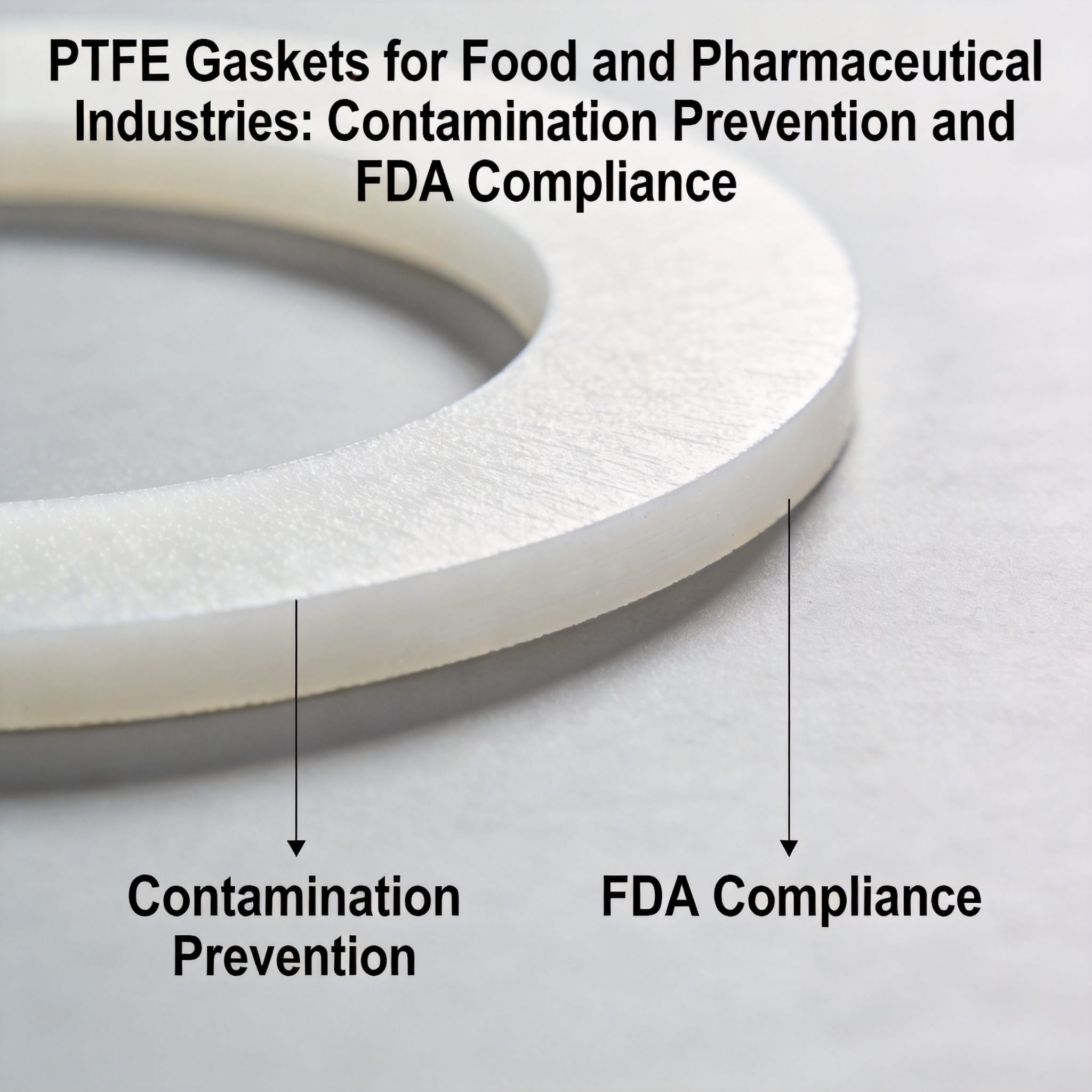
One of the standout features of PTFE gaskets is their chemical resistance. PTFE is virtually inert, meaning it doesn’t react with most chemicals. This property makes PTFE gaskets ideal for use in industries such as chemical processing, pharmaceuticals, and food and beverage, where exposure to aggressive chemicals is common.
Épaisseur et dureté des joints en PTFE

The thickness and hardness of a PTFE gasket can significantly influence its performance. PTFE gaskets are available in various hardness levels, typically measured using the Shore D scale. The hardness you select will depend on the application’s specific requirements, such as the need for flexibility or rigidity.
Spécifications du joint en PTFE (PDF)
Pour obtenir des informations détaillées, de nombreux fabricants proposent des fiches techniques PDF pour les joints en PTFE. Ces documents contiennent généralement des données complètes sur les propriétés du matériau, les dimensions, les tolérances et les caractéristiques de performance des joints en PTFE. Consulter ces fichiers PDF peut s'avérer très utile pour choisir le joint adapté à votre application.
Applications des joints en PTFE
Grâce à leurs propriétés exceptionnelles, les joints en PTFE sont utilisés dans une vaste gamme d'applications, notamment :
- Traitement chimique : Les joints en PTFE offrent une résistance aux produits chimiques corrosifs, ce qui les rend idéaux pour les applications de traitement chimique.
- Industrie pharmaceutique : Dans l’industrie pharmaceutique, les joints en PTFE assurent une étanchéité fiable dans les environnements où la propreté et la résistance chimique sont essentielles.
- Food and Beverage: PTFE’s non-reactive nature and ability to maintain integrity under varying temperatures make it suitable for food and beverage processing.
- Pétrole et gaz : Les joints en PTFE sont utilisés dans l’industrie pétrolière et gazière pour leur capacité à résister aux environnements difficiles et aux substances agressives.
Conclusion
Les joints en PTFE sont des composants essentiels dans de nombreuses applications industrielles grâce à leurs propriétés uniques, notamment leur tolérance aux hautes températures, leur résistance chimique et leur grande flexibilité en termes de dimensions et de spécifications. En comprenant les exigences spécifiques de votre application et en choisissant le joint en PTFE approprié, vous garantissez des solutions d'étanchéité fiables et efficaces. Qu'il s'agisse d'un joint en PTFE haute température ou d'une solution résistante aux produits chimiques, les joints en PTFE vous offrent la performance et la fiabilité requises.
Pour plus de détails, reportez-vous toujours aux fichiers PDF de spécifications des joints en PTFE fournis par les fabricants et consultez des experts pour prendre des décisions éclairées et adaptées à vos besoins spécifiques.
Frequently Asked Questions About PTFE Flange Gaskets
Q: What is the standard thickness for a PTFE flange gasket?
A: The most widely‑used standard thickness for industrial PTFE flange gaskets is 1.5 mm (1/16 inch) for ASME‑compliant steel flanges in general‑purpose piping systems. 0.8 mm (1/32 inch) is common for flat‑face, high‑precision flanges with minimal flange misalignment. 3.2 mm (1/8 inch) is selected for warped flanges, glass‑lined equipment or uneven sealing surfaces, though higher creep risk exists under high bolt load. Custom thicknesses are available for non‑standard flange requirements.
Q: What is the temperature limit for PTFE gaskets?
A: Standard PTFE gaskets operate reliably across a continuous temperature range of -200 °C to 260 °C (-328 °F to 500 °F). Short‑term peak excursions can reach approximately 315 °C, but sustained operation above 260 °C will accelerate material degradation and creep failure. Both virgin and filled‑PTFE grades follow this core thermal boundary; fillers mainly improve mechanical performance rather than drastically raising maximum service temperature.
Q: How does Virgin PTFE compare to Filled PTFE for gaskets?
A: Virgin PTFE is 100% pure PTFE resin. It delivers maximum chemical inertness and material purity, ideal for pharmaceutical, food‑grade and ultra‑corrosive media. Its main weakness is cold‑flow (creep) deformation under sustained bolt pressure, limiting its performance in high‑pressure services.
Filled PTFE adds glass, carbon or graphite fillers to reduce creep and improve compressive strength, wear resistance and pressure‑handling capacity. It performs better under high‑pressure flange conditions. The trade‑off is slightly reduced chemical compatibility for some aggressive media and lower material purity compared to virgin PTFE.

 English
 Russian
 French
 Spanish