
In the ever-evolving landscape of industrial innovation, one might wonder how the most delicate of substances are safely transported through complex systems. Enter the PTFE lined pipe—a marvel of modern engineering that combines durability with versatility. But what makes these pipes so magical in their applications, and why are they becoming indispensable across various industries? This blog post will explore the fascinating world of PTFE lined pipes, revealing their unique capabilities that ensure both safety and efficiency in processes where they are most needed.
Imagine a material so resilient that it can withstand harsh chemicals, extreme temperatures, and prevent contamination—all while maintaining its integrity over time. PTFE lined pipes do just that. From chemical plants to pharmaceutical manufacturers, these pipes are key to handling substances that would otherwise erode traditional piping materials. As you delve into this article, you’ll uncover how PTFE-lined pipes not only solve critical challenges faced by industrial sectors but also push the boundaries of what’s possible in modern engineering. Prepare to be captivated by the unmatched advantages that have made them a game-changer in today’s technologically advanced world.

The Evolution of PTFE Lined Pipes
From the earliest days of industrial piping, engineers faced a persistent challenge: how to transport aggressive chemicals and corrosive fluids without sacrificing the longevity of the system. Traditional metals like carbon steel and stainless steel often succumbed to erosion, corrosion, and leaching when exposed to harsh substances. The introduction of PTFE lined pipe revolutionized this landscape by marrying the structural strength of a metallic pipe with the chemical inertness of polytetrafluoroethylene (PTFE). This hybrid solution first gained traction in the mid-20th century, shortly after PTFE’s invention in the late 1930s. As chemical processing plants expanded, so too did the demand for reliable, contamination-free transport lines capable of operating under extreme pressures and wide temperature ranges.
Over the decades, advances in polymer science and manufacturing techniques refined the PTFE lining process. Early iterations faced difficulties with maintaining uniform wall thickness and adhesion between the PTFE layer and the metal bore. However, innovations such as centrifugal casting, skive-and-weld methods, and electrostatic lining have optimized the consistency and reliability of each tube. By the 1990s, industry standards like ASME B31.3 and ISO 21003 began incorporating guidelines specifically for PTFE-lined systems. Today, a modern PTFE lined pipe can endure temperatures from –200 °C to +260 °C, resist nearly every chemical, and sustain pressures exceeding 2,000 psi. The result is a solution that has set the benchmark for durability and performance in sectors where fluid integrity and safety are paramount.
Industrial Applications of PTFE Lined Pipes
When it comes to safely transporting corrosive or high-purity fluids, few solutions outperform the PTFE lined pipe. In chemical processing, these pipes handle acids, alkalis, solvents, and oxidizers without fear of reaction. This capability is critical for industries that demand zero contamination and precise process control, ensuring both product quality and worker safety. Equally important is their role in the pharmaceutical sector: sterile APIs (active pharmaceutical ingredients) require contaminant-free pathways, and a PTFE lining guarantees that no metallic ions or particles will leach into the stream.
Beyond chemicals and pharmaceuticals, PTFE lined piping finds invaluable uses in food and beverage processing, where strict hygiene and sanitation standards apply. Whether conveying dairy products, fruit concentrates, or carbonated beverages, the non-stick, inert surface prevents bacterial growth and facilitates easy cleaning during CIP (clean-in-place) procedures. In oil and gas, these pipes protect against sour gas corrosion and the abrasive effects of sand-laden fluids. Power generation plants, semiconductor fabrication facilities, and laboratories have also adopted this technology, recognizing that the reliability of a ptfe lined pipe translates to minimized downtime, reduced maintenance costs, and unwavering process integrity.
Design and Construction of PTFE Lined Pipes
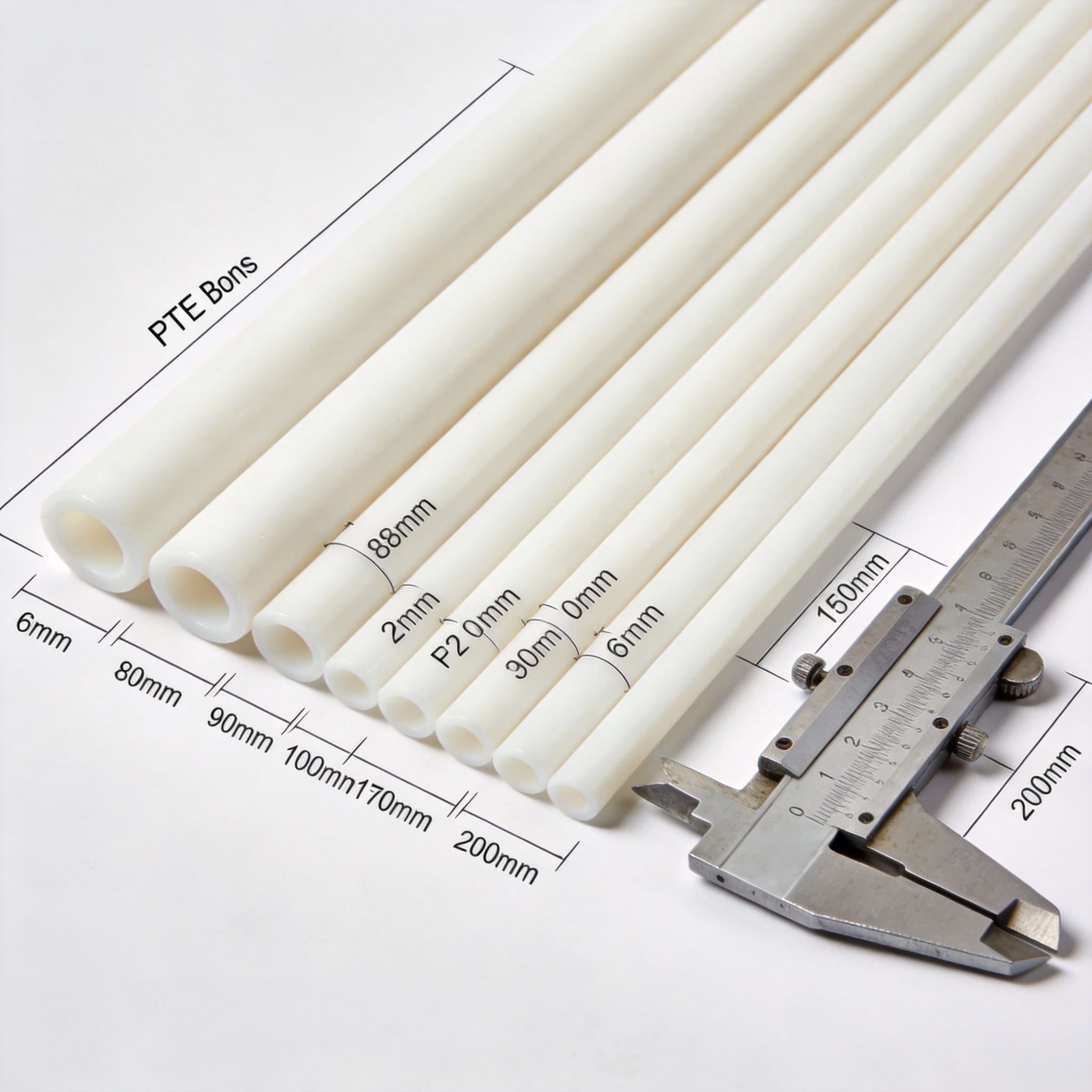
Designing a reliable PTFE lined pipe system begins with selecting the appropriate base material, most commonly carbon steel or stainless steel, chosen for its mechanical properties and cost-effectiveness. The inner diameter and wall thickness of the metal pipe must accommodate both the pressure requirements and the thickness of the PTFE liner, which typically ranges from 1.5 mm to 4 mm. Centrifugal casting is often the preferred method: the metal pipe rotates at high speed while molten PTFE is introduced, ensuring a uniform, defect-free lining that bonds to the inner surface.
Key considerations in construction include ensuring proper electrostatic alignment to avoid air pockets, verifying that the PTFE melt has fully degassed, and confirming that the temperature profiles avoid thermal degradation of the polymer. Flanged joints utilize full-face joints en PTFE to maintain the inert barrier, while skived-and-wrapped liners are used in complex fittings like elbows and reducers. Each piece of piping undergoes rigorous inspection, including X-ray or ultrasonic testing to identify voids, followed by hydrostatic tests at 1.5 times the design pressure. The result is a seamless composite pipe whose PTFE lining remains intact even under cyclic pressure and thermal fluctuations, ensuring long-term reliability.
Environmental and Safety Benefits
One of the most compelling advantages of PTFE lined pipe systems is their contribution to environmental protection. By virtually eliminating corrosion, these pipes prevent leaks of hazardous chemicals into the surrounding ecosystem. Facilities that switch to PTFE-lined solutions often witness a marked decrease in incident-related soil and groundwater contamination. Moreover, extended service life reduces the frequency of pipe replacements, curbing the consumption of raw materials and the generation of industrial waste.
From a safety perspective, a PTFE lining’s chemical inertness means it will not react with transported fluids or produce harmful by-products. This inertness dramatically lowers the risk of exothermic reactions that could lead to pipe rupture or fires. In high-purity applications, the non-porous, non-stick surface prevents bacterial colonization and cross-contamination, safeguarding consumer health in food, beverage, and pharmaceutical industries. Combined with robust metal exteriors, these composite pipes maintain structural integrity under seismic events or mechanical impacts, ensuring that safety remains uncompromised throughout their operational lifespan.
Conclusion: The Enduring Impact of PTFE Lined Pipes
In today’s industrial environment, the PTFE-lined pipe has cemented its place as a cornerstone of safe, efficient fluid transport. Its evolution reflects decades of innovation in materials science and engineering, leading to pipes that defy corrosion, withstand extreme conditions, and protect product purity.
As we look toward the future, the unmatched benefits of PTFE lining—from environmental stewardship to enhanced safety—will continue driving its adoption across an ever-expanding array of applications. Truly, PTFE lined piping represents a modern engineering marvel whose impact will resonate for generations to come.

 English
 Russian
 French
 Spanish