
Short answer: PTFE itself does not chemically discolor — it is one of the most color-stable polymers known. When white PTFE turns gray, yellow, or brown in service, the cause is almost always something on or inside the surface: permeated media behind the surface, absorbed process films, contamination from tools or packaging, or overheating above ~300 °C that begins degrading the polymer. The color is a diagnostic, not a property change.
Discoloration alarms buyers precisely because PTFE “isn’t supposed to change.” Treat the color as free diagnostic data — each shade pattern points to a specific mechanism.
The Discoloration Diagnostic Table
| Appearance | Most likely cause | What it means |
|---|---|---|
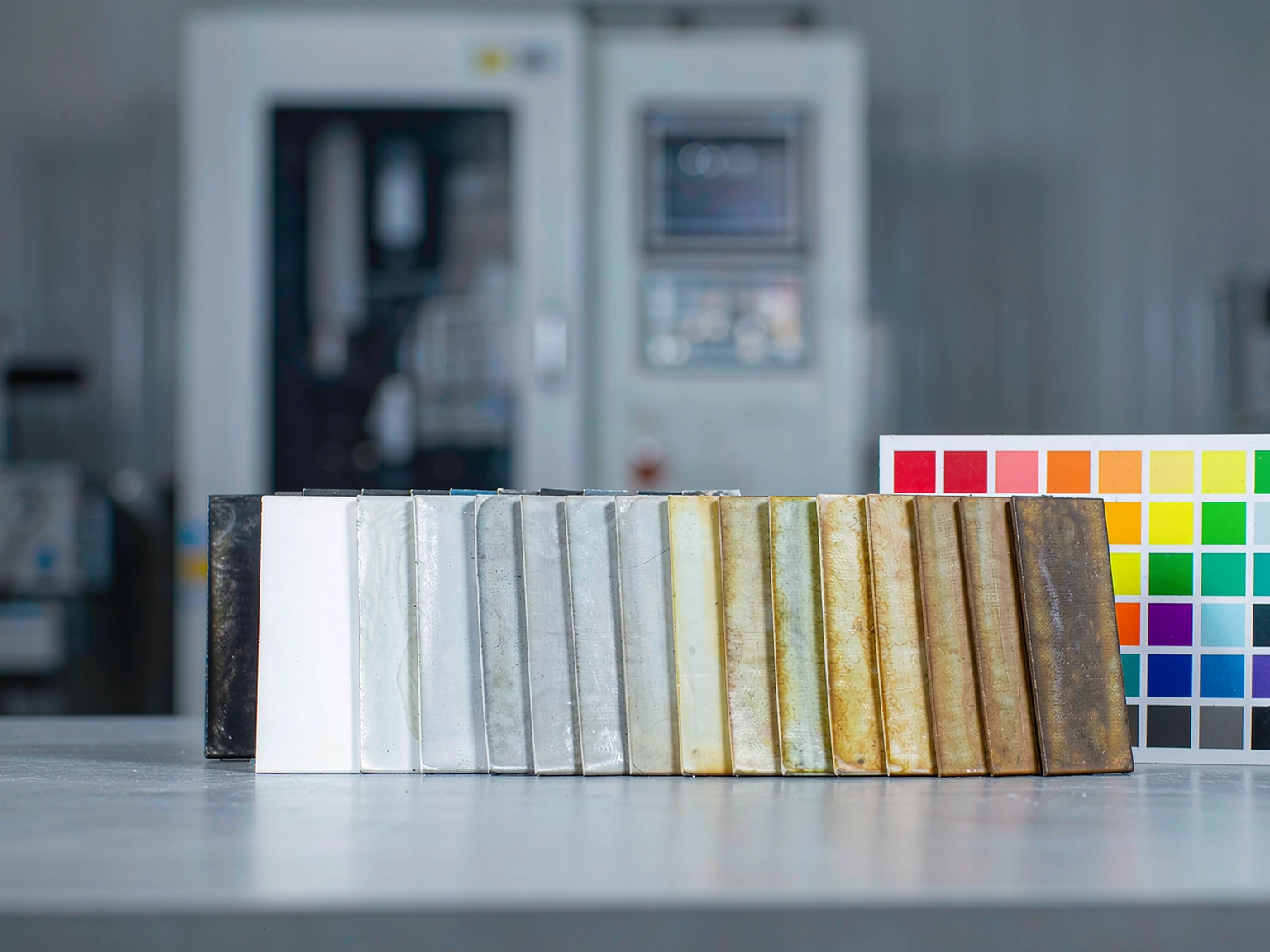
| Yellow/brown gradient from hot side | Thermal degradation beginning (300 °C+ excursions) | Review temperature history; degraded PTFE loses properties |
| Uniform gray film, wipes off partially | Process fouling or media film absorption | Cleaning problem, not material problem |
| Blotchy patches, under-surface appearance | Permeation with subsurface accumulation | Media diffused in; check for blisters, review duty |
| Dark specks or streaks | Tool contamination, metal pickup, or packaging contact | Handling issue upstream |
| Chalky white/rough surface | Surface micro-cracking from thermal cycling or UV-in-air exposure over years | Cosmetic mostly; monitor structural parts |
The One Cause That Matters Urgently
Brown discoloration tracking from the hot zone signals PTFE beginning to decompose — which starts meaningfully above about 300–350 °C. Below that threshold, PTFE handles essentially every process chemical without optical change. So discolored PTFE in a sub-260 °C duty is telling you about the environment, not the polymer; discolored PTFE near a heater or steam trace is telling you to verify actual surface temperatures.
How to Investigate in 15 Minutes
- Note the color pattern (uniform vs gradient vs blotchy vs specks).
- Try wiping with a solvent-dampened clean cloth — if it improves, it’s surface fouling.
- Check the duty log for temperature excursions, especially near heaters and tracing.
- If under-surface discoloration with blisters: plan for permeation — inspect behind the liner or inside the gasket area.
- Keep a cut sample of new material for comparison; photograph both.
Chunhuan supports discoloration diagnosis with material comparison against production records — separating process causes from material causes with lot data.
Frequently Asked Questions
Does PTFE chemically discolor in service?
No — PTFE is extremely color-stable. Discoloration comes from surface films, permeated media, contamination, or overheating above roughly 300 °C.
What does brown PTFE discoloration mean?
Often the start of thermal degradation from excursions above ~300 °C, especially near heaters or steam tracing — verify actual surface temperatures.
Is discolored PTFE still safe to use?
If the color wipes off, yes. Under-surface discoloration or any sign of thermal degradation warrants investigation before continued service.
Can UV discolor PTFE outdoors?
PTFE has excellent UV resistance; years outdoors may give a slight chalky surface but not meaningful property loss.

 English
 Russian
 French
 Spanish
